
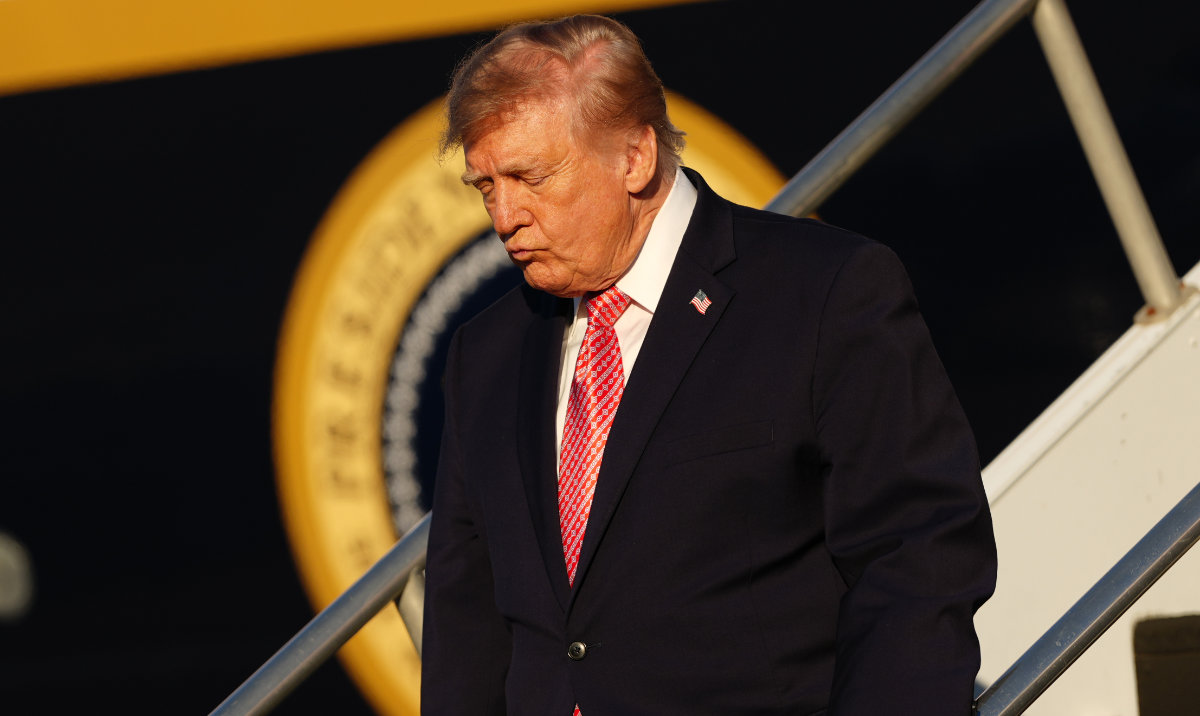
Photo via arabnews.com
Trump Blames France Riots on Immigration While Officials Point to Schools, Costs
President attributes unrest to border failures and demographic change; French PM cites far-left agitation of otherwise legitimate protests over living standards.
What happened
President Donald Trump blamed France's violent weekend protests on immigration, urging French President Emmanuel Macron to tighten borders. Speaking Monday outside the White House, Trump said Paris would become "a Muslim city very soon" if Europe did not restrict immigration, and claimed he had warned Macron years ago to close France's borders. Trump posted on social media that "the migrants have taken over France" and "France is burning."
The actual trigger for the protests differed sharply from Trump's framing. Demonstrations began in September when high school students protested poor school conditions and teacher shortages, later broadening to include cost-of-living complaints, fuel price anger, and revival of the "Yellow Vest" movement. Over 550,000 people participated across France on Saturday, according to authorities. What began as grassroots grievance descended into rioting, looting, and fires at city halls in Limoges and elsewhere.
French officials rejected Trump's immigration explanation. French authorities and police explicitly stated they had not linked immigrants to the violence, instead attributing it to "ultra-left" activists and opportunistic criminals. Prime Minister Sébastien Lecornu blamed the destruction on "radical far-left groups" and warned against using the unrest for political purposes ahead of 2027 elections. Macron voiced the public's "anger" and "shame" over the rioting but framed the underlying cause as legitimate frustration over education and economic hardship.
About 2,400 people were arrested across France. French authorities imposed partial curfews in Paris, Lille, Nice, and other cities Monday night. Vice President JD Vance amplified Trump's framing, warning that "Western liberals imported the third world" and that the chaos could become reality in America if Democrats regained power—a claim that transformed France's domestic grievances into a midterm campaign talking point.
Chanakya's Move
Trump is making a strategic move: he is using France's domestic crisis to reinforce his core campaign message—that immigration unchecked leads to chaos—while positioning himself as a prescient leader who warned Macron and proved right. This serves two audiences: American voters facing midterms, whom he is warning that Democratic policies could replicate European disorder, and far-right movements in Europe, whose messaging on immigration he is amplifying. By attributing riots to immigration rather than education or economic failure, Trump is offering a pre-packaged narrative to conservative parties across Europe and foreclosing French officials' ability to frame the crisis as solvable through domestic policy reform. The bet: American voters will fear the same outcome at home, and European right-wing leaders will adopt his framing. The counter: if French officials succeed in linking the violence to far-left organizing and succeed in addressing cost-of-living grievances, Trump's prediction will appear as an overreach, potentially damaging his credibility on foreign crisis assessment.