
Photo via arabnews.com
Violent clashes sweep Europe as protests erupt in France, Italy, Albania
Cost-of-living demonstrations turned destructive across France and Italy, while Albanian students demanded PM Rama's resignation, leaving over 1,200 arrested.
What happened
Hundreds of thousands of people took to streets across Europe on October 17-18, 2026, in demonstrations against rising living costs, education deficits, and political governance. The protests quickly escalated into some of the worst urban violence the continent has seen in years. In France, over 550,000 marchers—many organized by unions and student movements—descended into riots in dozens of cities.
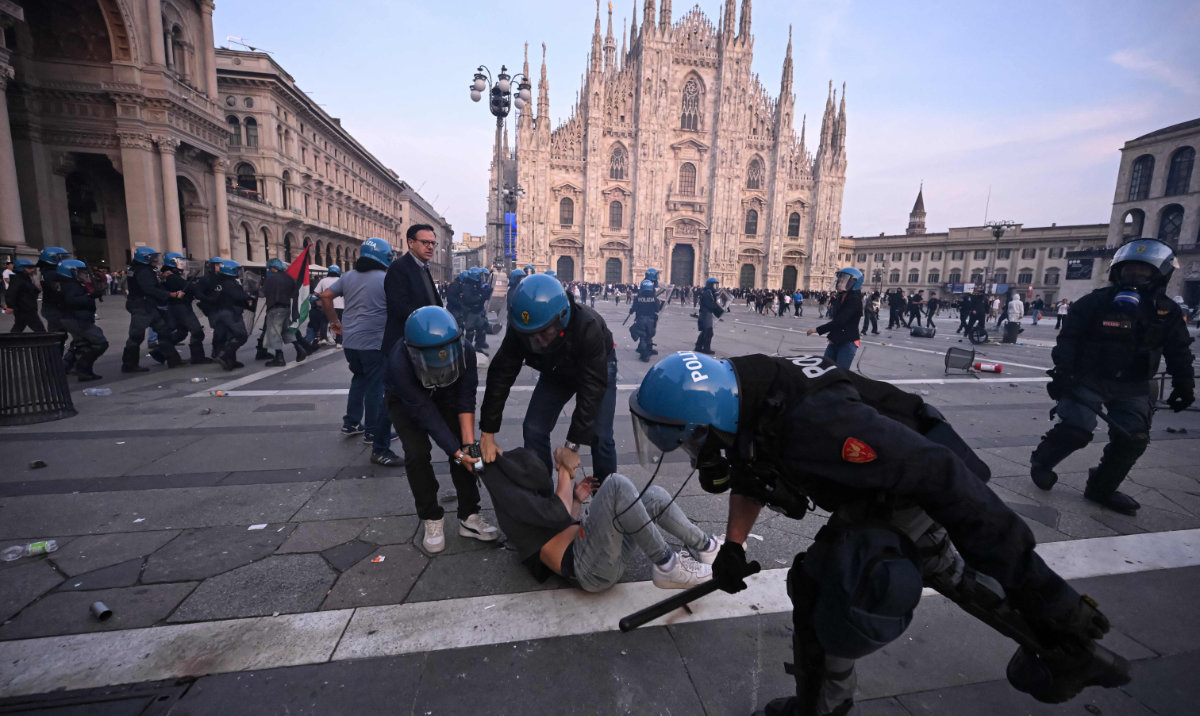
Police reported at least 1,200 arrests and 150 injured officers, with masked rioters looting shops, torching vehicles, and setting fire to public buildings, including a 143-year-old town hall in Limoges. Italian cities including Milan, Bologna, and Turin saw similar scenes, with hundreds protesting state services and inflation. Police deployed tear gas and water cannons in Milan's Piazza Duomo and luxury shopping district.
In Albania, unrest took a distinctly political turn: for the sixth consecutive day, thousands of student-led demonstrators clashed with police outside government buildings, demanding Prime Minister Edi Rama's resignation over corruption allegations and poor university conditions. Albanian authorities reported 500 detentions and over 120 police injured. While European leaders condemned the violence, political figures sparred over responsibility—French far-right and left-wing contenders blamed each other for inflaming crowds weeks before the presidential election.
Chanakya's Move
The timing and scale suggest this is not a coordinated movement but rather synchronized discontent across Europe—a common threshold of frustration with inflation, wage stagnation, and declining services reached simultaneously in multiple countries. For France and Italy, the ruling center-left parties are betting that visible police response and condemnation of 'rioters' will separate their pro-order messaging from left-wing demands, preserving their vote share before elections. For Rama in Albania, the stakes are existential: six days of sustained protest signals a new political threat from Gen Z voters, not traditional opposition parties. His gamble is that patience and non-escalation will burn out the protests, but if violence or police overreach becomes the dominant frame, it could accelerate calls for his ouster. The deeper play: all these governments are managing a narrative tension between acknowledging real grievances (inflation, education, corruption) and delegitimizing the violent minority within protests—a strategy that works only if tangible policy responses materialize soon.