
Photo via arabnews.com
France braces for new student protest wave
Nationwide demonstrations planned today aim to sustain pressure over teacher shortages and school funding ahead of a critical election.
What happened
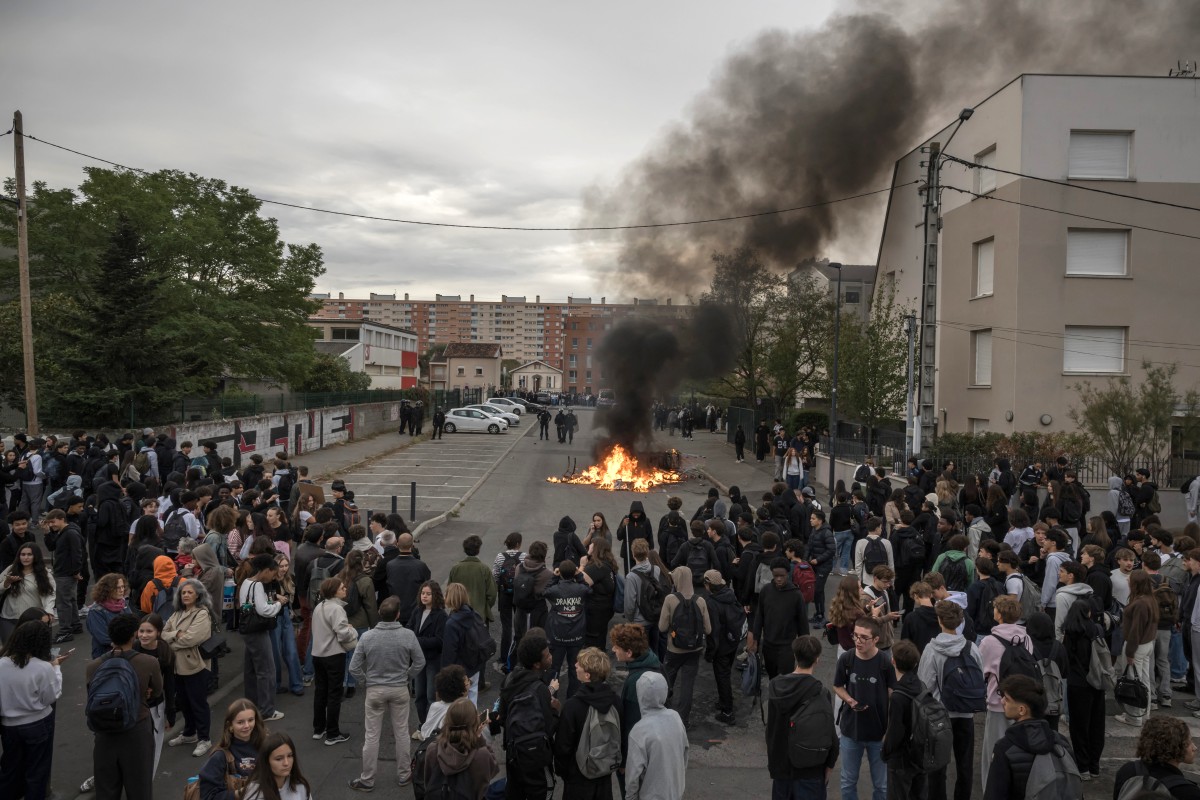
France faces another day of nationwide student demonstrations today as high school and university students, along with teachers, mount fresh protests over education funding and resource shortages. The movement has been escalating since late September, when staff walkouts began at suburban schools over vacant teaching positions. Over the past two weeks, students have blockaded schools, occupied campuses, and marched through major cities, with cumulative arrests reaching over 6,100 people—most minors—and more than 700 police officers injured.
The demonstrations have turned violent in some locations, with protesters setting fires, throwing projectiles, and clashing with riot police who deployed tear gas and water cannons. Some protests remained peaceful; other sites saw serious injuries and property damage. Today's mobilization is being called by student unions and major labor confederations including the CGT, demanding 10 billion euros in additional education funding and immediate deployment of substitute teachers.
Education Minister Édouard Geffray has announced a deployment of roughly 3,000 qualified teachers as a first measure, and Prime Minister Sébastien Lecornu promised a full government response plan by month's end. The government has accused the far-left of stoking the protests for political gain, while the opposition frames the unrest as legitimate dissent over chronic school underfunding. The timing is significant: France faces a presidential election in the coming months, and the walkouts have begun to tap into broader public discontent over austerity measures.
Chanakya's Move
This is a strategic test for Prime Minister Lecornu's government, exposed on multiple fronts: its fiscal capacity, its political durability before an election, and its ability to manage an escalating protest movement. The government's move to deploy 3,000 substitute teachers is a tactical concession—enough to show responsiveness without committing to the 10 billion euros students are demanding. The October 31 deadline for the full response plan is a calculated delay, banking on protest fatigue; but if violence repeats today and unionized workers (not just students) join escalated action, the government risks being forced into larger spending commitments that stress its austerity narrative. The opposition—particularly the far-left La France Insoumise—has an incentive to sustain the momentum; the government benefits if it can frame any violence as radical infiltration and position itself as the voice of order. France's labor confederations, once purely focused on pensions and wages, are now anchored to education funding, widening the coalition against austerity and making it harder to isolate and contain the movement.