
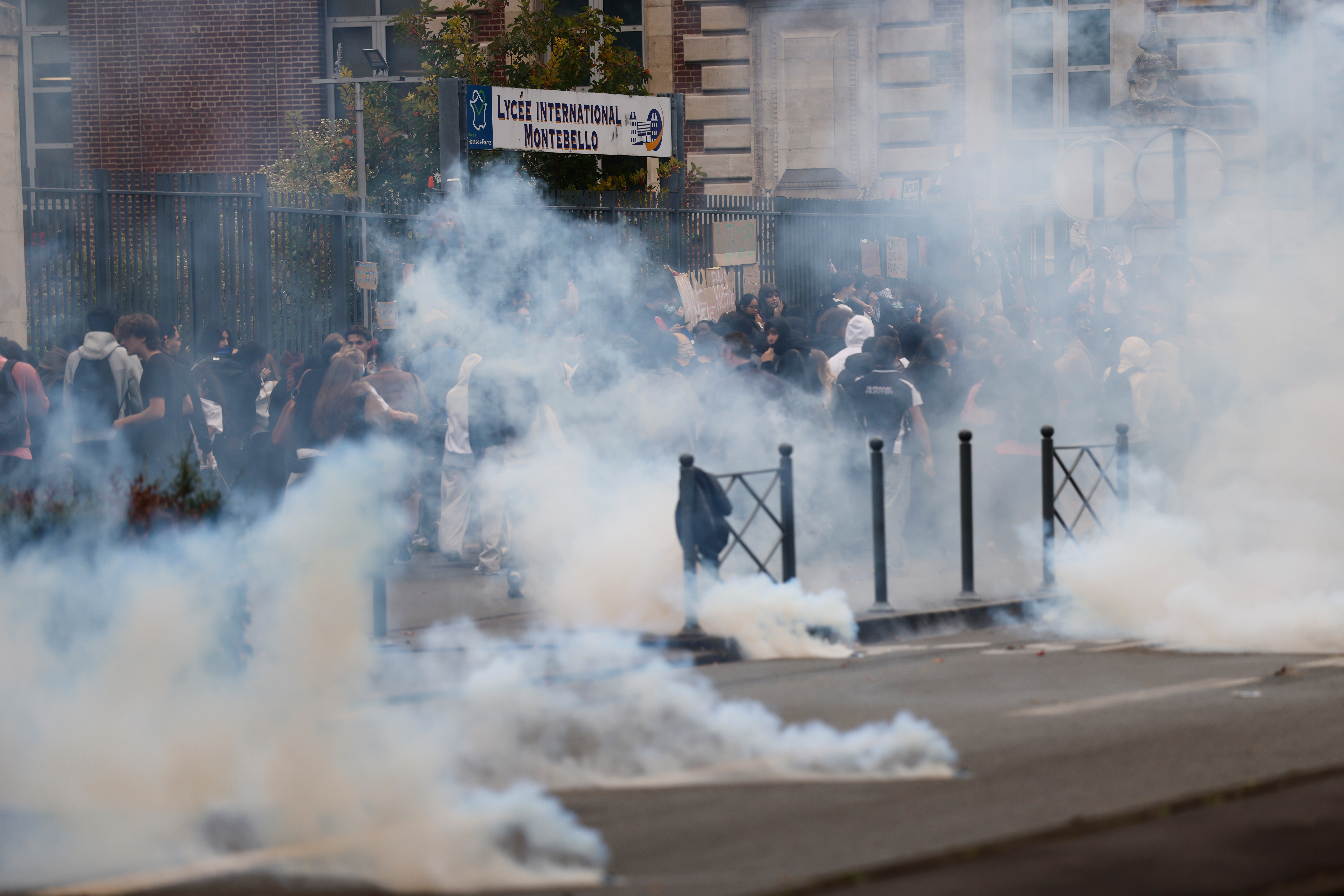
Photo via arabnews.com
France suspends school week as largest protest yet draws hundreds of thousands
Students, teachers and parents marched across the country Tuesday on the biggest day of a fortnight of demonstrations over overcrowded classes and teacher shortages. Police fired tear gas in multiple cities as some protests turned violent.
What happened
On October 6, students, teachers, and parents marched in cities across France in the largest coordinated action yet against deteriorating school conditions. Blockades affected nearly 2,000 schools. Authorities estimated 250,000 protesters nationwide, while organizers claimed closer to 500,000. Prime Minister Sebastien Lecornu suspended high school classes through the end of the week, citing security concerns.
Police deployed tear gas in Strasbourg, Lyon, Rennes, and Paris as some demonstrations escalated. Protesters set fires and hurled projectiles in several cities; riot police reported 715 officers injured. France's interior ministry said 6,100 people have been arrested since protests began in late September, with the overwhelming majority minors. More than 1,800 are being prosecuted.
The movement began September 21 when teachers at Lycée Saint-Exupéry near Paris were joined by students protesting unfilled staff positions, classes of 32-35 students, dilapidated buildings, and extreme heat during this summer's heatwaves. Despite initial concessions at that school, the movement snowballed across France. Core demands include hiring substitute teachers, renovating buildings, reducing class sizes, and reforming the university admissions system.
The protests coincide with broader public sector strikes over the government's 2027 budget cuts. Teachers have staged strikes demanding wage protections. Government officials characterized the movement as having morphed into urban violence, accusing political opposition groups of stoking escalation. Student leaders and teachers disputed this framing, citing police responses to minors as provocative.
Chanakya's Move
Students and unions are leveraging visible disruption of the education system to force government attention during a fiscal crisis and election year—betting that mass protests, parent mobilization, and media coverage of police response create political cost higher than budget concessions. The government's containment strategy (class suspension, riot police, calling violence 'urban' rather than legitimate protest) aims to isolate 'rioters' from sympathetic core protesters, but risks deepening alienation if police tactics continue. The counter-move available to the government is substantial education funding in the budget, but this contradicts its broader austerity mandate.