
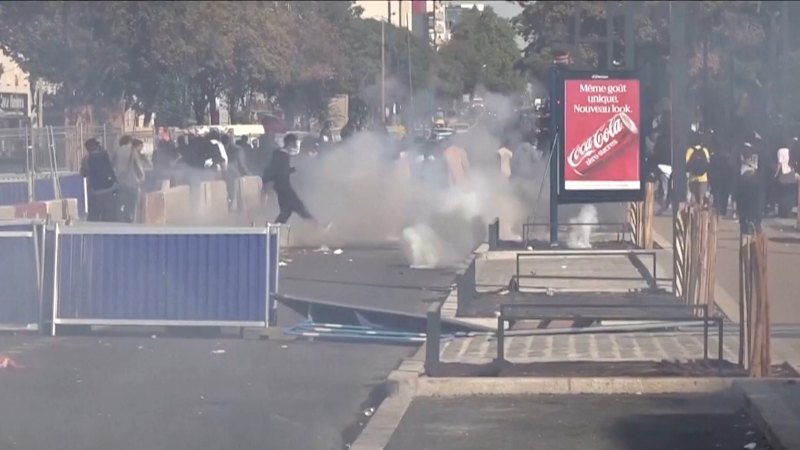
Photo via theage.com.au
Violent student protests paralyze French schools as Macron battles growing unrest
Hundreds of French high schools closed Friday as student demonstrations over staffing, dilapidated buildings and long hours escalated into clashes with police, compounding pressure on a government already facing a budget crisis ahead of 2027 elections.
French high school students lit fires outside schools and clashed with police across the country on Friday as a protest movement over school conditions forced the closure or disruption of more than 560 establishments. The movement began in the Paris region last week and rapidly spread nationwide, with teenagers blockading school entrances and facing off with riot police. Students are protesting excessive school hours—which can stretch from 8 a.m. to 6 p.m.—overcrowded classrooms, teacher shortages, and dilapidated school buildings. At least 65 education staff, including 40 principals, have been injured since protests began, alongside around 170 students, with more than 100 high schools suffering severe damage. Police have arrested around 5,000 people, most of them teenagers, since Monday. The escalation reflects deepening frustration over education funding as Prime Minister Sébastien Lecornu's government unveiled its 2027 budget on Thursday, seeking €54 billion in savings while inflation pressures mount. Education funding in the draft budget would increase only 1.7 percent, below inflation rates. The timing has compounded student anger: the protests coincide with planned budget cuts and public sector strikes. Education Minister Édouard Geffray has dismissed some protesters as "ultra-violent fringe groups," though he acknowledged students' core grievances are legitimate. He has withdrawn one proposed fee on certain post-secondary programs and urged affected schools to hold classes remotely. Teachers' unions have called for strikes, threatening to expand the unrest beyond high school students. The protests create a political headache for Macron six months before the 2027 presidential election. Opinion polls show his center-right government deeply unpopular amid fiscal strain and public anger over austerity. The government convened a crisis meeting on Thursday and suspended some officials' travel to focus on the demonstrations. Whether concessions on specific fees or emergency meetings can diffuse the broader anger over structural underfunding remains unclear.