
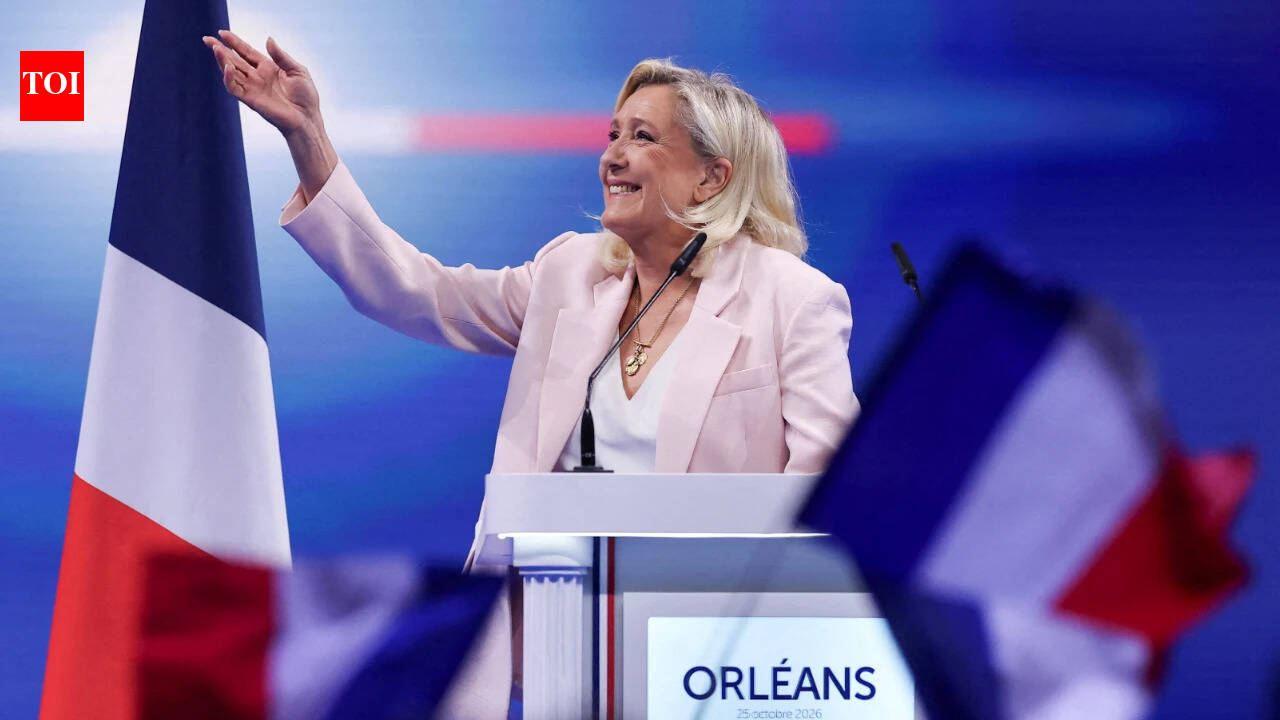
Photo via timesofindia.indiatimes.com
Le Pen Vows to End Ukraine Financial Aid if Elected
French far-right leader reaffirms plan to halt new French financial support after six months in office, though material and humanitarian aid would continue.
What happened
Marine Le Pen, the far-right National Rally candidate leading polls for France's April 2027 presidential election, confirmed on November 16 that she plans to end financial assistance to Ukraine if she wins. Following a meeting with Ukraine's Ambassador Vadym Omelchenko in Paris, Le Pen issued a statement citing France's budget constraints. She said the country's public finances no longer allow it to provide new financial support in the coming months. Le Pen reiterated an October position that France would maintain financial aid for the first six months of her presidency before phasing it out entirely, including both direct French contributions and France's share of future EU financial support programs.
However, Le Pen emphasized that France would continue supporting Ukraine in other ways. She pledged to honor existing commitments, including France's share of a 90 billion euro European Union loan already agreed to Kyiv. She also said France would maintain military support, provide equipment transfers at no cost, expand humanitarian assistance, and pursue more active diplomacy with Ukraine. Le Pen offered to meet with President Volodymyr Zelensky in Brussels or Paris to discuss her position.
Opponents have seized on her stance as central to the campaign. At a televised debate the same day featuring four rival candidates, Le Pen fielded criticism on economic and social policy, with the debate focused mainly on cost-of-living issues. Le Pen is currently polling at around 31-36 percent for the first round, with far-left candidate Jean-Luc Mélenchon in second place.
Chanakya's Move
Le Pen is signaling to voters that she will prioritize France's domestic crisis over external commitments—a positioning that appeals to her core base and plays into anxieties about national decline. By meeting with Ukraine's ambassador and issuing a detailed statement, she is managing a potential liability: her party's historical ties to Russia and past admiration for Putin. The move accomplishes two things: it allows her to claim she has a coherent, fiscally responsible foreign policy (not an abandonment of Ukraine), and it softens the optics of ending aid by emphasizing that military and humanitarian support will continue. Her offer to meet Zelensky suggests she is preparing for a potential presidency and wants to avoid being cast as Putin's ally. The opposition's criticism that aid cuts equal forcing Ukraine into unfavorable negotiations is the counter-bet: that Le Pen's position, however dressed in pragmatism, could undermine Western leverage in any peace process.