
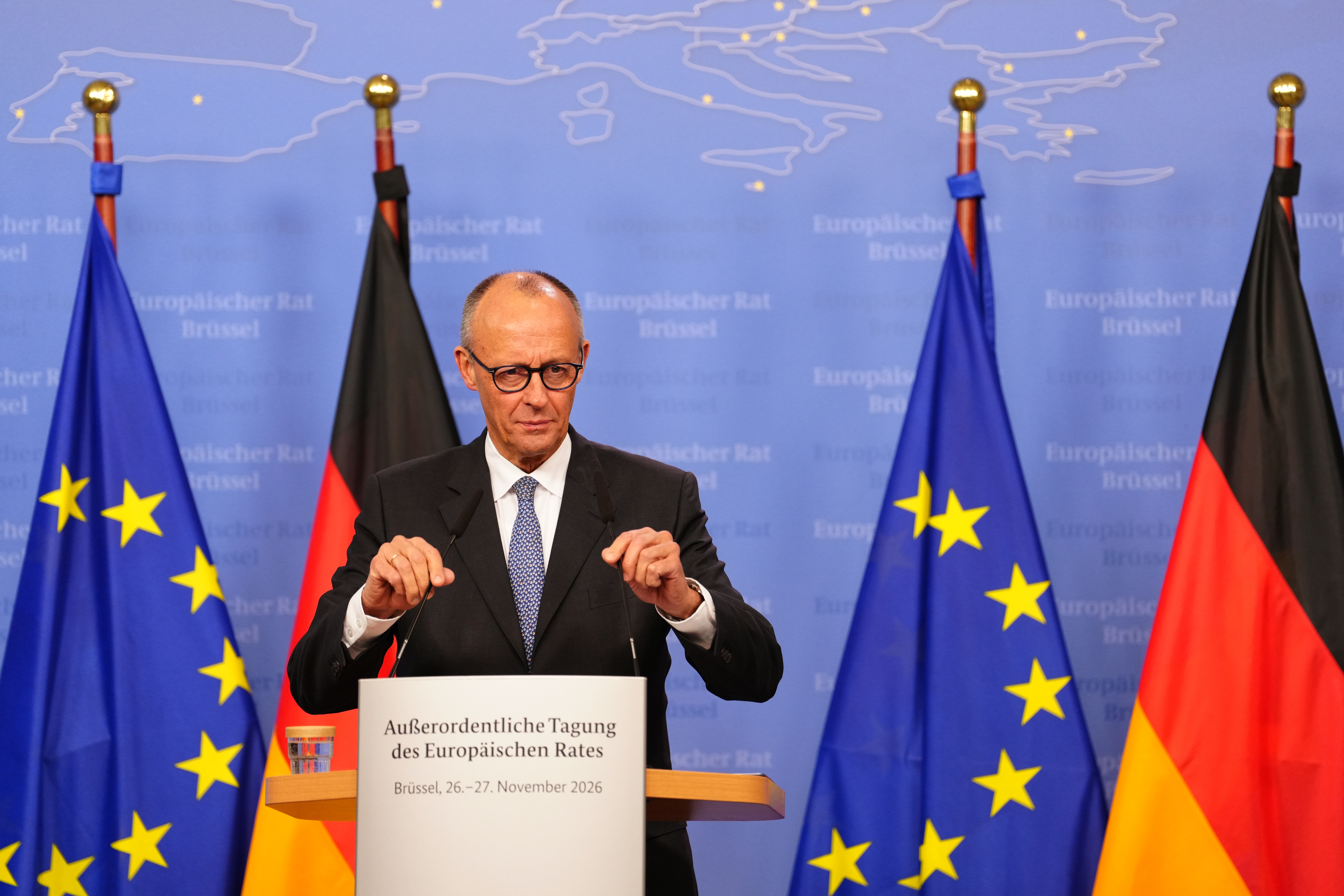
Photo via arabnews.com
EU Budget Summit Ends in Stalemate, December Deadline Set
European leaders failed to agree on the bloc's €1.78 trillion 2028-2034 budget after two days of talks, pushing negotiations to mid-December under election-driven time pressure.
What happened
European Union leaders ended an extraordinary summit in Brussels without reaching agreement on the bloc's next seven-year budget on November 27, exposing deep divisions between net contributors and recipient states over spending priorities and total size. The summit, which ran late into Thursday evening without reconvening Friday, centered on a €1.78 trillion compromise proposal that satisfied neither camp. Net contributor countries led by Germany, the Netherlands, Austria, Sweden, Denmark and Finland demanded further cuts beyond the €204 billion reduction already proposed by European Council President António Costa.
Simultaneously, the "Friends of Cohesion" group—including Spain, Italy, Poland, and other net recipients—sought to protect funding for agriculture and regional development. The impasse was sharpened by disputes over a proposed €49 billion loan for Ukraine, with Germany linking budget approval to permanent EU funding mechanisms for Kyiv. France and Germany pushed for a year-end deal before 2027 elections in France, Italy, Poland, Greece, Estonia, Finland and Slovakia could change political dynamics.
French President Emmanuel Macron set December 31 as an absolute deadline, warning he could not reopen negotiations after that date due to his April presidential election. Leaders agreed to resume negotiations at a summit scheduled for December 17-18, with lower-level talks continuing in early December. An unnamed EU diplomat told AFP the November summit "was designed to fail," signaling expectations of an extended negotiation into the December gathering.
Chanakya's Move
France and Germany are attempting to 'lock in' the EU budget framework before the 2027 electoral cycle reshapes member-state politics. Macron's hard December 31 deadline is a move to constrain his own potential successors—and especially Marine Le Pen, who leads French polls and has pledged to slash French EU contributions and halt Ukraine funding. By securing agreement now, France and Germany aim to insulate the budget from renegotiation even if eurosceptic or fiscally conservative governments take power. Germany adds its own bet: linking budget approval to permanent Ukraine financing locks Kyiv support into the EU's fiscal structure, preventing future governments from withholding aid. The 'Friends of Cohesion' are leveraging their veto power (unanimity is required) to defend spending on agriculture and regional development, betting that the electoral uncertainty will force a compromise favoring their priorities over deeper cuts. The frugals, in turn, are holding firm on further reductions, banking on their fiscal weight (they fund ~40% of the budget) and security/competitiveness arguments to wear down opposition. The December 17 summit is likely a negotiating round, not a final deal; the real endpoint will probably come after Christmas—another Brussels tradition of extended multi-day talks. No side has genuine room to collapse talks entirely, since all 27 must agree and all fear the political cost of a failed budget. This is a game of brinkmanship to see which coalition's priorities dominate the final compromise.