
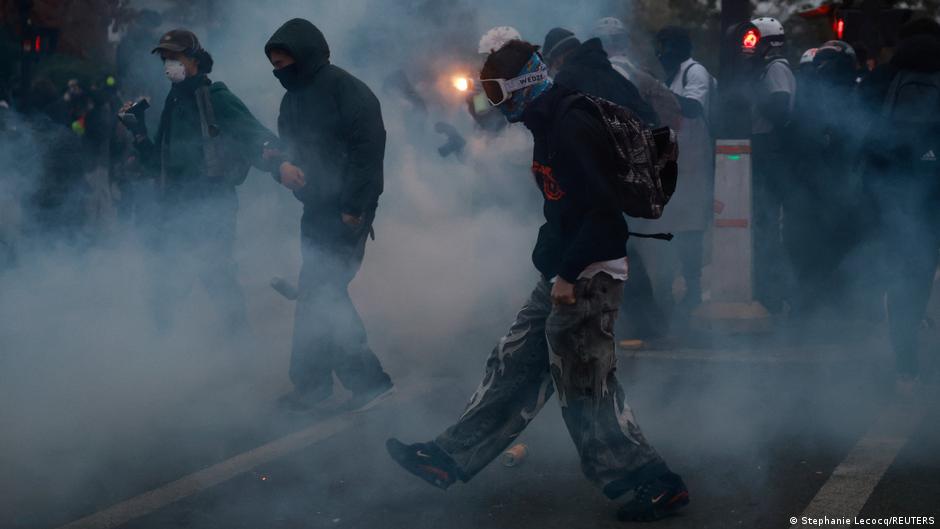
Photo via dw.com
French Protests Enter Fourth Week as Turnout Declines
Saturday's demonstrations drew 146,000 official count as cost-of-living unrest enters its second month ahead of spring elections.
What happened
Tens of thousands protested across France on November 7 in the fourth consecutive weekend of demonstrations against rising costs and deteriorating public services. The interior ministry counted 146,000 participants nationwide, down from 320,000 reported the previous week, while organizers claimed 250,000. Police and protesters clashed in Paris despite the smaller turnout, with authorities deploying heavy security across the country.
The movement, which began in September with student protests over overcrowded classrooms and teacher shortages, has broadened to encompass wage stagnation, inflation, and failing public infrastructure. The Yellow Vest movement—dormant since 2020—has resurged as a central organizer alongside student unions and trade unions. Saturday's protests mark an ongoing test of whether the four-month-old movement can sustain momentum as France heads toward presidential elections in April 2027. Student and teacher groups have already called for further strikes on Tuesday.
Chanakya's Move
The Yellow Vests' resurrection alongside student organizing represents a convergence bet: that a broad coalition—spanning generational and class lines—can force the government's hand before the far-right captures the presidency. The movement's architects are gambling that sustained street pressure will reshape the April electoral landscape by forcing centrist and left candidates to adopt concrete economic and education commitments or risk Le Pen's ascent. The declining turnout is not yet fatal; it could reflect vacation patterns or protest fatigue, or signal the coalition is narrowing to hardened supporters. The counter-bet is that government holds firm on budgets and security crackdowns, allowing the movement to fragment—which would remove an obstacle to Le Pen's path to the runoff.