
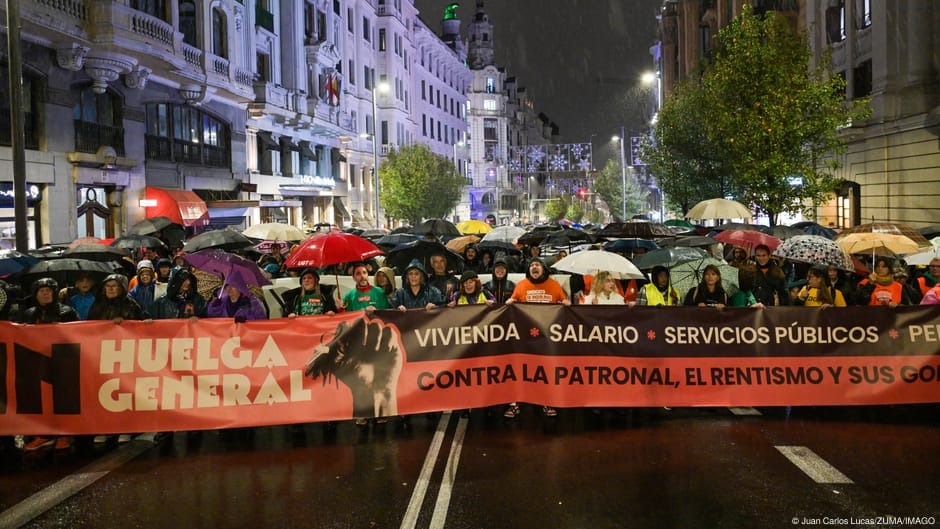
Photo via dw.com
Spain strikes on housing as right-wing bloc surges
Four million workers halted work on November 11 in Europe's first labor stoppage in 14 years, demanding action on a 750,000-home shortage amid escalating violence.
What happened
Spain's two largest unions, CCOO and UGT, called a 24-hour nationwide general strike on Wednesday over the housing crisis and cost of living, ending the country's first labor stoppage since 2012. Approximately four million workers shut down transportation, ports, and businesses across Europe's fourth-largest economy. The strike culminated in massive marches through Madrid and Barcelona, with organisers claiming over 400,000 participants in the capital alone.
However, as peaceful demonstrations ended, groups of masked protesters in Barcelona and Madrid threw fireworks at riot police, set fires, smashed shop windows, and looted stores on major shopping streets. Police responded with tear gas and baton charges; at least 53 people were arrested. The housing crisis driving the strike is acute: Spain faces a shortage of 750,000 homes—expected to exceed one million by 2028—while average rental costs now consume 98.7% of young workers' monthly salaries.
The strike occurred 18 days before a snap election on November 29, called after Parliament rejected government housing relief measures in early October. The eviction and subsequent death of 87-year-old Maricarmen Abascal in September had sparked the initial wave of protests that prompted the electoral gamble. Polls show Spain's right-wing bloc, led by the conservative People's Party and far-right Vox, maintaining a commanding lead with an estimated 190+ seats in the 350-seat parliament, while Prime Minister Pedro Sánchez's Socialists trail at around 105–108 seats.
Chanakya's Move
Sánchez's bet: call a snap election to frame housing as the central issue and energize socialist voters before the right-wing bloc consolidates. The timing of the general strike—18 days before voting—was meant to sustain housing pressure and demonstrate government alignment with worker anger, potentially narrowing the polling gap. What Sánchez is betting on: that housing resonates loudly enough to overcome internal left-wing divisions (hard-left parties failed to unite) and counter the right's law-and-order positioning. The risk: clashes between masked groups and police, property destruction, and arrests redirect the narrative away from housing grievance toward state control and security—terrain where the right, especially Vox, traditionally wins. If the post-strike news cycle becomes one of vandalism and violence rather than unmet housing needs, the strike could backfire and further entrench right-wing advantages. The counter-move: right-wing parties will seize on the clashes to argue that only a tough conservative government can restore order, cementing their polling lead.