
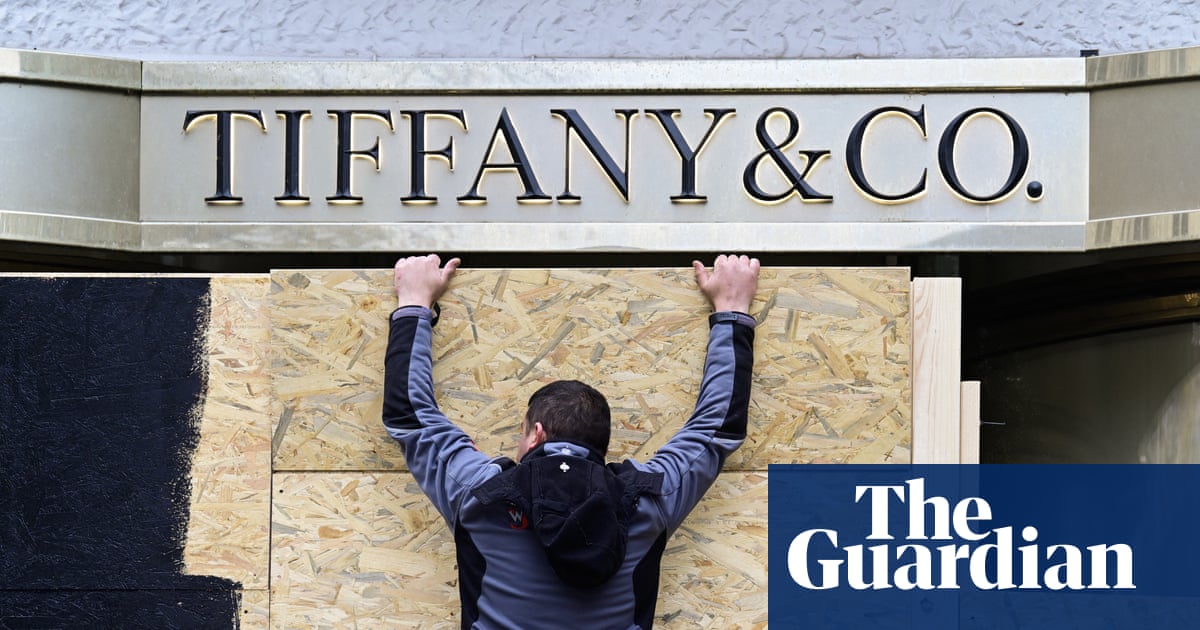
Photo via theguardian.com
Europe erupts in cost-of-living protests as Halloween amplifies disorder
Massive demonstrations sweep France, Germany, Italy and Spain as youth anger over living costs collides with political instability and security fears.
What happened
Massive cost-of-living protests spread across Europe on Halloween weekend, with France bracing for a third consecutive weekend of unrest and Germany mobilizing over 160,000 youth demonstrators. In France, authorities deployed 70,000 police and gendarmes after riots two weeks earlier left shops looted and buildings damaged. Businesses in Paris and other cities boarded up windows ahead of Saturday's demonstrations, while officials banned face-covering masks citing concerns that Halloween costumes could conceal rioters. Interior Minister Laurent Nunez warned of a "very high risk" of disorder, cautioning that radical groups had issued online calls for violent evening gatherings after mainstream daytime protests end.
In Germany, the "Gen Z regelt" youth movement organized largely peaceful protests across 34+ cities, with participants demanding increased education funding, action on climate change, lower living costs, and opposition to mandatory military service. Organizers registered over 160,000 participants, with expectations of around 10,000 at Berlin's Brandenburg Gate alone. German authorities said they expected demonstrations to remain peaceful but warned of attempts by extremist groups to exploit the movement.
The protests reflect deepening frustration across the continent over inflation, housing costs, and deteriorating public services. In France, student groups have been joined by trade unions and the re-emergent Yellow Vest movement. The broader wave has also affected Italy, Spain, Belgium, Portugal and other European nations since mid-September.
The timing carries significant political weight in France, where presidential elections are scheduled for April-May 2027, just six months away. Far-right candidate Marine Le Pen, who leads opinion polls, launched her campaign on October 25 with promises to "restore law and order," positioning herself as an alternative to President Emmanuel Macron's centrist government. Prediction market odds for Le Pen's victory jumped to 53% from 39% a month earlier, as unrest accelerates her law-and-order messaging. Macron said this week it was "not normal" for France to be in such a state of "turmoil" so close to an election.
Chanakya's Move
Marine Le Pen is executing a classic authoritarian playbook: she frames street disorder as proof of governmental failure and positions herself as the solution. The timing—launching her campaign during a third weekend of riots—is deliberate. Each violent incident becomes campaign material and reinforces her "restore law and order" message while Macron appears reactive and powerless. Her political bet: that chaos drives voters toward strongmen. The counter-move available to centrists is to either suppress the unrest (risking further radicalization) or address the underlying grievances (cost, education, services) quickly enough to undercut both the protests and Le Pen's narrative. Germany's Gen Z movement presents a different strategic calculus—youth mobilization around specific policy demands (education, climate, military spending) could force the Merz government to shift spending priorities or lose credibility with an emerging electorate. The larger European dynamic: synchronized cost-of-living anger across nine countries signals that inflation and inequality are reshaping politics faster than elites anticipated.