
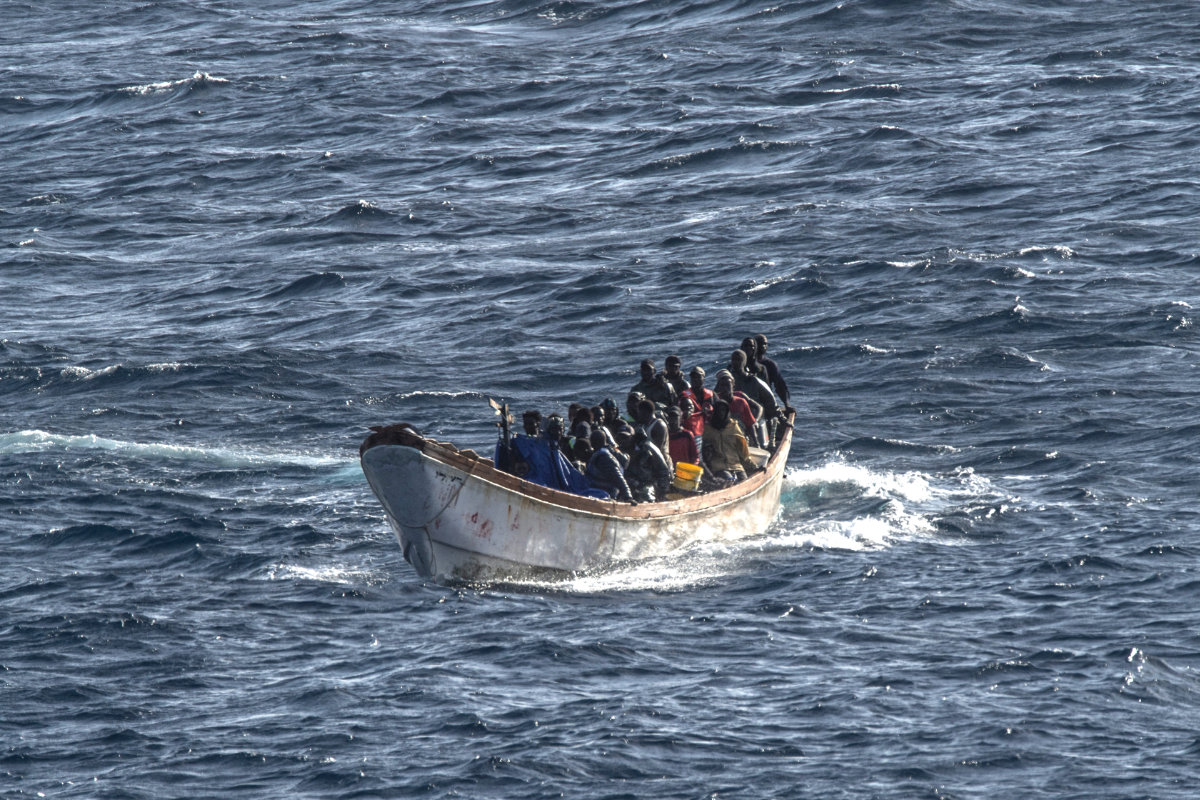
Photo via arabnews.com
14 dead in migrant boat rescue near Canary Islands
The deaths occur during record November arrivals and two days before Spain's election, where immigration has become central to the political race.
What happened
Fourteen migrants were found dead after a boat carrying approximately 100 people was rescued near Spain's Canary Islands on November 27, Spanish news agency EFE reported. The vessel, discovered 39 nautical miles south of El Hierro, had originated from The Gambia and suffered engine failure, leaving it adrift for three days before rescue crews located it. Six survivors were airlifted to hospital in serious condition; 84 others from a separate boat reached La Restinga port the same day.
The incident coincides with a historic surge in arrivals. On November 25 alone, a record 2,100 migrants reached El Hierro in multiple boats, prompting regional authorities to declare an emergency and request military assistance. About 14,000 people have arrived this month aboard 139 boats, according to regional government figures. The Atlantic route from West Africa to the Canary Islands is among the world's deadliest migration crossings; deaths and disappearances rose 95% from 2022 to 2025.
The tragedy unfolds two days before Spain's general election on November 29, where immigration has emerged as a defining campaign issue for the first time in Spanish electoral politics. Immigration ranks third among voter concerns after housing and the economy. Conservative opposition leader Alberto Núñez Feijóo and the far-right Vox party are leading in polls and have made immigration control a centerpiece of their platforms, while Prime Minister Pedro Sánchez's Socialist government has advocated for more open immigration policies. Regional leader Fernando Clavijo emphasized that solutions must address root causes in Senegal and Gambia, urging European-level action.
Chanakya's Move
The right-wing opposition (PP and Vox) are betting that the visible humanitarian crisis and record arrivals will swing undecided voters rightward in a close election. By maintaining polling leads and keeping immigration central to the campaign, they create political space for a PP-Vox coalition. Their strategy depends on voter anxiety about capacity and control outweighing humanitarian or economic arguments for managed migration. The counter-move is regional initiatives and EU-level solidarity that could redistribute arrivals, reducing El Hierro's visible crisis and deflating the political salience of the issue before Sunday.