
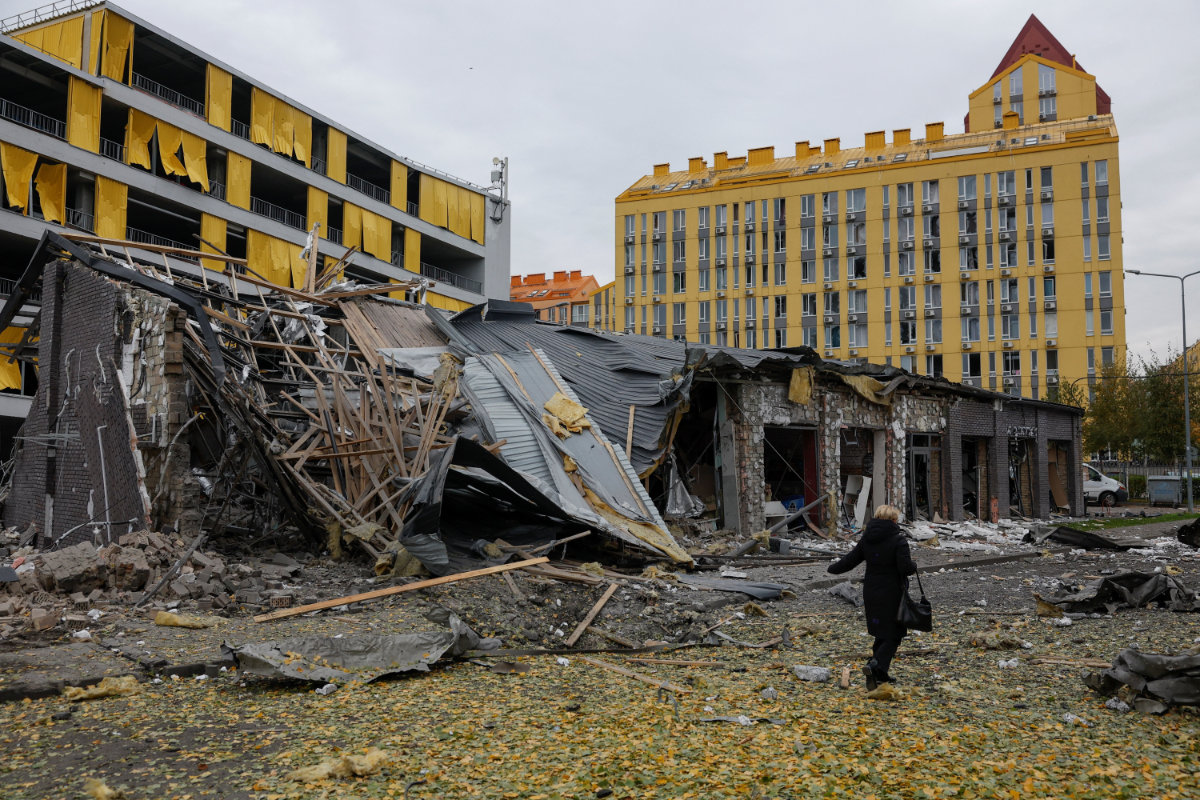
Photo via arabnews.com
Russia strikes Zelensky's hometown as missiles breach Polish airspace
Ballistic attack on Kryvyi Rih kills 2, wounds 60 amid U.S.-led peace talks and NATO military drills.
What happened
A Russian ballistic missile strike on Kryvyi Rih, the central Ukrainian hometown of President Volodymyr Zelensky, killed a 7-year-old boy and a 20-year-old paramedic and wounded 60 others on November 20, according to local officials. The attack damaged roughly 25 apartment buildings, a hospital, schools, and an industrial facility, triggering four fires. In what officials described as a double-tap attack, further missiles and Shahed drones struck the same location as rescuers and emergency workers arrived, targeting the urban center near a popular restaurant.
Hours before the Kryvyi Rih strike, two Russian missiles and a suspected drone came down in southeastern Poland on November 20—the first confirmed strike into NATO territory during the war. Polish Prime Minister Donald Tusk characterized the incident as a likely provocation timed to coincide with an unprecedented two-week European military exercise in Poland beginning November 9, where forces prepare for a possible postwar stabilization mission in Ukraine. NATO Secretary-General Mark Rutte called the missile incursion a "grave violation" of Polish airspace.
The strikes come amid U.S.-brokered peace talks between Russia and Ukraine that resumed November 10-11 in Abu Dhabi—the first direct negotiations since February. Washington had announced working-level discussions aimed at "post-war security arrangements" and "next steps toward peace," though deep divisions remain over territory and security guarantees. Observers noted the attack added to uncertainty about the trajectory of those negotiations.
Chanakya's Move
Russia appears to be signaling dual strategic moves: (1) using the double-tap on civilian rescue operations in Kryvyi Rih to impose maximum civilian cost on Ukrainian resistance and pressure Zelensky during peace talks, and (2) testing NATO's response threshold by allowing (or deliberately) letting missiles cross into Polish airspace during NATO military exercises. The timing—hours into Polish drills and amid active U.S.-brokered negotiations—suggests a calculated gamble: intimidate NATO into perceiving itself as already under fire, test whether Trump's envoys will soften Ukraine's demands in response, and demonstrate that Russia does not view itself as bound by any de-escalation framework. The counter-move from the U.S. and NATO would be to establish clear red lines (via strengthened air defense, NATO reinforcement, or hardened diplomatic language), while ensuring Zelensky understands that no ceasefire will exclude NATO allies from participation.