
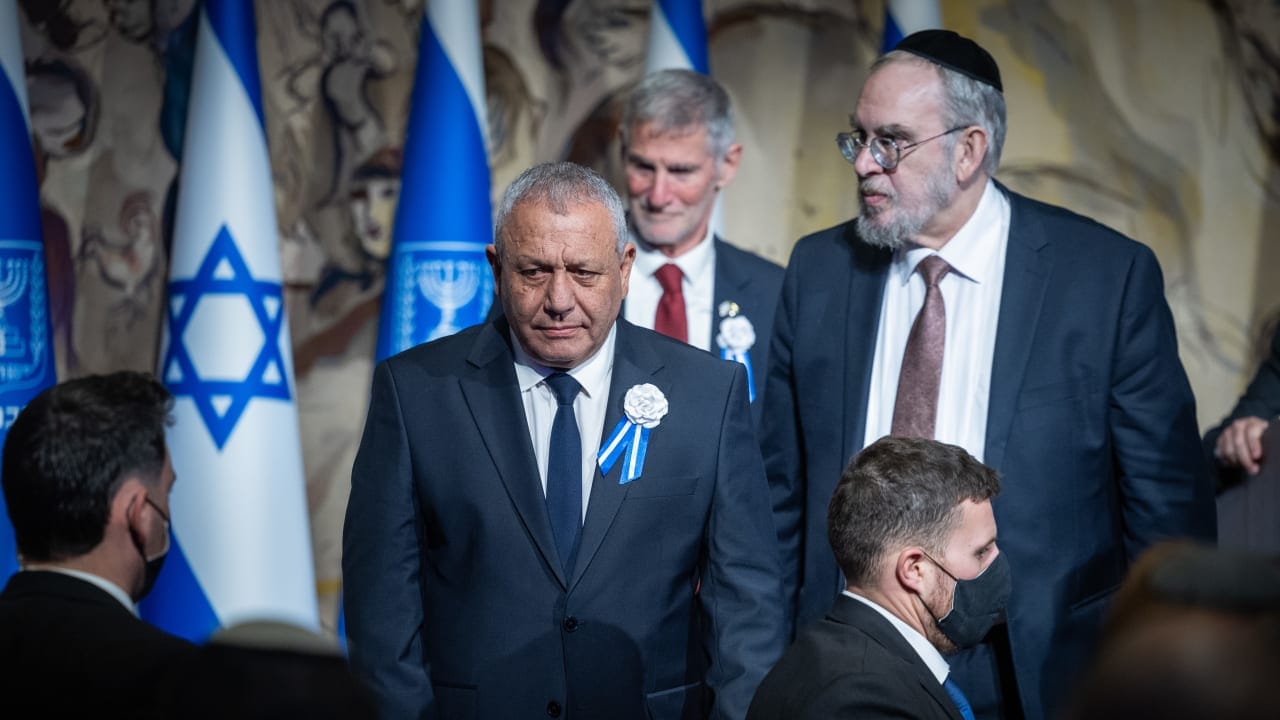
Photo via jpost.com
Netanyahu urges unity govt as Eisenkot pursues haredi coalition
In a widening political standoff, Netanyahu publicly appeals to his rival as Eisenkot negotiates separately with ultra-Orthodox parties to form government.
What happened
Israeli caretaker Prime Minister Benjamin Netanyahu renewed calls Saturday for a national unity government with opposition leader Gadi Eisenkot, saying only such an arrangement could guarantee Israel's security against the Iranian threat. Netanyahu met Eisenkot for a security briefing Thursday and followed up with a video statement urging him to negotiate "without preconditions." Within minutes, Eisenkot dismissed the appeal as a political ploy, saying Netanyahu "knows he lost the election."
Eisenkot was formally tasked November 8 with forming the next government after 67 lawmakers endorsed him, including Arab-led parties. He faces a December 6 deadline to assemble a coalition. Netanyahu's bloc secured 46 seats, while Eisenkot's four Jewish-led opposition parties control 48 seats—short of the 61 needed for a majority.
Eisenkot's strategy centers on bringing United Torah Judaism (UTJ), a haredi party with 7 seats, into the coalition alongside support from Arab parties. Netanyahu is working to block this, personally contacting rabbinical leaders and sending emissaries to dissuade UTJ from joining Eisenkot. UTJ's support would bring a potential coalition to 55 seats, still below majority but closer. Alternatively, Eisenkot could form a minority government with Arab abstentions, though this faces internal resistance within UTJ over dependence on Arab parties.
The dispute hardened Friday when Eisenkot accused Netanyahu of running a "racist" campaign against Arab parties, which won a record 19 seats. Netanyahu has sought to delegitimize Arab leaders by linking them to Hamas, though all Arab party leaders condemned the October 2023 attack. Eisenkot's defense of Arab political participation drew rare public support from Jewish leaders.
Eisenkot also faces internal coalition pressures. The haredi draft law—military service exemptions for yeshiva students—remains contentious, with UTJ having demanded Netanyahu pass it before talks, though the party has left unclear whether it will impose the same condition on Eisenkot. Members of Eisenkot's bloc worry Netanyahu could delay negotiations long enough to force another election.
Chanakya's Move
Netanyahu's public appeal for unity—invoking the Iranian threat—appears designed to fracture Eisenkot's coalition arithmetic by forcing Eisenkot to negotiate with him rather than with the haredi and Arab parties. By publicly tying unity to national security, Netanyahu shifts the political cost onto Eisenkot if negotiations fail or produce a minority government. Simultaneously, Netanyahu works the haredi parties directly, warning UTJ that Eisenkot cannot be trusted to honor coalition commitments and emphasizing the risk of relying on Arab party support. His counter-bet: that haredi concerns about left-wing governance and Arab partnership will outweigh frustration with his own failure to pass the draft law. Eisenkot's counter-move is to accelerate negotiations with UTJ and develop an external support model with Arabs, aiming to swear in a 48-member minority government before Netanyahu can block it. The critical variable is UTJ's calculus: whether the party will accept Eisenkot's promises of draft legislation and coalition roles in exchange for breaking with Netanyahu.