
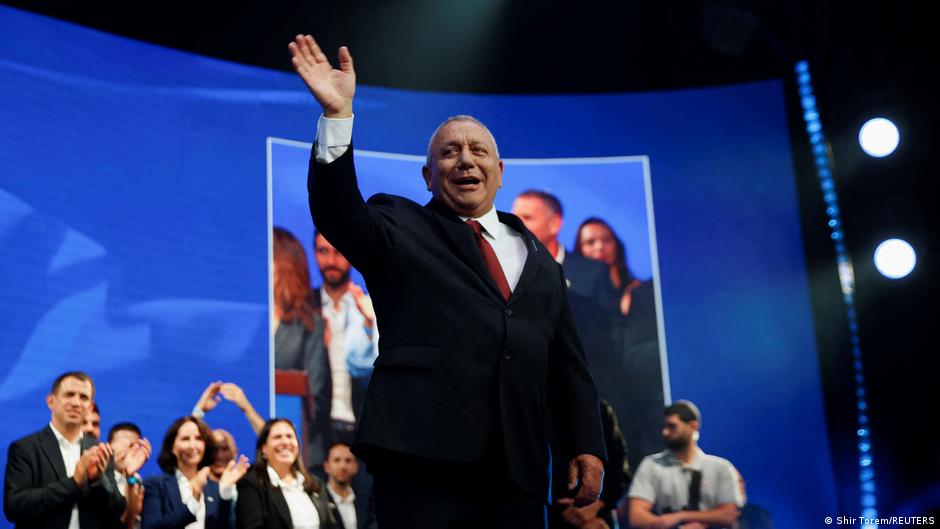
Photo via dw.com
Eisenkot Tapped to Form Israeli Government After Deadlocked Election
The centrist former military chief has 28 days to assemble a 61-seat coalition after his bloc won 48 seats and Arab parties proved kingmakers with 19.
What happened
Israeli President Isaac Herzog chose opposition leader Gadi Eisenkot on Saturday to form the country's next government, passing over Prime Minister Benjamin Netanyahu after an October 27 election left both men without a parliamentary majority. Herzog based the decision on consultations with all parties: 67 lawmakers endorsed Eisenkot compared with 46 for Netanyahu, the incumbent. Eisenkot, a former chief of staff of the Israel Defense Forces and founder of the centrist Yashar party, now has 28 days to assemble a coalition of at least 61 of 120 Knesset seats, with a possible 14-day extension.
The math is unforgiving. Eisenkot's four-party opposition bloc won just 48 seats in an election where Arab-led parties surged to 19 seats—a record share that makes them essential to any government majority. Both Ra'am and the Joint List publicly endorsed Eisenkot during Herzog's consultations, and observers expect they will be willing to provide support. But Eisenkot, his coalition partners, and several Jewish-led opposition figures publicly pledged before the election not to rely on Arab party support, creating a political trap.
Eisenk will need to square this circle in negotiations with his own bloc. Yisrael Beytenu leader Avigdor Liberman has explicitly ruled out any government relying on Arab parties, even from outside the coalition. Eisenkot himself said in September that Arab parties did not meet his conditions for governing partnership, though he has not fully closed the door. One path could be a minority government with external support—Arab parties abstaining or voting with the government on key measures without holding ministerial seats—but that arrangement faces resistance from his coalition partners. If Eisenkot fails, Netanyahu will likely receive the mandate to try forming a government. If both fail, Israel will face a new election.
Chanakya's Move
Herzog's decision reflects a calculation that the Knesset's will—as measured by the 67 endorsements—should override the raw seat count that favors Netanyahu's bloc. Eisenkot's move is a bet on his ability to either break his own coalition partners' pledges on Arab support or to construct a minority government that Arab parties tolerate from outside. Netanyahu's counter-move, calling for national unity, is a play to divide Eisenkot's bloc and position himself as the reasonable fallback if coalition talks fail. The decisive gambit will be whether Arab parties can extract concrete commitments on Palestinian affairs or welfare policy without formally joining the government—a structure that could satisfy both their negotiating demands and Eisenkot's coalition partners' red lines. If not, the government falls to Netanyahu and the cycle repeats.