
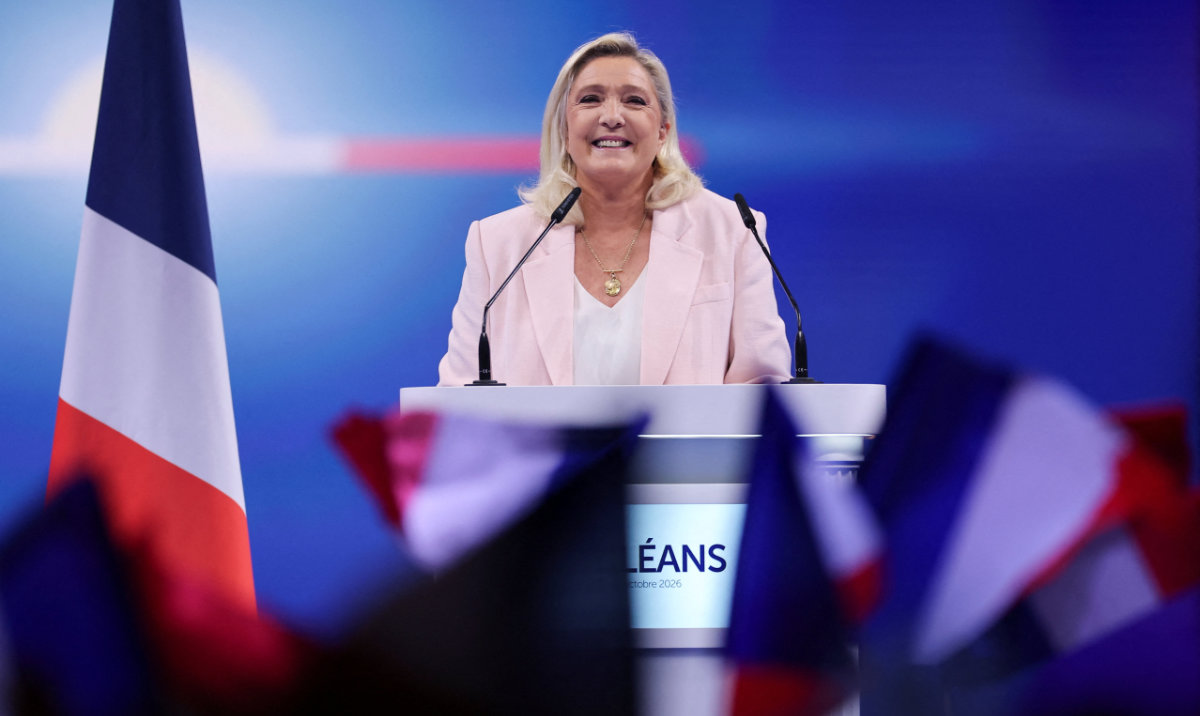
Photo via arabnews.com
Le Pen Launches Presidential Campaign as France Convulses
The far-right candidate vowed to restore order at a rally in Orléans as weeks of protests over cost-of-living and education have turned violent.
What happened
Marine Le Pen formally launched her 2027 presidential campaign on Sunday at a rally in Orléans before thousands of supporters, vowing to restore order and "rule of law" to France. The far-right National Rally (RN) candidate framed her candidacy as a return to stability after weeks of escalating unrest. She promised to preserve French cultural identity, restore secure borders, and implement tougher immigration laws. Her campaign comes as frontrunner in polls with 32–34% support in first-round projections, benefiting from France's current turmoil.
The timing capitalizes on social upheaval. More than 400,000 people marched across France on October 24, protesting rising living costs, education funding shortages, and deteriorating public services. While many demonstrations remained peaceful, violent clashes with police resulted in nearly 1,000 arrests, looting, and fires in city centers. The unrest began in September and escalated significantly after October 17 riots, the worst civil violence France has experienced in decades. Le Pen's "rule of law" message directly frames these protests as evidence of failed governance under Emmanuel Macron.
Beyond domestic order, Le Pen's platform includes significant EU policy shifts. She pledged a constitutional referendum to challenge the primacy of EU law over migration policy and an annual €11 billion reduction in France's contribution to the EU budget. While the RN has abandoned full "Frexit" rhetoric, her proposals would fundamentally reshape France's relationship with Brussels, positioning her as a Euroskeptic voice willing to act unilaterally on immigration.
Anti-far-right counter-demonstrations occurred on Saturday in Orléans ahead of her rally. Police controlled traffic into the city and authorities deployed 70,000 officers nationwide during the previous weekend's marches. The presidential election is scheduled for spring 2027, six months away.
Chanakya's Move
Le Pen's move is a textbook exploitation of crisis. By launching during peak social unrest—not despite it—she positions her nationalist, order-focused platform as the obvious antidote to chaos. Her framing of "rule of law" against Macron's "failed" stewardship captures genuine popular anger over cost-of-living and police tactics while avoiding the extremism label her party has worked to shed. Strategically, she is betting that six months of continued economic strain and protest will move soft voters rightward; she's also betting that her EU reframing ("change from within" rather than "Frexit") makes her palatable to business and centrist voters spooked by the RN's radical past. The counter-protests in Orléans signal that the left and centrists have not yet rallied behind a unified alternative—a fragmentation that historically aids the far right in polarized runoff elections. Le Pen's challenge: maintaining this momentum while avoiding the legal jeopardy from her outstanding appeal of the embezzlement conviction; if that appeal fails before spring 2027, her candidacy could collapse. Her bet is that the appeals court will rule in her favor by summer 2026, as promised.