
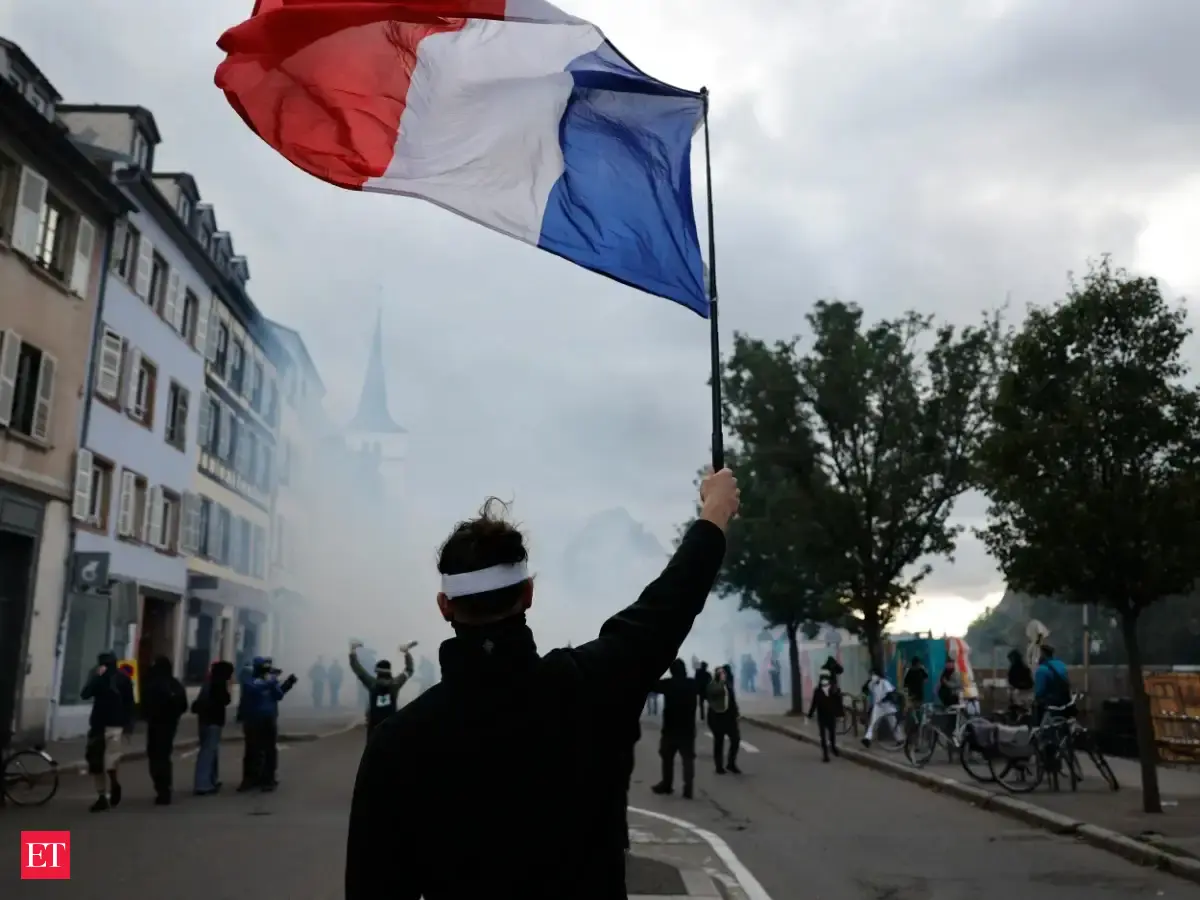
Photo via economictimes.indiatimes.com
Macron, Trump clash over cause of France's massive protests
Over 400,000 marched across France over school funding and living costs; Trump blamed immigration while State Department echoed him—Macron fired back at 'stupid' foreign commentary.
What happened
More than 400,000 people protested across France on October 24, with demonstrations centered on school funding shortages and soaring living costs. What began as high school protests over teacher staffing in September has broadened into a nationwide movement that drew students, workers, unions including the CGT, and yellow vest activists. Police deployed tear gas and water cannons as clashes erupted in Paris and other cities; authorities reported nearly 1,000 arrests.
The protests became a proxy fight between French and U.S. leadership over narrative. President Trump blamed the unrest on immigration, saying migrants and jihadists "have taken over France" and urging border closures. Trump's State Department followed suit, with spokesperson Tommy Pigott telling Fox News that Trump's assessment was "spot on," calling mass migration "inherently destabilizing."
Macron struck back on October 22, saying foreign leaders' comments were "unacceptable and stupid," specifically naming Trump "among others." The French president noted that AI-generated images and disinformation had fueled false claims of mass migrant involvement, and stated plainly that demonstrators had "legitimate demands" rooted in real economic pressures and fuel costs tied to the Iran conflict. French authorities have not linked immigrants to the rioting.
Macron, heading into the final months of his presidency before May elections, is under mounting pressure as the far-right National Rally's Marine Le Pen exploits discontent. The broader European context matters: similar student and worker protests have spread to Belgium, Albania, Greece, Italy, Portugal, Spain, Austria, and Germany over education funding and living costs—suggesting transnational economic strain rather than a migration-driven phenomenon.
Chanakya's Move
Trump is betting that chaos abroad—even in allied nations—becomes a cudgel for him at home. His strategy: frame France's protests as proof that Democratic or centrist immigration policies produce disorder, while portraying his own hardline immigration stance as the cure. The State Department's endorsement signals that this is now official U.S. messaging, not just rally rhetoric. Macron's counter-move is to insist the real story is education funding and economic desperation, and to blame foreign disinformation (especially Trump and U.S. Republicans) for distorting it. What could undo this? Evidence that immigration was actually central to the unrest (undermining Macron) or that economic grievances, not migration, drove turnout (undercutting Trump). For now, both leaders are locked in competing narratives, each hoping their version sticks before voters decide.