
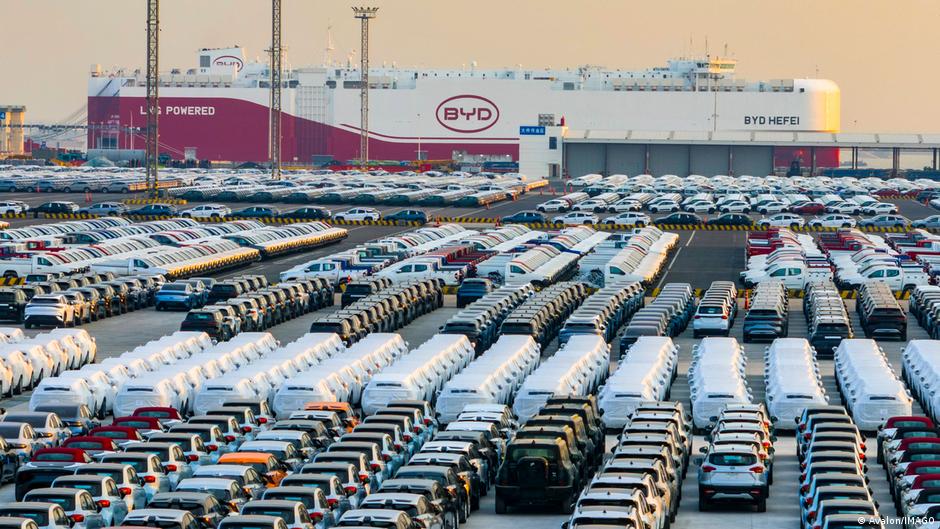
Photo via dw.com
EU and China Reach Deal to Moderate Hybrid Car Exports, Averting Trade War
After two days of talks in Beijing, Brussels and Beijing reached a 'shared understanding' that could cut Chinese hybrid vehicle shipments by more than half over four years, while securing tariff relief on EU goods.
What happened
EU Trade Commissioner Maroš Šefčovič and Chinese Commerce Minister Wang Wentao concluded two days of intensive negotiations in Beijing on October 9, announcing a preliminary agreement to moderate China's exports of hybrid and plug-in hybrid cars to the bloc. Šefčovič said the understanding could prevent several million Chinese vehicles from entering the European market over four years, cutting projected exports by more than half—though the reduction is measured against expected growth under no agreement, not against current shipment volumes. Neither side disclosed the mechanism by which exports will be restrained.
The agreement addresses a critical friction point: Chinese automakers have surged hybrid exports to Europe over the past year as a workaround to the EU's 2024 tariffs on battery-electric vehicles, which do not apply to hybrids. Chinese hybrid imports to the EU jumped 86 percent year-on-year through September, with Chinese brands capturing roughly a quarter of Europe's hybrid market by August.
Beyond cars, the deal includes commitments to lower Chinese tariffs on European goods—auto parts, olive oil, and footwear worth nearly €4 billion in current export value—generating at least €225 million in annual duty savings. China also agreed to streamline export licensing for rare earths and permanent magnets through a 'green channel' mechanism, easing supply for European industries dependent on these materials.
Šefčovič characterized the package as a 'crucial first step' in rebalancing trade relations, as the EU faces a record deficit with China of roughly €1 billion per day. EU leaders will review the agreement at a summit next week before formal ratification. The two sides set a follow-up ministerial meeting for January and a third round of consultations in March 2027, signaling an intent to continue negotiations on the broader trade imbalance.
Chanakya's Move
China's play is strategic restraint to forestall escalation: by moving first on hybrid caps without waiting for Brussels to impose tariffs, Beijing positions itself as a cooperative partner and preserves negotiating room on electric vehicles, where Chinese makers hold structural advantages. The deal also locks in rare earth supply commitments and opening of Chinese markets—wins that offset concessions. For the EU, the move is a face-saving de-escalation that buys time before an October summit. But the lack of detail on implementation mechanisms gives both sides room to claim victory while leaving enforcement ambiguous. Sefcovic withheld specifics until EU leaders review next week, suggesting internal EU disagreement on whether the terms are sufficient. Watch whether Beijing's actual export behavior follows the understanding or whether 'moderation' becomes a loose commitment.