
Photo via azernews.az
Azerbaijan earmarks $3.1 billion for mining and metals expansion through 2030
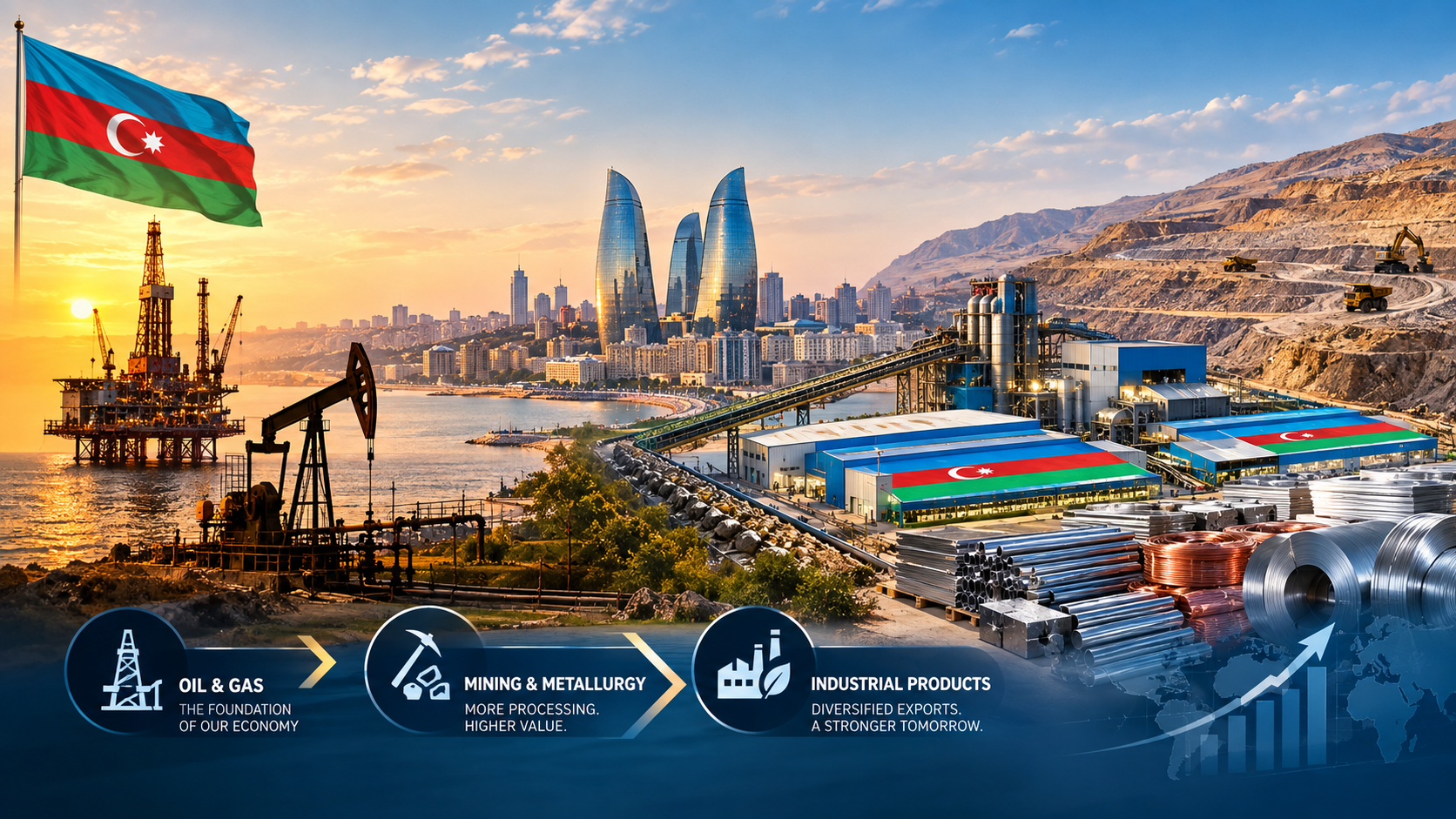
The latest state program targets aluminum, gold, and copper processing as President Aliyev pursues economic diversification away from oil dominance.
What happened
Azerbaijan has approved a 2027–2030 State Program for the Development of Mining and Metallurgical Industries with estimated investment of 5.3 billion AZN (approximately $3.1 billion), according to a September 22 presentation chaired by President Ilham Aliyev. Roughly 80% of this investment is expected to come from private sources, with the remainder from the state budget. The program targets expansion of aluminum electrolysis capacity at Azeraluminium's Ganja plant from around 50,000 tonnes per year to 100,000 tonnes by 2030, alongside development of new rolled aluminum capacity.
Separately, Azerbaijan is exploring a new primary aluminum smelter with capacity of around 200,000 tonnes per year, which has attracted interest from foreign investors. The program also includes assessment of the Zaylik alunite deposit as a potential domestic raw-material base for aluminum production. Non-oil exports have already begun shifting: through July 2026, non-oil-and-gas exports reached $5.93 billion, reflecting a 2.8-fold increase compared to the same period last year.
Mining and metallurgy exports are projected to increase 2.6-fold by 2030 under the program. While oil and gas will remain the country's primary export pillar, the strategy positions processing sectors as key drivers of added value and export revenue growth as part of Azerbaijan's broader "2030" diversification framework.
Chanakya's Move
This move is President Aliyev's bet that Azerbaijan can capture value across commodity value chains—raw materials from its deposits, energy leverage for smelting, and geographic position as a processing gateway between Central Asia and the Caucasus. The strategy concedes that oil cannot sustain growth indefinitely (oil revenues remain volatile and finite) but claims that backward-integrated processing—moving from ore extraction to finished metals—can sustain wealth creation. The calculation assumes stable foreign direct investment, competitive energy costs relative to rivals, and coherent execution of industrial policy. Risks include commodity price exposure (even processed metals fluctuate), execution risk on a complex multi-year capex program, and potential pushback from traditional hydrocarbon exporters if Azerbaijan's refinery and processing ambitions compete with neighbors' interests.