
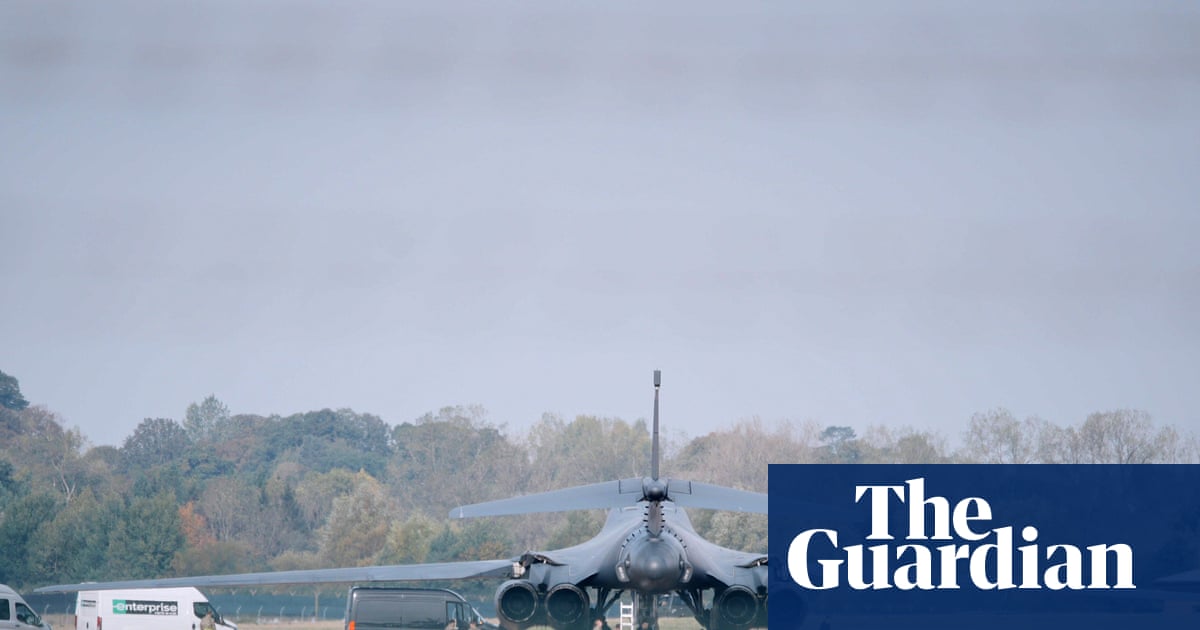
Photo via theguardian.com
US withdraws all B-1 bombers from RAF Fairford after suspected Iran-linked terror plot
The Pentagon redeployed its entire bomber contingent from the UK base on October 4, following arrests connected to a suspected attack on the military installation.
The US military withdrew all twelve B-1 Lancer bombers from RAF Fairford in Gloucestershire on October 4, redeploying them to home stations in the continental United States. The Pentagon cited security concerns stemming from a suspected terror plot targeting the base. The withdrawal came one week after five British men were arrested near the airbase on September 27 following reports of three suspicious vans in the area.
Bomb disposal teams found petrol in the vehicles but no explosives. All five men were released on bail; a sixth suspect, a UK-Iranian dual national, was arrested October 1 and also released on bail. British authorities continue investigating with no charges filed as of October 4. UK Prime Minister Andy Burnham stated there were "strong indications" Iran played a role, though Iran has denied involvement and called the accusations baseless.
The investigation remains "hugely complex," according to Counter Terrorism Policing, with specialists examining multiple lines of inquiry including possible foreign state involvement. RAF Fairford has served as the primary staging point for US B-1 and B-52 bombers conducting operations in the ongoing Iran war that began February 28. The facility is the only European airfield capable of hosting heavy US bombers. The Pentagon stated that aircrews remain ready to deliver precision strikes from the continental US, maintaining operational capability.
This move reflects a tactical retreat by the US military in response to demonstrated targeting capability by Iran or Iran-linked actors. The fact that a credible-enough threat emerged to warrant full evacuation of the asset—despite no explosives being recovered and suspects being released—suggests either: (1) US intelligence detected active Iranian planning beyond what the arrested suspects attempted, or (2) the threat assessment bar has lowered due to broader escalation concerns in the Iran conflict. Iran signaled in July that any base used to strike Iranian territory is a legitimate target; this event validates that threat. The Pentagon's statement that it remains ready to strike "from the continental United States" asserts capability but cedes forward positioning. The strategic bet: Iran may interpret withdrawal as weakness or as prudent American risk management. A sustained pullback could invite further Iranian probing of US basing in the region. Conversely, rapid redeployment of bombers back to Fairford post-investigation could signal resolve—but would require confidence in UK security posture. The real counter-move: hardening RAF Fairford's perimeter, expanding security protocols, or rotating assets more frequently to prevent predictable targeting.