
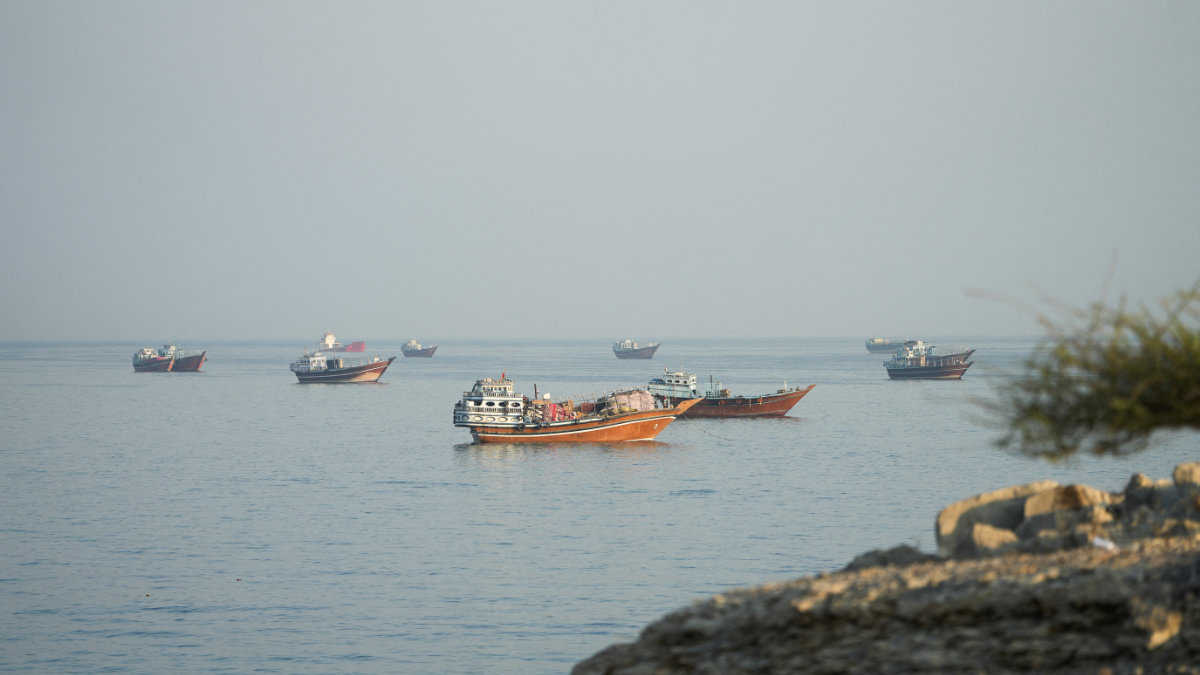
Photo via arabnews.com
US touts 1.5B barrels through Hormuz as Iran escalates mine attacks
CENTCOM claims 95% safe passage while Tehran reports tanker hits and warns off US warships, revealing competing control narratives.
What happened
US Central Command announced Sunday that it has helped Gulf partners export 1.5 billion barrels of crude oil through the Strait of Hormuz since summer, with over 3,000 commercial vessels transiting successfully in the past six months. CENTCOM chief Admiral Brad Cooper visited the strategic waterway and stated that primary transit routes remain free and clear of Iranian sea mines. The US claims over 95% of vessels have passed safely, citing Secretary of State Marco Rubio's recent assertion that Iran has lost complete control of the strait.
Iran's narrative sharply diverges. The Revolutionary Guard claimed October 17 that two supertankers struck naval mines in the strait, each carrying approximately two million barrels of crude. An International Maritime Organization official warned that while Iran maintains an unauthorized shipping corridor, sea mines remain a serious threat that cannot be independently verified as cleared. Iran has demanded permission for transit and warned US warships against entering the Persian Gulf.
The competing claims reflect an intensifying struggle for leverage. US-backed operations have aimed to keep routes open for Gulf oil exports since the February 28 US-Israeli strikes on Iran triggered the conflict. Iran has responded with escalating attacks: in one week in early October, six vessels were struck—the highest single-day total since the war began. October saw a monthly high of 28 attacks recorded by Reuters. Despite this, maritime data shows crude oil exports from the region excluding Iran reached pre-war levels in September, at 16.5 million barrels per day.
Both sides claim control of a waterway through which roughly one-fifth of global oil trade normally passes. The actual security picture remains contested: CENTCOM reports high transit safety, Iran reports fresh mine strikes, and the IMO says verification of mine clearance remains difficult while the conflict continues.
Chanakya's Move
The US move is a strategic claim of victory in operation Project Freedom—establishing a counter-narrative that US military presence has neutralized Iran's blockade and restored Gulf oil flows. By announcing the 1.5 billion barrel milestone and having CENTCOM's commander visit the strait in person, the US seeks to reassure Gulf partners, international markets, and its own stakeholders that the corridor is secure. Iran's mine strike claims and warnings serve as a riposte: Tehran signals it retains disruptive capability and leverage despite US superiority in controlling shipping lanes. The test is whether Iran can sustain mine-laying and attack operations at wartime highs (28 attacks in October) while US mine-clearance and escort operations keep major flows intact. If mine strikes continue to accumulate without causing lasting transit shutdowns, US claims gain credibility; if even sporadic hits raise insurance costs or cause rerouting, Iran's leverage persists despite lower absolute traffic disruption. The long game is about which narrative—open waterway or contested strait—shapes market pricing and shipping behavior.