
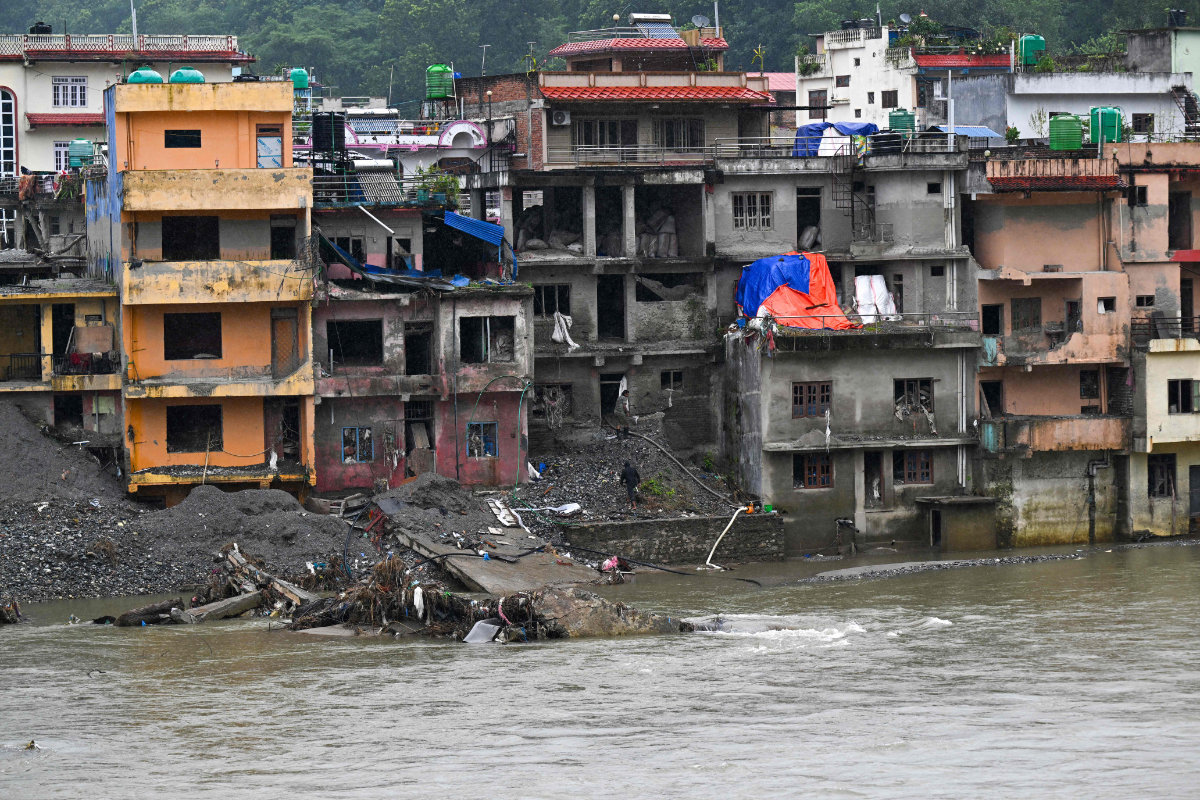
Photo via arabnews.com
UN Climate Fund Allocates $20M to Nepal, But Wealthy Nations Block Precedent
The loss and damage fund's first allocation—for August flood victims—faces internal dispute over whether rapid emergency disbursement could become standard.
What happened
The United Nations' Fund for Responding to Loss and Damage unanimously agreed Thursday to allocate $20 million to Nepal, marking the first time the three-year-old fund has set aside money for any country. The decision came at an extraordinary board meeting held in response to Nepal's August floods, which were triggered by a climate-induced glacier collapse and killed more than 1,400 people with over 5,000 still missing. Nepal's government requested emergency assistance on August 31, prompting developing-country board members to push for an immediate response before the fund's scheduled December meeting.
The $20 million represents the maximum amount countries can request in a single application and covers less than 0.5 percent of Nepal's estimated $4.7 billion reconstruction needs. However, the allocation does not mean Nepal will immediately receive the funds. The country must first submit a formal proposal to the board, which will then approve it—a process with no firm timeline. No money has been disbursed from the fund to date.
The core dispute emerged over whether Nepal's emergency response should establish a model for rapid-disbursement mechanisms. Representatives of Germany, Czech Republic, and Japan stressed the decision should be seen as exceptional and explicitly not set a precedent for the fund's long-term operations. Developed countries resisted committing to fast-track procedures for future climate disasters, citing the need to follow established protocols. The European Union's representative said the decision was "not a precedent" but offered "learning" for the fund's eventual design.
Developing countries countered directly. Pakistan's Ali Tauqeer Sheikh urged colleagues to move faster and told the meeting: "Please do not define the boundaries for learning." He and others argued Nepal's case should inform how the fund structures rapid-response mechanisms for future sudden-onset disasters. The fund currently holds only $350 million with 119 countries seeking a combined $2.8 billion in support, and critics have faulted both the meager funding and the absence of any disbursement mechanism since the fund became operational in 2023.
The allocation signals the fund's willingness to act when faced with visible catastrophe and developing-country pressure, but also reveals its severe constraints. Board co-chair Camila Minerva Rodriguez called the decision "truly historic," yet climate advocates noted the amount underscores how far the fund remains from meeting actual loss-and-damage needs in vulnerable nations.
Chanakya's Move
Developing countries—led by Pakistan and least-developed-country coalition members—used Nepal's visible catastrophe to force developed nations' hand on the fund's first payout. They are betting this establishes a moral and operational precedent that will be harder to resist when COP31 debates the fund's permanent structure in December. Developed nations conceded the allocation to preserve their control over the fund's long-term design, explicitly rejecting rapid-response protocols as standard. The underlying contest is whether the fund becomes a humanitarian instrument for sudden-onset disasters (developing-country model) or a slow, project-based mechanism that distributes funds only after rigorous vetting cycles (developed-country preference). Pakistan's intervention is strategic: having itself suffered catastrophic floods in 2022, it leads the coalition pushing for the rapid-disbursement model. Germany and Japan's defensive positioning suggests wealthy nations fear setting a precedent they cannot afford to replicate across dozens of climate-vulnerable states with pending claims. The outcome of the December model-design debate will determine whether this fund becomes meaningful climate reparations or symbolic commitment.