
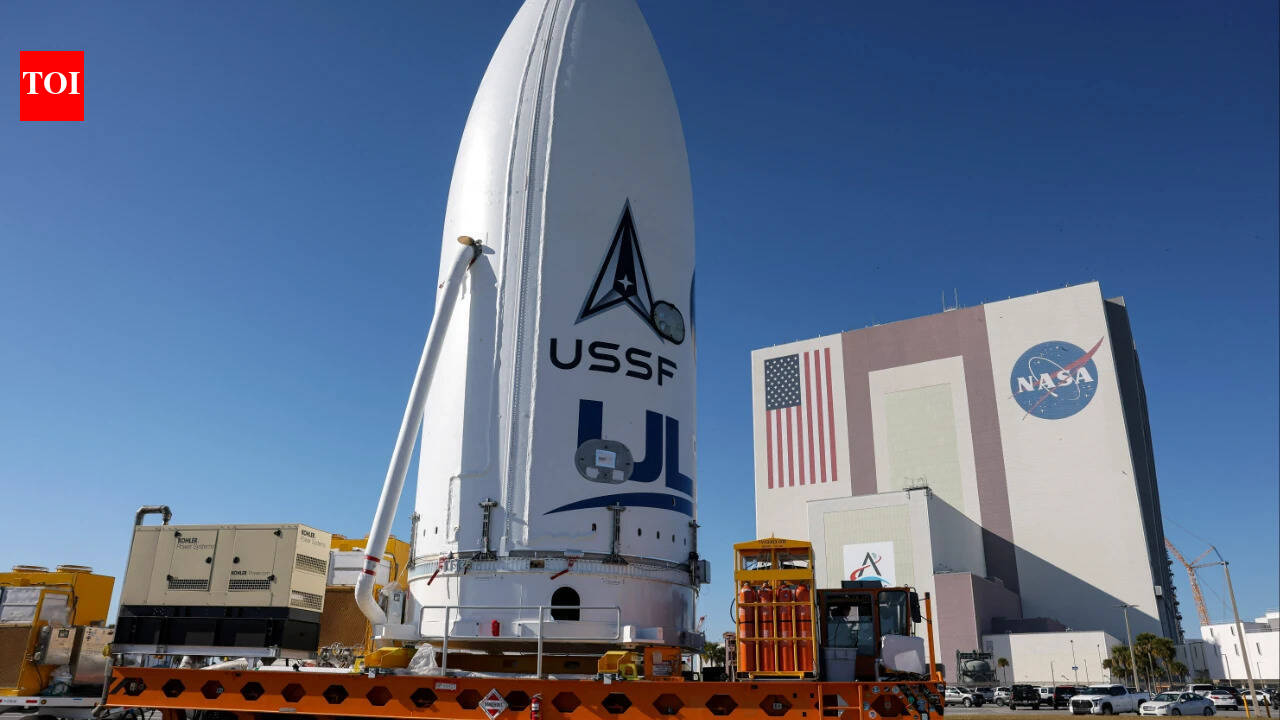
Photo via scmp.com
ULA's Vulcan rocket fails on first Amazon Leo mission
A malfunction in the Centaur upper stage destroyed 40 satellites, marking ULA's first total mission loss in 20 years and delaying Amazon's Starlink challenge.
What happened
United Launch Alliance's Vulcan Centaur rocket suffered an anomaly approximately 10 minutes into flight from Cape Canaveral on November 15, destroying 40 Amazon Leo satellites in the company's first outright mission failure since its 2006 founding. The rocket lifted off carrying the largest batch of satellites Amazon had ever attempted to deploy in a single launch—the first of 38 Vulcan flights purchased to build out its low-Earth-orbit broadband constellation. The malfunction appears to have occurred in the hydrogen-fueled Centaur upper stage during its planned 12-minute-and-15-second burn sequence. ULA said it does not yet have enough data to determine what went wrong and will conduct a technical investigation before returning to flight.
The failure is a major setback for both companies. Amazon Leo has approximately 396 satellites in orbit and needs to deploy more than 3,200 total to compete with SpaceX's dominant Starlink network, which already has over 10,000 satellites in operation. Amazon had targeted initial commercial service launch in late 2026 and was racing to meet a revised FCC regulatory deadline to have half its constellation operational by 2029. The loss of 40 satellites and the expected grounding of Vulcan during investigation will delay Amazon's deployment timeline and could push back service availability.
For ULA, the failure comes after a nine-month grounding (February–November 2026) triggered by booster anomalies on two earlier Vulcan flights. The rocket was attempting to demonstrate reliability after returning to flight. Amazon said it views ULA as a "trusted partner" and believes the company will "learn from this mission and deliver on their long-term plans," but the failure raises questions about near-term launch cadence and ULA's ability to execute its ambitious manifest of commercial and national security missions.
The precise cause remains under investigation. Previous Vulcan flights encountered problems with solid rocket booster nozzles supplied by Northrop Grumman, but the failure signature on this mission suggests the issue occurred after stage separation, in systems ULA controls directly.
Chanakya's Move
This is ULA's strategic inflection point failing. The company bet heavily on Vulcan as its flagship next-generation rocket to replace aging Atlas V inventory and compete with SpaceX. After a costly nine-month grounding earlier in 2026, Vulcan was supposed to demonstrate reliability on this high-profile Amazon commercial mission to restore confidence with customers (both commercial and national security). Instead, a catastrophic failure on return-to-flight signals deeper engineering or quality-control problems. Amazon will now face pressure to diversify its launch provider base or accelerate negotiations with other rockets, potentially weakening ULA's grip on the 38-launch contract. ULA's counter-move is transparent: a thorough investigation, transparent communication, and aggressive corrective action to prove Vulcan can be fixed. But if the investigation takes months, ULA risks losing additional national security contracts to SpaceX, compounding the competitive damage.