
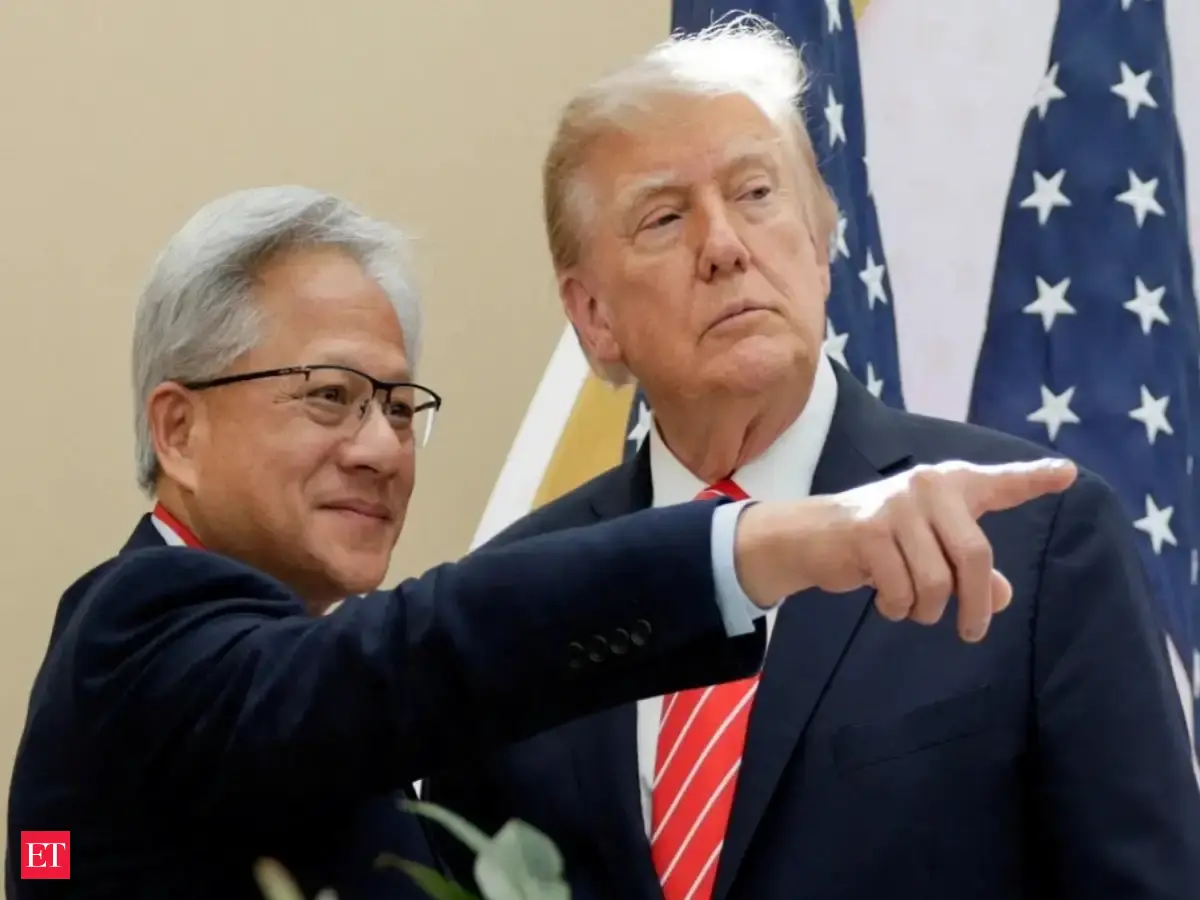
Photo via hindustantimes.com
Trump defends Huang's Nvidia return, dismisses security concerns
The president doubled down on his intervention to reinstate the CEO weeks after intelligence agencies flagged the woman he had an affair with as potentially tied to China.
What happened
President Trump publicly defended his administration's campaign to reinstate Jensen Huang as Nvidia CEO on Thursday, saying he had seen sufficient information that Huang posed no national security threat. Trump told reporters at Mar-a-Lago that he believed Huang was "absolutely fine" based on "information I have, which is a lot of information." The statement came days after Nvidia's board voted unanimously to reinstate Huang on November 23, just 11 days after his resignation.
Huang stepped down following disclosure of extramarital affairs, including one with Alice Huang (no relation), a business executive whom U.S. intelligence agencies had flagged with concerns that she was passing information to Beijing. However, recent intelligence briefings told Congress there was no evidence Alice Huang was directed by Chinese intelligence to spy on Jensen Huang, though investigations into Nvidia and its supply partners remain ongoing.
Trump's intervention was central to the board's reversal. He personally assured Nvidia's directors that Huang posed no legal or national security risk, with Vice President JD Vance coordinating directly with the board and Huang. Trump told CNBC he "made the deal," citing concerns that Nvidia's plummeting stock price—which fell nearly 28% between Huang's resignation and the reinstatement—threatened broader economic stability. When asked if the stock decline influenced his view, Trump said "probably so."
Trump is scheduled to attend a groundbreaking ceremony on December 4 for TSMC's expanded chip manufacturing facility in Phoenix, Arizona. The visit follows his reinstatement campaign and signals continued administration support for the semiconductor industry amid competitive pressures from China. Huang is scheduled to appear before the Senate on December 3, the day before Trump's Arizona visit.
Chanakya's Move
Trump's move: Reinstate Huang and use the TSMC groundbreaking to cement the narrative that keeping Huang in place protects American technological dominance against China. The bet is that market stability and AI leadership advantage outweigh the espionage risk. What he's relying on: Stock price rebound and no new disclosures; continued ambiguity about Alice Huang's true intelligence status (which intelligence community has now muddied by declining to confirm active direction). What could counter it: Congressional testimony from Huang or new evidence from ongoing investigations that contradicts the "no threat" assurance; revelation that Commerce Department was indeed granting favorable treatment to Nvidia/Megaspeed due to political pressure, exposing export control violations; or Chinese intelligence disclosure of compromising material, turning Trump's guarantee into liability.