
Photo via dw.com
Ukraine Drone Raids Shut All Moscow Airports
Four major airports halted flights for hours on October 23 as Ukrainian drones targeted the capital, disrupting over 340 flights in the fifth closure this month.
What happened
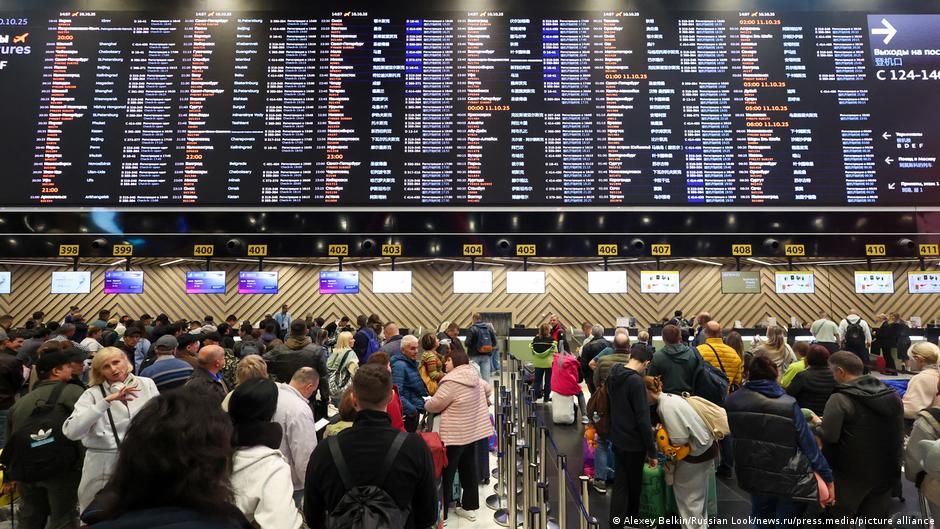
All four of Moscow's main airports suspended arrivals and departures on the afternoon of October 23 following a Ukrainian drone attack on the Russian capital. Rosaviatsiya, Russia's Federal Air Transport Agency, announced restrictions at Sheremetyevo, Domodedovo, Vnukovo, and Zhukovsky airports at 2:05 p.m. local time. Passengers at Sheremetyevo, Moscow's largest airport, were directed to shelters after an air alert was sounded, with some evacuated from aircraft on the tarmac.
Photos circulated on social media showing drone debris on the runway, though independent verification was not possible. Moscow Mayor Sergey Sobyanin reported that air defense forces shot down 17 to 21 drones heading toward the city. Flight-tracking data indicated over 340 flights were delayed or canceled, with some aircraft diverted to alternate airports.
The incident marks the fifth major airport closure in October and follows an escalating campaign of drone strikes. Separately, reports indicated a missile strike hit the Proton plant in Oryol, a semiconductor facility linked to Russia's defense production. Ukraine has not officially confirmed organizing these operations, though the pattern aligns with what media outlets have termed 'Operation M&Ms,' an unofficial campaign to disrupt Russian civilian air traffic. Moscow's airports were closed for a total of 101 hours during the first two weeks of October, more than double the 46 hours for all of September.
Chanakya's Move
Ukraine is executing a sustained attrition campaign against Moscow's civilian aviation and supporting military-industrial infrastructure. The pattern—described by media as Operation M&Ms—targets both logistics (airports) and weapons production (semiconductor plants), forcing Russia to maintain constant air defense overhead while imposing cumulative economic costs on civil aviation and commerce. Ukraine has strategically neither claimed nor denied the campaign, leaving Russia unable to respond diplomatically or militarily in kind without risking escalation. Zelenskyy's September warning to airlines about dangerous Russian airspace telegraphed the intent without triggering formal retaliation. Russia's counter-move is primarily defensive: air defense interceptions and temporary flight restrictions that harm its own economy. Ukraine bets that sustained disruption to Moscow's air links—affecting both regime mobility and international commerce—will impose political costs that may eventually shift calculations toward negotiation, while avoiding the legal and diplomatic risk of openly targeting civilian infrastructure. Russia can counter by significantly improving air defense (expensive and time-consuming) or negotiating, both costly options.