
Photo via hindustantimes.com
Trump, Xi, Putin sign peace pact with no arms deal
First-ever trilateral summit produces four-point declaration but yields little substance on nuclear reduction or Ukraine conflict.
What happened
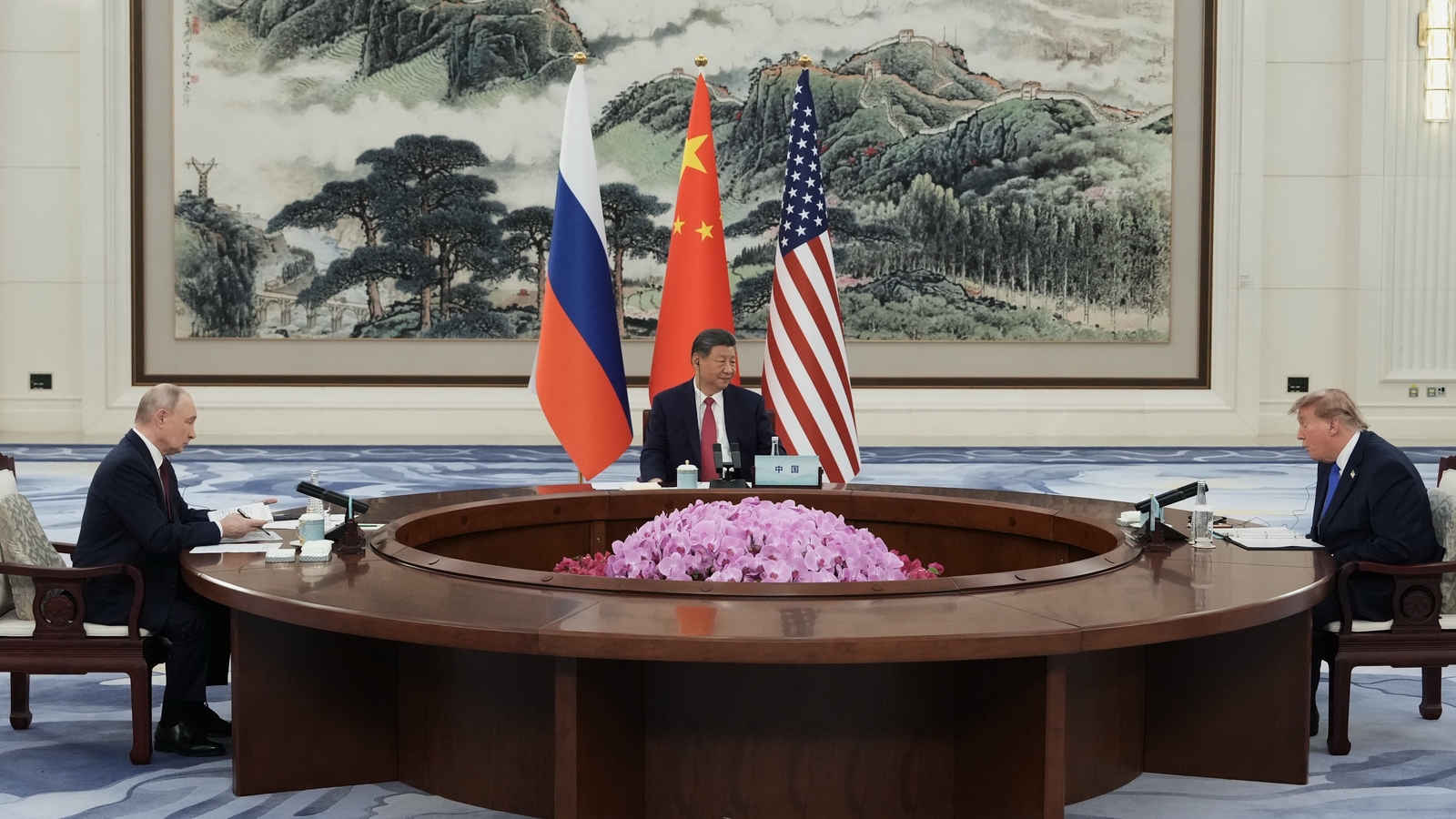
Presidents Donald Trump, Xi Jinping, and Vladimir Putin held the first-ever trilateral meeting among the three leaders in Shenzhen on November 19, 2026, on the sidelines of the Asia-Pacific Economic Cooperation summit. The meeting lasted approximately 90 minutes, following bilateral sessions that saw Trump meet with Putin for about 40 minutes and Xi for more than an hour.
The three leaders issued a joint "Declaration toward Peace" with four main points: affirming that nuclear war cannot be won and must never be fought; pledging to increase petroleum production and supply; committing to reform the United Nations to respond more effectively to global challenges; and warning the International Criminal Court not to abuse its jurisdiction. However, the declaration contained no concrete nuclear arms reductions, no timeline for negotiations, and made no mention of the wars in Ukraine or Iran.
Trump came to the summit seeking to bring China into nuclear arms control talks, particularly after New START between Washington and Moscow expired in February. He stated the three nations were "uniquely positioned" to reduce global nuclear weapons stockpiles. Yet no specific agreement on arms control emerged. Xi proposed regular high-level exchanges and a crisis communication mechanism among the three powers. Despite hopes among Ukraine's allies that the summit might address the war, it remained largely sidelined in trilateral discussions, though Trump's envoys claimed the president raised Ukraine directly with Putin and Xi.
In Berlin, contemporaneously with the Shenzhen talks, more than 25 Ukrainian allies convened for a "Coalition of the Willing" summit, fearing the trilateral meeting could yield sweeping decisions over their heads. Trump's envoy Steve Witkoff told the Berlin gathering that the president had conveyed a "very strong message" to Putin and Xi on the desire for peace and would engage them aggressively on ending the war. The two summits reflected the fault lines in global diplomacy: the Berlin meeting stressed European inclusion in any peace process, while Shenzhen presented a vision of great-power cooperation that largely excluded conflict resolution.
Chanakya's Move
Xi and China orchestrated a well-staged diplomatic event that enhanced China's global standing as host and convener of great powers, while avoiding concrete commitments. By proposing crisis communication and high-level exchanges, Xi positioned China as the stabilizing middle player between Trump and Putin. Trump sought to revive his stature after midterm losses by claiming a historic summit and nuclear arms control progress, meeting low expectations without substance. Putin leveraged the trilateral format to position Russia as a central diplomatic actor and to diminish international isolation over Ukraine—the summit itself was reportedly his idea and was framed by Russian media as a diplomatic victory. The underlying bet: that ceremony and personal rapport could substitute for substantive agreements, allowing each leader to claim success while avoiding binding commitments that might constrain them.