
Photo via economictimes.indiatimes.com
Trump and Xi frame competition as rivalry, not warfare—but major rifts remain unresolved
At their first summit in Washington in over a decade, the US and Chinese leaders extended their trade truce and agreed to talk AI safety. Yet differences over Taiwan, Iran, and tech control persist beneath the warm rhetoric.
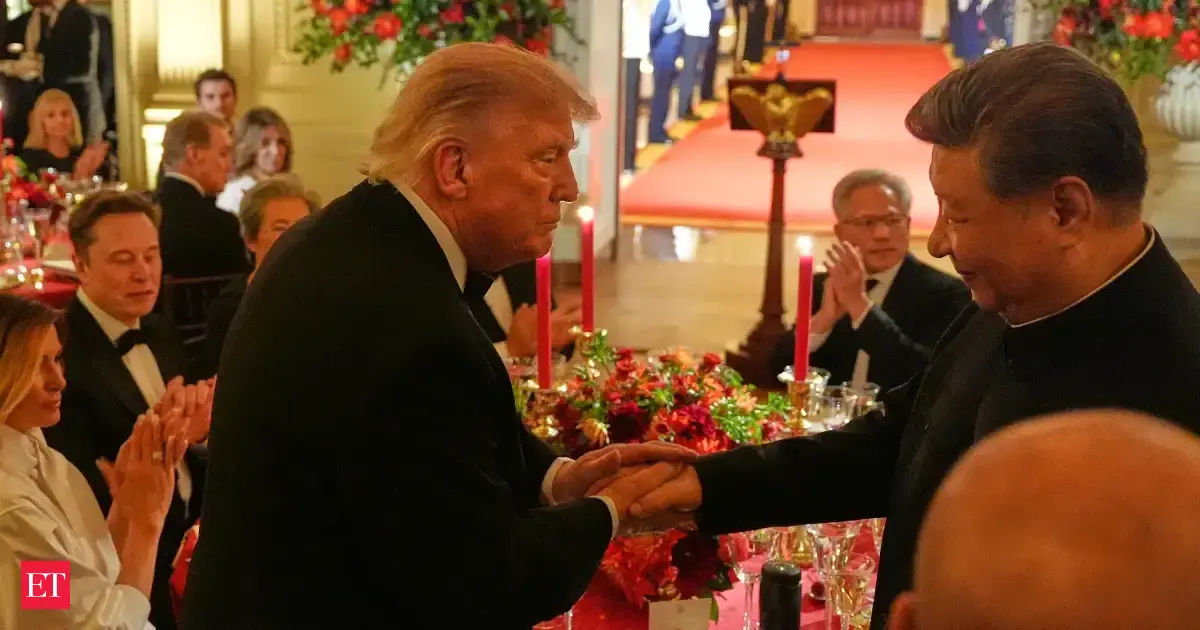
Chinese President Xi Jinping arrived in Washington on Wednesday for his first state visit in 11 years, landing to an unusual welcome: Trump met him at Joint Base Andrews, the first time a sitting US president has greeted a foreign leader at that base in over a decade. The two held a bilateral meeting Thursday morning in the Oval Office that lasted roughly an hour. Xi emphasized in opening remarks that competition between the superpowers should be healthy and bounded—"a race of catching up with one another, not a wrestle in which when either wins, or loses." Trump reciprocated, describing Xi as a "truly great friend" and saying the two had "made tremendous strides" on bilateral issues. On trade, the most concrete outcome: the US and China agreed to extend their temporary trade truce, originally set to expire in November, through January 10, 2027. Treasury Secretary Scott Bessent announced the two-month extension just as Xi landed. The "Busan Agreement," struck at an October 2025 summit in South Korea, had suspended some tariffs and rare earth export controls. The extension preserves that relief but leaves core trade disputes unresolved—current tariffs on Chinese goods still run above 30 percent, and China has not fulfilled earlier commitments on agricultural purchases and market access. On artificial intelligence, both sides signaled willingness to discuss safeguards and incident-notification mechanisms to avoid dangerous AI-related mishaps. Xi said the two countries have "great scope for cooperation" in AI despite competing fiercely in the sector. Trump indicated he wanted to "leave it exactly where it is" and pursue no major policy moves. Analysts expect any AI agreement to be symbolic rather than substantive, with both sides continuing to race for advantage. Taiwanremained contentious. Xi pressed Trump to ensure the US opposes Taiwan independence, a longstanding red line for Beijing. Trump did not publicly commit to new restrictions on Taiwan policy. On Iran, Xi called for US-Iran negotiations and China's return to a 14-point agreement; Trump has resisted appeals to seek Chinese mediation in the conflict. By evening, the leaders hosted each other at a state dinner attended by tech executives including Elon Musk and Sam Altman, maintaining warm public messaging despite these underlying disagreements.