
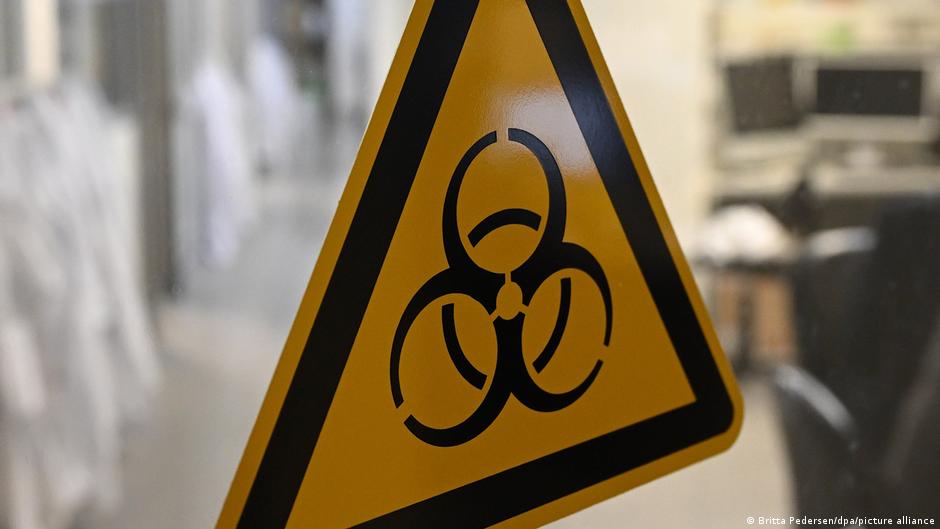
Photo via dw.com
Russian lab worker dies of suspected pneumonic plague, nearly 200 placed under observation
A 28-year-old technician at the Irkutsk Anti-Plague Institute reportedly broke a test tube containing plague bacteria on September 25 and died of pneumonia a week later. Moscow has been cautious about disclosing details, while the US and EU call for transparency.
What happened
A laboratory worker at Russia's Irkutsk Anti-Plague Institute in Siberia has died following what media reports identify as exposure to pneumonic plague bacteria. The woman, identified by Russian media as 28-year-old Darya Shipilova, reportedly told hospital staff she had accidentally broken a test tube containing live Yersinia pestis bacteria while collecting samples on September 25. She was hospitalized on September 29 with severe pneumonia symptoms, placed on a ventilator, and died on October 2. Russian health authorities have officially described her death only as "pneumonia of unknown aetiology," avoiding explicit confirmation of a plague diagnosis.
Authorities in Irkutsk have placed nearly 200 people under medical observation, including healthcare workers and others who had contact with the deceased. The Shelekhov district hospital where she was treated was placed under quarantine. Russia's chief state sanitary doctor, Anna Popova, traveled to Irkutsk to oversee the response. Public events were cancelled, and a criminal investigation into potential health safety violations was opened. As of early October 5, regional officials reported that observed contacts showed no symptoms and tested negative.
Russia's Federal Agency for Consumer Protection, Rospotrebnadzor, has stated that its testing found no microorganisms associated with the worker's professional activities, suggesting it has not confirmed plague as the cause of death. The Kremlin directed citizens to rely only on official statements from federal health authorities, pushing back against reports from independent Russian media outlets.
Western governments are monitoring the situation closely and pressing Moscow for more information. The US State Department urged Russia to "share accurate information quickly and openly." The European Commission is coordinating with the European Centre for Disease Prevention and Control and said it is in "very close" contact with WHO. The World Health Organization said it was aware of reports but that "no cause of death has been officially confirmed" and that "based on unofficial information available, the public health risk to the general population appears to be low." Some US politicians have called for restrictions on air travel between the US and Russia until the situation is clarified.
Chanakya's Move
Russia is playing a narrow communication game: contain panic domestically while limiting international scrutiny. By labeling the death "pneumonia of unknown aetiology" rather than confirming plague, Moscow avoids triggering mandatory WHO notifications under the International Health Regulations, while directing citizens to trust only official statements. This strategy assumes the quarantine will hold and secondary cases will not emerge. The bet is that time and negative test results on contacts will let the incident fade before Washington or the EU can leverage it politically. The counter-move for Western governments is sustained diplomatic pressure via the WHO and intelligence collection to verify the cause of death and monitor for unreported cases—any evidence of containment failure would expose Russia's reticence as a cover-up, potentially triggering sanctions on research institutions or travel restrictions.