
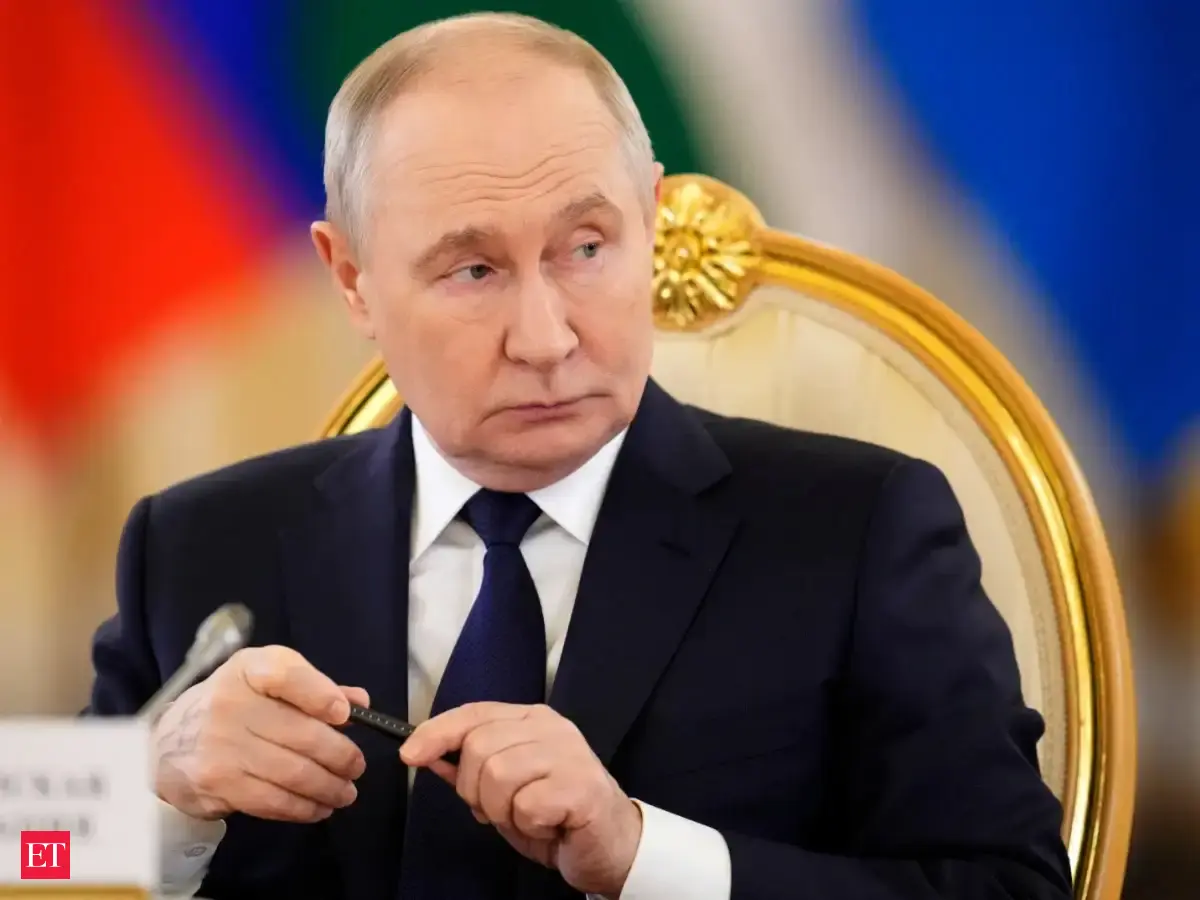
Photo via economictimes.indiatimes.com
Russia warns UK of 'serious consequences' over G20 presidency
Moscow threatened Britain after London said Putin won't attend the 2027 Manchester summit due to UK sanctions.
What happened
On November 16, Russia issued a formal warning to Britain that it would face 'serious consequences' if it attempts to curtail Moscow's rights when London assumes the G20 presidency in 2027. The warning, delivered by Marat Berdyev, Russia's ambassador-at-large for G20 and APEC affairs, came less than two weeks after British Prime Minister Andy Burnham told The Economist that Russian President Vladimir Putin would not travel to the Manchester summit in November 2027 because of UK sanctions related to Russia's invasion of Ukraine.
Burnham's remarks have created a diplomatic tension around the norms of G20 participation. While he said Putin will not be invited, he acknowledged that Russia cannot be simply excluded because it remains a full G20 member. The Russian Foreign Ministry argues that the country holding the rotating G20 presidency does not have the right to dictate terms or decide who participates in the forum's work.
The dispute unfolds against a sharply different approach from the United States. The Trump administration has invited Putin to the G20 summit it is hosting in Miami in December 2026, keeping open the possibility of his attendance. Britain, by contrast, is maintaining its longstanding policy of not engaging directly with Russian officials since the 2022 invasion of Ukraine, applying that principle to the G20 host role.
Russia remains a G20 member despite Western efforts to isolate it over the Ukraine war. The group has no formal procedure for expelling a country through a host government's invitation decision, leaving ambiguous what Russia's actual status and participation rights will be during the British presidency.
Chanakya's Move
Russia is signaling that it will not accept de facto exclusion from the G20 without contest. By issuing a formal warning before Britain even assumes the presidency, Moscow is placing a marker: any attempt to restrict Russian participation below the level of head of state could trigger countermeasures (economic, diplomatic, or procedural). Russia's move is defensive—protecting its seat at the table as geopolitical isolation deepens—but also tactical: it sets expectations that if Britain wants to exclude Putin on sanctions grounds, Russia will demand full clarity on what rights it retains and may demand reciprocal concessions. Britain's counter-move is to draw a distinction between Putin personally (subject to sanctions) and Russia as a member (which cannot be excluded). But that distinction is fragile: it assumes Russia will accept deputy-level representation when the head of state is barred, an assumption Russia has not affirmed. Trump's invitation to Putin in Miami, by contrast, signals an openness to Russian participation that could become leverage for Moscow—allowing it to claim that Britain alone is politicizing the G20.