
Photo via scmp.com
Poland suspends court chief as Tusk and opposition clash
Constitutional tribunal president ousted in one-month suspension as police deploy and President Nawrocki turns plane around mid-flight.
What happened
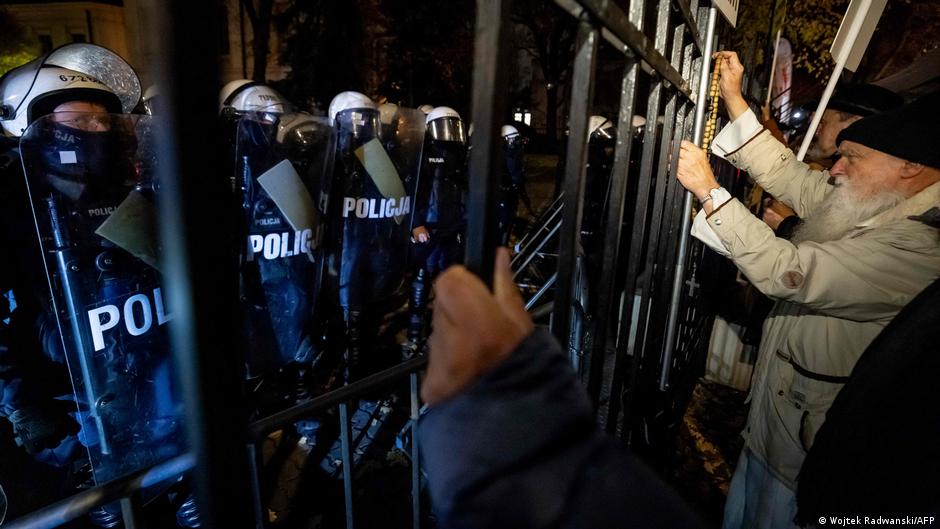
Poland's Constitutional Tribunal descended into chaos on October 30 when judge Anna Korwin-Piotrowska announced the one-month suspension of tribunal president Bogdan Święczkowski and vice president Bartłomiej Sochański. Police deployed to the court's Warsaw premises as dozens of protesters, primarily supporters of the opposition Law and Justice party (PiS), gathered outside. Police detained three people after some protesters attempted to breach the court's fence.
President Karol Nawrocki cut short his journey to Senegal and ordered his plane to return to Warsaw, saying "at a moment like this, the president must be in Poland." Prime Minister Donald Tusk defended the move as "restoring the rule of law," while Święczkowski's supporters and the tribunal's official social media account rejected the suspension's validity, calling it a "coup d'état." The tribunal's website was compromised during the confrontation, though its social media account denied that Korwin-Piotrowska held legitimate authority to suspend the two judges.
The crisis reflects years of deadlock over the tribunal's composition. Nawrocki, aligned with PiS, has refused to swear in three judges nominated by the current parliamentary majority, while Święczkowski blocked judges elected by that same majority from assuming their posts. Tusk's pro-European government has questioned the tribunal's legitimacy since judges appointed under PiS remain on the bench, ignoring its rulings since taking office in 2023.
Chanakya's Move
This is Tusk's move to break a stalemate that has left Poland's highest court non-functional. He is betting that by deploying police and forcing the issue while Nawrocki was abroad, he could present a fait accompli: a court purged of PiS-era judges and under government-friendly leadership. His gamble rests on the EU and international community accepting the framing of this as judicial restoration rather than executive overreach. What could counter it: Nawrocki's return and symbolic occupation of the tribunal by the president; international—especially EU—criticism framing this as unconstitutional; court rulings (if either faction can claim authority) that reverse the suspension; or sustained street pressure from PiS constituencies that forces Tusk to negotiate rather than consolidate. The 2027 election looms; Tusk appears to be trying to eliminate a major veto point before voters choose.