
Photo via economictimes.indiatimes.com
Musk Winds Down Cybertruck Production at Texas Plant
Tesla will halt production of its polarizing pickup at Gigafactory Texas around mid-2027 to free capacity for Cybercab robotaxi manufacturing.
What happened
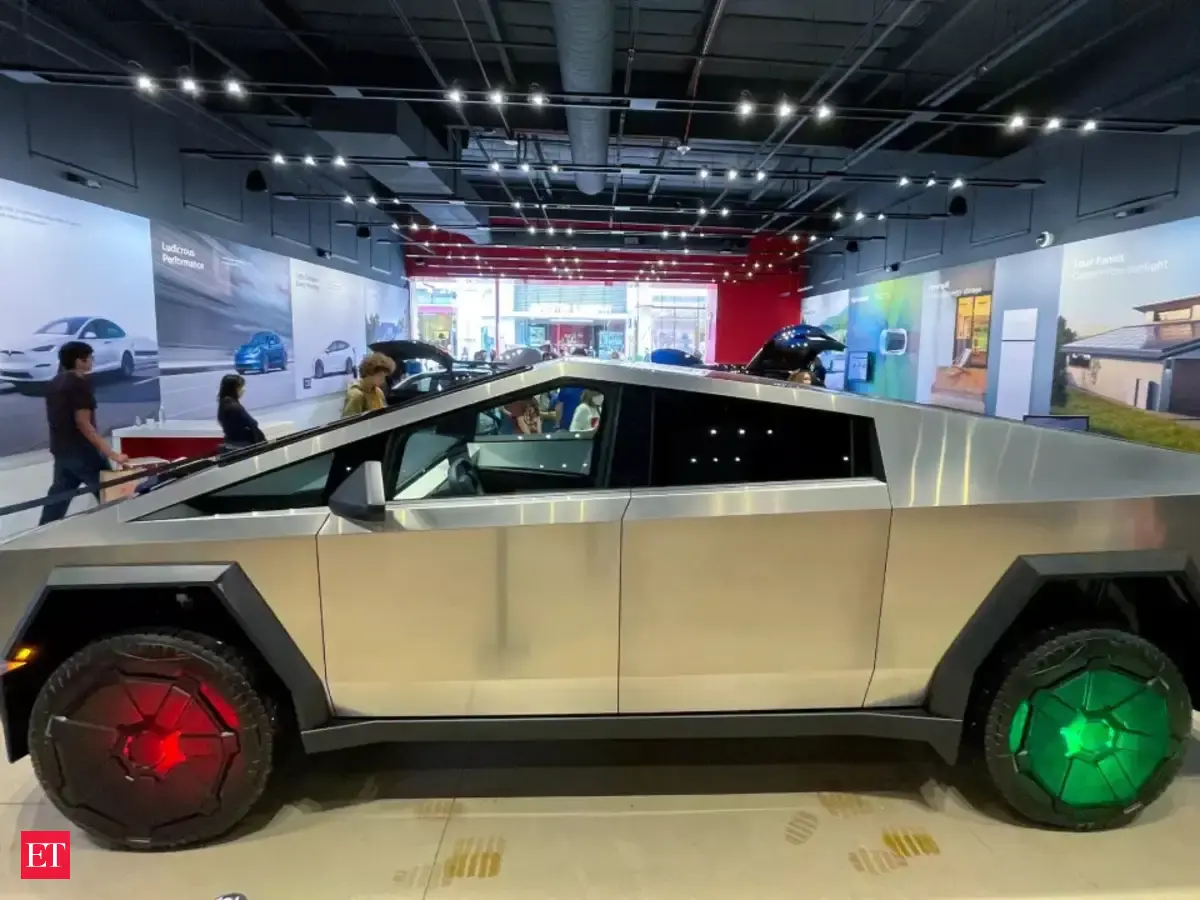
Tesla CEO Elon Musk announced Friday that the company will wind down Cybertruck production at its Texas Gigafactory around mid-2027, shifting factory capacity toward manufacturing of the Cybercab robotaxi. The decision ends the production run of a vehicle that sold roughly one-tenth of the 250,000 annual units Musk had once projected. The Cybertruck faced years of persistent production challenges, from multiple manufacturing delays since its 2019 unveiling to at least 11 recalls covering issues including accelerator pedals, windshield wipers, and loose body panels.
Last year, U.S. sales fell 48 percent to an estimated 20,237 units, down from 38,965 in 2024. The vehicle, while gaining what analysts described as a niche following, never achieved mass-market adoption despite its distinctive stainless-steel design. Musk said the production wind-down would enable increased output of the Cybercab, which Tesla began offering paid robotaxi rides with in Austin in September.
In a subsequent X response, Musk characterized the wind-down as "the end of an era," while also stating that the existing Cybertruck fleet would "be around for a long time."
Chanakya's Move
Musk is executing a strategic pivot from product-line expansion to technology platform consolidation. Rather than fix the Cybertruck or move it to another factory, he is signaling that Tesla's capital and floor space are now bet entirely on autonomy and robotics—Cybercab, Optimus humanoid robots—not traditional vehicle sales. The Cybertruck becomes a technology development project (steer-by-wire, rear-wheel steering) whose innovations feed the Cybercab rather than a growth driver in its own right. This move tells investors Musk sees Tesla's future as an AI/robotics company, not a truck manufacturer. The bet requires two things to pay off: (1) Cybercab demand must materialize and justify the factory pivot, and (2) political risk around Musk's Trump administration involvement—which dampened Cybertruck sales in 2025—must not undermine Cybercab adoption or Tesla's broader market position. A counter-move would be heavy legacy automaker investment in electric pickups that exploit Cybertruck's exit gap, though Ford and GM have already committed to EV truck lineups.