
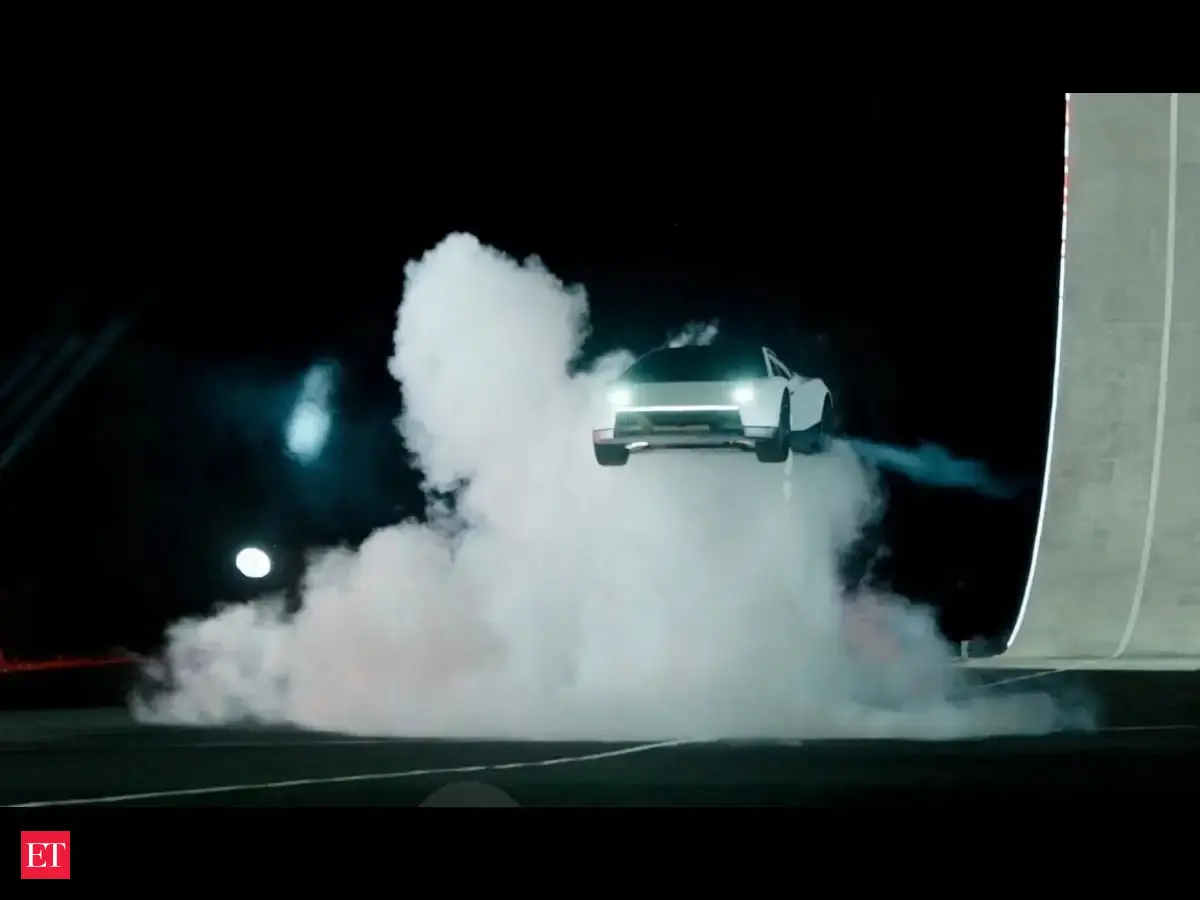
Photo via economictimes.indiatimes.com
Musk Unveils Tesla Roadster With SpaceX Thrusters
The long-delayed electric sports car uses cold-gas thrusters to briefly leave the ground, but production won't start until 2028.
What happened
Elon Musk unveiled Tesla's next-generation Roadster on Thursday at a SpaceX test facility in Waco, Texas, demonstrating a vehicle equipped with cold-gas thrusters and a suction system that could briefly launch into the air, perform midair flips, and land safely. The prototype accelerated from 0 to 60 mph in 0.81 seconds and hung upside down on a curved ramp using fan-based downforce. Tesla plans to offer three variants—Performance, Thrust, and Rocket (invite-only, single-seat flying version)—with deposits starting at $50,000, though no final price was announced.
Production is scheduled to begin in 2028, nearly a decade after Tesla first unveiled the redesigned Roadster in 2017. The flying model is not approved for public road use. Tesla stock fell 2-3% on Thursday amid a broader tech sector selloff, though shares recovered partially on Friday with modest gains.
Chanakya's Move
Musk's move is primarily theatrical—a spectacle that generates attention and keeps Tesla in the cultural conversation at a moment when the company faces valuation pressure and upcoming earnings. The invite-only flying version and single-seat design ensure it will never move significant revenue, but the engineering feat itself (cold-gas thrusters, suction system, 0.81-second acceleration) is real and burnishes Tesla and SpaceX's engineering brand. By linking the Roadster to SpaceX technology and holding the event at a SpaceX facility, Musk signals technological synergy between his two companies and raises speculation about deeper integration—some analysts immediately began speculating about a Tesla-SpaceX merger. The risk: if production misses 2028 again (as Tesla's track record suggests), the narrative flips from visionary engineering to overpromising on delivery. Wall Street's lukewarm response—stock decline despite enthusiasm in social media—suggests institutional investors are pricing in both the regulatory hurdles and the track record of delays.