
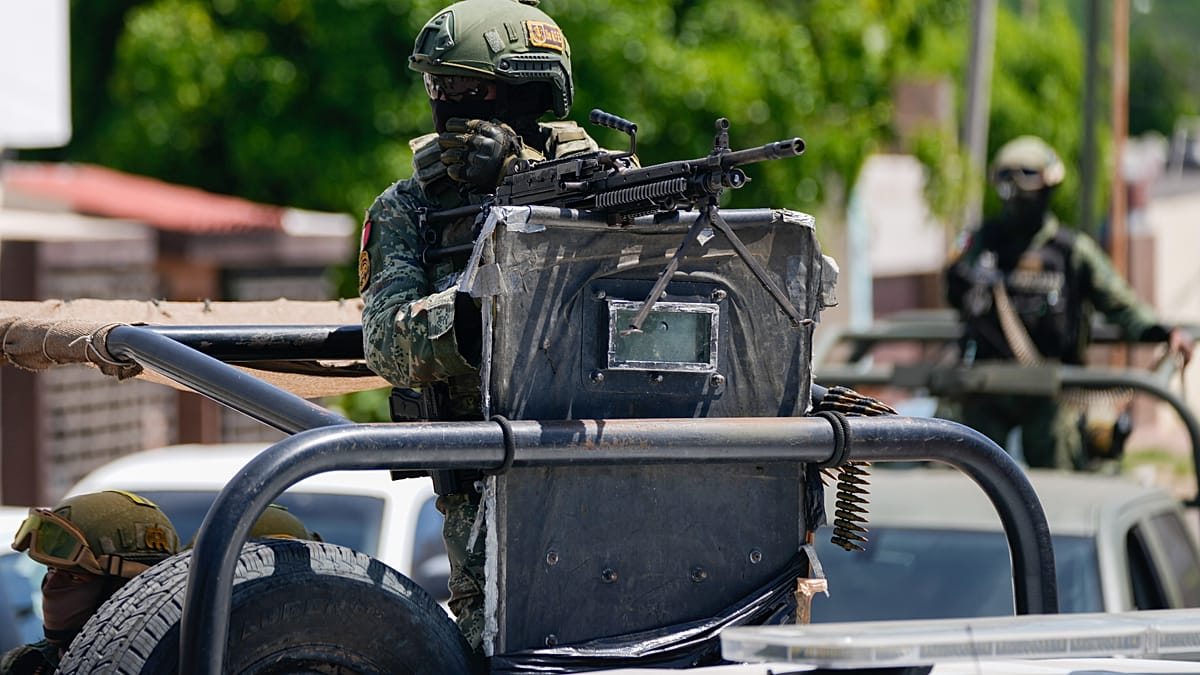
Photo via euronews.com
Mexico Arrests FBI's Top Cartel Boss El Chapo Isidro
Fausto Isidro Meza Flores, fugitive on FBI's 10 most-wanted list with Trump admin help, faces violence that experts warn may destabilize an already fractured Sinaloa cartel.
What happened
Mexican special forces arrested cartel leader Fausto Isidro Meza Flores, known as "El Chapo Isidro," in Guasave, Sinaloa on November 20 in an operation aided by intelligence from the Trump administration. Meza Flores, one of the FBI's 10 most-wanted fugitives with a $5 million reward on his head, was wanted in the U.S. for trafficking fentanyl, cocaine, heroin and methamphetamine. His capture marked a significant law enforcement win after he evaded authorities for over a decade following his 2012 indictment.
The arrest set off immediate violence in the region. Gunfire erupted, vehicles burned, and roadblocks formed as cartel gunmen clashed with Mexican forces. Military personnel came under attack with gunfire and explosives during the operation, though no immediate casualties from the raid itself were reported. The violence sent civilians fleeing, with some disrupted even during a baseball game.
Meza Flores led the Meza-Flores Transnational Criminal Organization and controlled a faction of the Beltrán Leyva organization. He was also a key ally to "Los Mayos," a Sinaloa Cartel faction that the Trump administration designated a foreign terrorist organization last year. The Trump administration and Mexican authorities celebrated the arrest as a security win, with Mexico's security secretary Omar García Harfuch calling it "an important step in pacifying Sinaloa."
Experts and analysts cautioned that the arrest could trigger further violence. The region is already caught in a power struggle between warring cartel factions, and removing a major leader often sparks disputes over succession. Some analysts noted that while leadership is disrupted, the underlying criminal network—its street-level dealers, corruption networks, and logistics—remains intact, limiting the arrest's long-term impact on drug flows.
Chanakya's Move
Trump's bet: By aiding Mexico in capturing one of the FBI's most-wanted traffickers, Trump demonstrates that US pressure on Mexico's government produces concrete results. This validates his campaign message of aggressive cartel-busting and builds political capital for future demands. The move pairs enforcement pressure (targeting Los Mayos, now a designated terrorist organization) with operational cooperation, signaling to both cartels and the Mexican government that the administration will follow through. Mexico's calculation: President Claudia Sheinbaum faces Trump's demands to crack down on cartels; this arrest shows compliance and delivers a rare, high-profile win. However, it also exposes Mexico to blowback—the violence that erupted shows the costs of such operations and their unpredictability. What could counter it: The Los Mayos faction or Meza Flores's subordinates could retaliate against Mexican security forces or civilian targets. A larger cartel war in Sinaloa could overwhelm Mexican forces and complicate future cooperation. If the arrest fails to disrupt actual drug flows (a real risk, given the organization's size), critics will cite it as evidence that targeting kingpins alone does not solve the drug problem—potentially weakening Trump's argument for escalated pressure tactics.