
Photo via ndtv.com
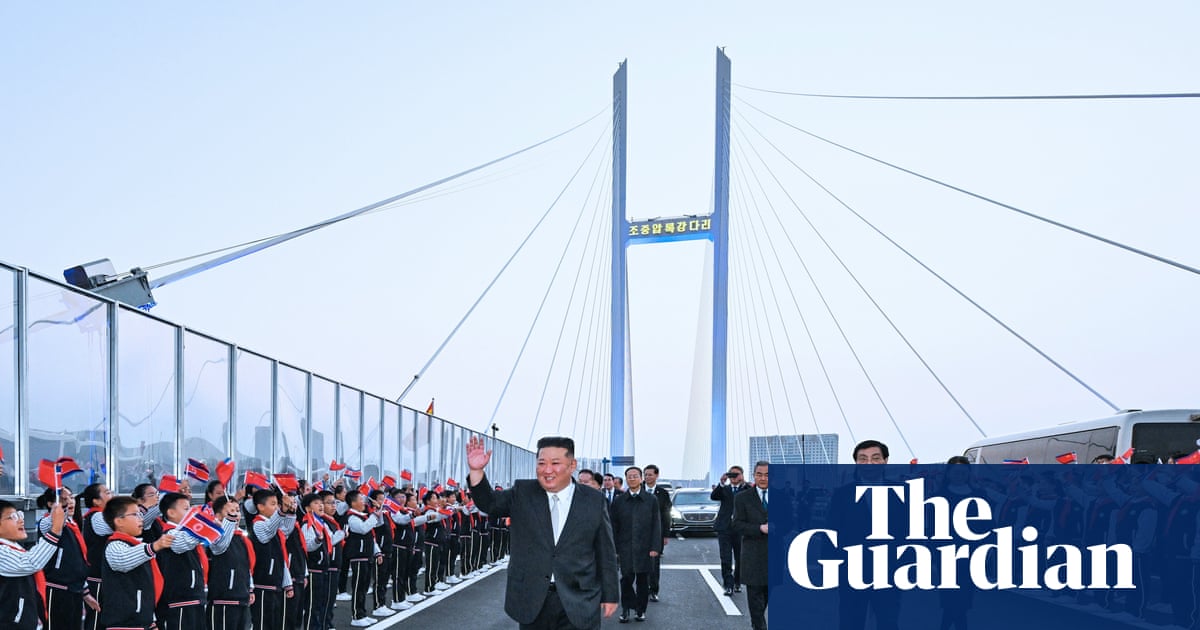
Kim Jong Un Visits China via New Border Bridge
The North Korean leader crossed a newly opened trade crossing to meet with Beijing's fourth-highest official, signaling warmer ties and plans for expanded bilateral commerce.
What happened
North Korean leader Kim Jong Un visited the Chinese border city of Dandong on Saturday, crossing the newly opened New Yalu River Bridge in a symbolic move timed to coincide with the eve of China's Korean War anniversary. The bridge, which opened on October 15 after more than a decade of delays, connects Sinuiju in North Korea to Dandong and was built to accommodate round-the-clock two-way traffic including container shipments and heavy cargo trucks.
Kim met with Wang Huning, a member of China's Communist Party Standing Committee and the country's fourth-highest-ranked official, who conveyed greetings from President Xi Jinping. The two toured an automobile factory in Dandong and visited a Korean War memorial, where Kim paid tribute to Chinese soldiers who fought in the 1950-1953 conflict. Both sides pledged to strengthen bilateral cooperation, with Kim stating that North Korea stood ready to expand practical cooperation with China.
The visit marks Kim's first trip to China in over a year, following his attendance at China's Victory Day events in September 2025. It comes as Kim has sought to balance closer ties with both China and Russia after prioritizing Moscow in recent years, when he sent troops to support Russia's war in Ukraine. Analysts view the bridge opening and Kim's visit as signals that Beijing and Pyongyang intend to expand trade despite international sanctions on North Korea, which depends on China for nearly all its external commerce.
Kim was expected to return home the same day. Neither Chinese nor North Korean state media had immediately reported the visit by Saturday afternoon, though China's official Xinhua News Agency confirmed his arrival and the details of his meetings in Dandong.
Chanakya's Move
Kim's move is a deliberate recalibration of North Korea's great-power balance. After prioritizing Russia over the past two years—sending troops to Ukraine and securing Putin's backing—Kim faces a strategic problem: deepening dependence on Russia invites Chinese anxiety and reduces his leverage with both powers. By crossing the new bridge in person and meeting China's fourth-highest official, he signals to Beijing that North Korea values the China relationship and that the bridge—delayed for years—is now operational. Wang Huning's emphasis on 'economic and trade cooperation' reframes the relationship around shared interests in regional stability and bilateral commerce, not just military alignment. This allows Kim to tell China he is 'balancing' between Beijing and Moscow, not subordinating himself to Putin. The timing—one day before the October 25 Korean War anniversary—reinforces historical bonds without committing to any formal trilateral military pact that would constrain North Korea's autonomy. What could counter this: If Russia's position in Ukraine deteriorates sharply, Kim may shift back toward Moscow. If the Trump administration presses China on sanctioning North Korea, Beijing might reduce trade concessions, forcing Kim to choose sides more explicitly.