Iran, Trump Trade Claims Over Deal Timing as Envoys Meet at UN
Tehran signals willingness to revive ceasefire before November midterms, contradicting Trump's assertion that Iran will wait for the election outcome.
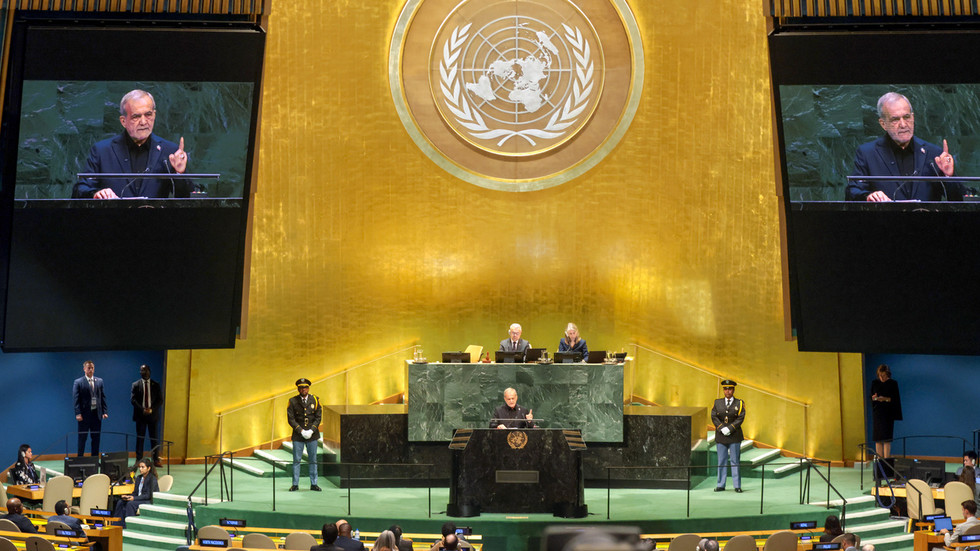
At the United Nations General Assembly this week, a sharp rhetorical clash erupted over who is actually willing to negotiate—and when. On September 22, President Trump told world leaders he believed Iran would hold off on a deal until after the November 3 midterm elections, claiming Tehran wanted to see how he performs at the polls before committing. "They're waiting to see how I do in the midterm election," he said, adding Iran "doesn't make sense not to" deal afterward.
Two days later, Iranian President Masoud Pezeshkian pushed back directly, telling reporters on the sidelines of the Assembly that Tehran wants a deal *before* the midterms. "We don't want it to get to the midterm elections," Pezeshkian said, calling on the U.S. to return to a June memorandum of understanding that outlined a temporary ceasefire. He added: "We wish Americans to return to the MOU before the midterms."
Behind the posturing, there are concrete negotiations. U.S. envoys Steve Witkoff and Jared Kushner met with Iranian Foreign Minister Abbas Araghchi for three hours at the UN, marking the first talks since late June when a ceasefire agreement collapsed into tit-for-tat strikes. A senior Iranian official told Reuters on September 22 that Tehran has delivered a proposal through mediators offering to reopen the Strait of Hormuz—through which one-fifth of global oil shipments pass—within seven days if the U.S. eases military pressure and lifts its blockade on Iranian ports. The proposal was originally delivered on September 16.
The war, which began on February 28 with Israeli and U.S. strikes that killed Iran's supreme leader, has now stretched seven months and become deeply unpopular domestically: 69% of Americans disapprove of Trump's handling of it. Oil prices remain elevated—Brent crude above $100 a barrel—adding pressure on both sides to move. Trump framed the choice starkly, saying he must decide whether to allow Iran to rebuild or "annihilate the Islamic Republic."
How could this affect you
Traced by who's actually in the path of this — not everyone is.
Likely
If you trade energy futures or own energy stocks
A successful deal that reopens the Strait of Hormuz could ease supply constraints and pressure global oil prices lower; failure and escalation could spike them. Trump's domestic political need to resolve the war before November raises the odds of either rapid deal-making or dramatic escalation in the final weeks before elections.
Likely
If you follow U.S. domestic politics
The war's unpopularity (69% disapproval) is a drag on Trump's position heading into midterms. A deal before November could improve his political standing and potentially help Republicans; prolonged conflict or escalation likely hurts GOP chances of holding Congress.
Direct
If you manage shipping or trade routes
If the Strait of Hormuz remains closed or operating at reduced capacity, rerouting and insurance costs stay elevated. Even a temporary ceasefire could ease constraints on the critical 20% of global oil and gas moving through Hormuz daily.
Sources
Every claim here traces back to reporting you can read yourself.