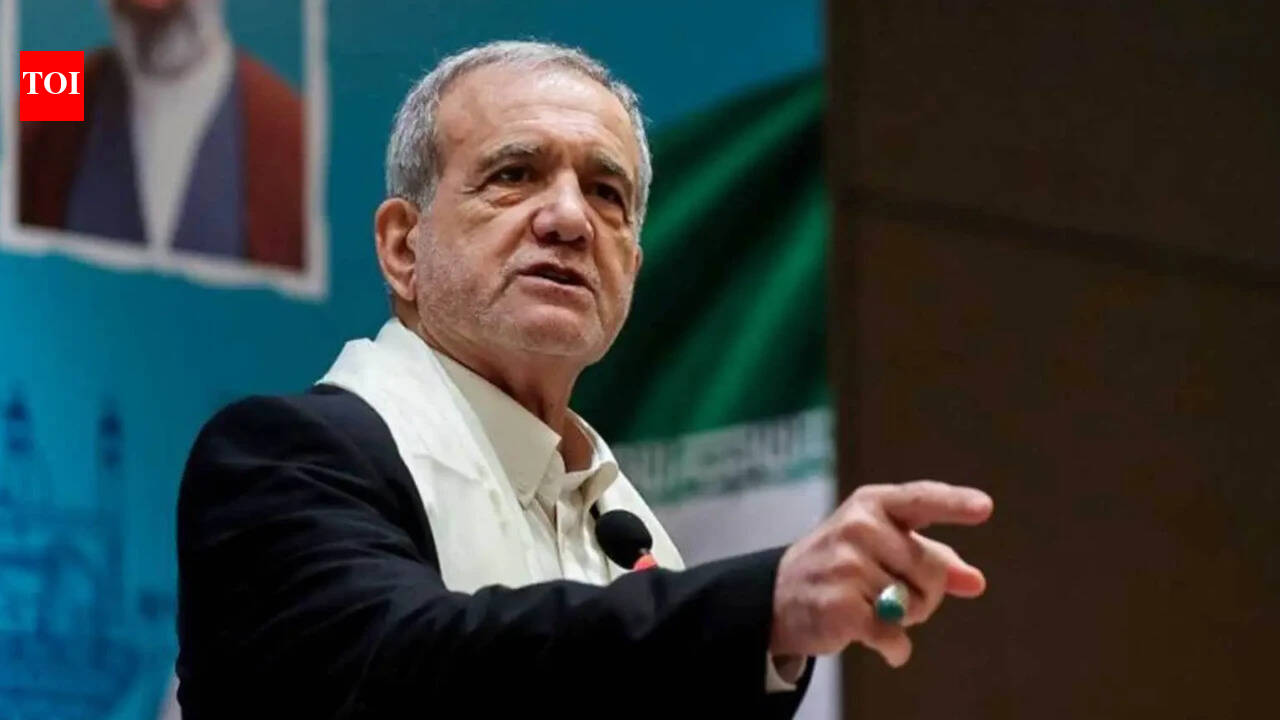
Iran's Trust Ultimatum: Pezeshkian Draws Red Line on US Commitment Even as Peace Proposal Lands
While presenting a concrete seven-day ceasefire plan at the UN, Iran's president says trust in Washington is broken—and it's a precondition for any deal.
Iranian President Masoud Pezeshkian told Al Jazeera on Saturday that Iran no longer trusts the United States, citing a pattern of attacks and sanctions that followed every round of negotiations. The statement came as he and Foreign Minister Abbas Araghchi proposed a detailed seven-day roadmap to end the seven-month conflict: a regional ceasefire, lifting of the US naval blockade, waiver of oil sanctions, release of $12 billion in frozen Iranian assets, and reopening of the Strait of Hormuz on day six, followed by nuclear talks on day seven. Pezeshkian framed trust—not mere technical agreement—as the missing foundation. He questioned whether Washington would honor any commitment it made in writing, referencing the June 2026 Memorandum of Understanding that both sides signed but which collapsed in August amid renewed fighting. Qatar and Pakistan are conveying Tehran's messages to the Trump administration through back channels at the UN General Assembly. The proposal revives the structure of the expired June agreement but compresses it into days rather than weeks, signaling Iran's willingness to move quickly if the US demonstrates it will stick to terms. Whether the Trump administration views rebuilding trust as negotiable or sees it as a non-starter remains unclear.
How could this affect you
Traced by who's actually in the path of this — not everyone is.
Likely
Oil markets and shipping
If trust remains broken and negotiations fail, the Strait of Hormuz—carrying roughly one-fifth of global oil and gas—could remain partially or fully restricted, tightening supplies and driving up energy prices. Conversely, if Pezeshkian's proposal catalyzes a breakthrough, rapid reopening could ease prices.
Likely
US manufacturers and exporters
Continued Hormuz closure raises shipping costs and delays for goods moving through the Persian Gulf; US oil and military contractors face persistent Middle East instability that disrupts supply chains and deters investment in the region.
Possible
Financial markets holding Iranian assets
If the $12 billion in frozen assets are released as part of a deal, it could unlock Iranian purchasing power and debt repayment, affecting credit markets and emerging-market currency traders exposed to Iranian exposure.
Likely
Regional allies of the US (Gulf states, Israel)
A US-Iran ceasefire could reduce US security guarantees to regional partners if perceived as appeasement, pushing Gulf states and Israel to expand independent deterrence and regional security arrangements.
Sources
Every claim here traces back to reporting you can read yourself.