
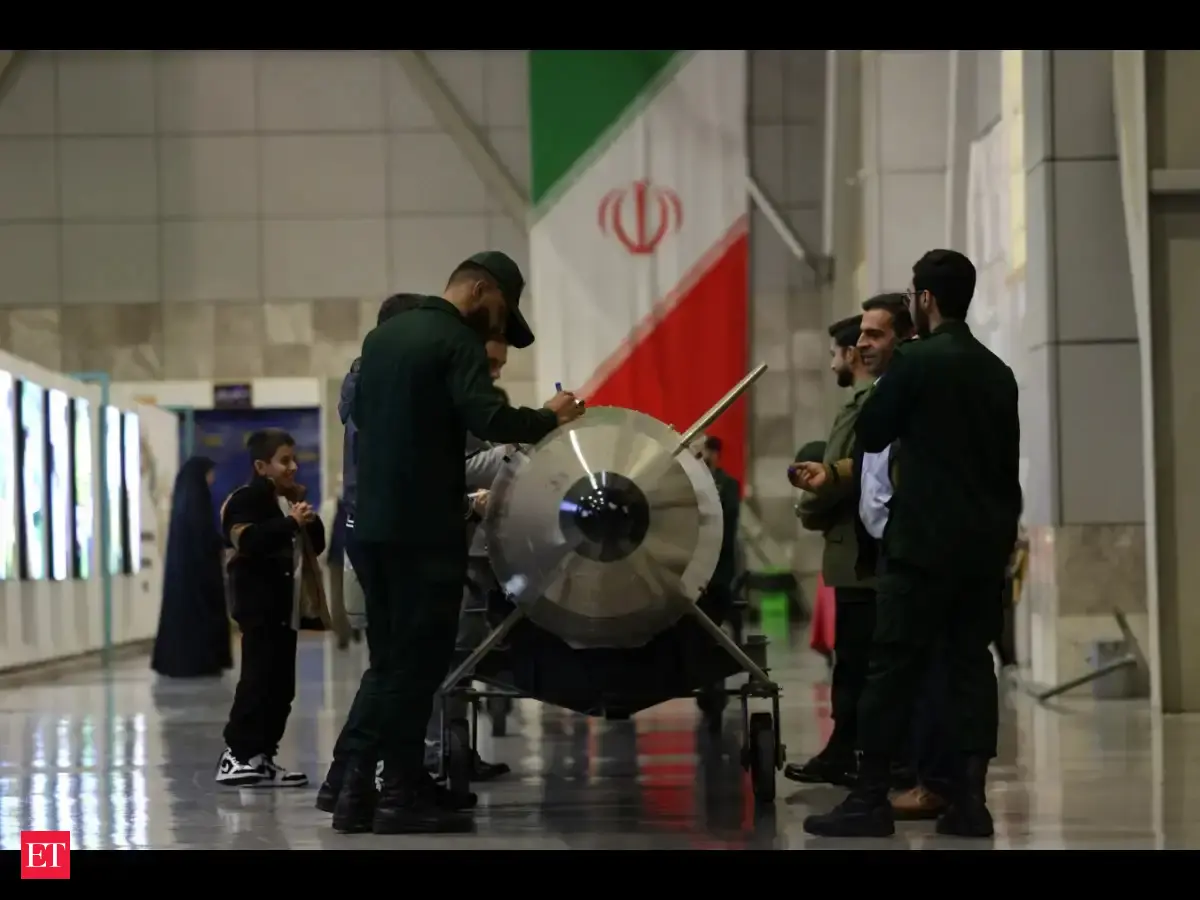
Photo via economictimes.indiatimes.com
Iran launches drones at Bahrain; US says it shot both down
As tanker attacks persist in Hormuz and death toll rises, Gulf states deepen defense pacts against Iranian threats.
What happened
Iran's Revolutionary Guard launched two one-way attack drones toward Bahrain on Friday, claiming to have struck a U.S. early-warning radar system in response to an attack on a telecommunications tower in the coastal town of Sirik. The U.S. military said it intercepted both drones with no damage or injuries. Central Command did not directly address the Iranian claim of a strike on Sirik infrastructure.
The drone incident followed multiple attacks on commercial shipping in the Strait of Hormuz. Iran's military reported that four oil tankers struck mines in unauthorized routes through the waterway on November 10 and 12, with two supertankers collectively carrying over 4 million barrels catching fire. The U.K. Maritime Trade Operations reported incidents continuing, though some claims remain unverified. The International Maritime Organization documented 134 incidents across the Persian Gulf and Strait of Hormuz as of November 11, with 25 confirmed seafarer deaths since the war began on February 28.
Regional states are responding with new defense alliances. Turkey and Qatar signed a mutual defense agreement on Friday, pledging unified military response to external attack. The pact follows Turkey's ratification last week of a joint defense agreement with Saudi Arabia and Pakistan signed in Mecca in August. Both accords reflect Arab Gulf states and NATO-member Turkey moving to coordinate air defense and military cooperation as Iranian attacks continue on regional infrastructure and shipping.
Chanakya's Move
Iran is betting that a demonstration of precision drone capability (the Nov 13 strike claim, whether successful or not) will deter further strikes on its infrastructure and signal that it can still impose costs on U.S. bases and equipment in the region despite nine months of war. The timing—directly tied to the Sirik telecom strike—shows a tactical willingness to escalate in response, not a strategy of de-escalation. Meanwhile, the U.S. and its Gulf allies are consolidating into formal defense arrangements that lock in forward-deployed air and naval assets, reducing options for Iranian strategic surprise. Turkey's entry into paired pacts with three Gulf states (Saudi, Pakistan, Qatar) signals NATO is being drawn deeper into Gulf defense architecture. Iran's response could be either further localized strikes to test U.S. resolve, or a diplomatic signal designed to establish a ceiling for acceptable losses. The counter-move from the U.S. side—densifying the defense network—makes the first option more costly and the second less credible.