
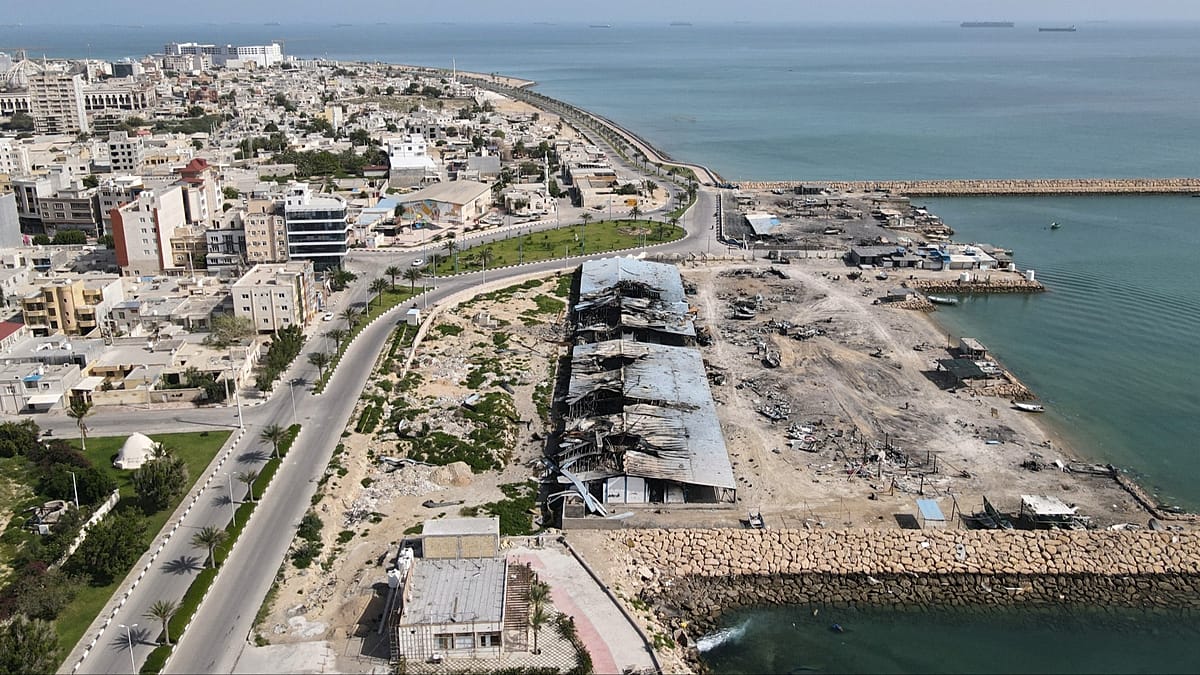
Photo via euronews.com
US strikes Qeshm missile site after Iran mines ships, hits Gulf bases
Four nations traded strikes in rapid escalation as mines disabled vessels in the Strait of Hormuz and Iranian drones targeted Bahrain and Kuwait.
What happened
On November 17, at least five ships caught fire in the Strait of Hormuz after striking naval mines, with Iran claiming the vessels were using unauthorized shipping routes. Hours later, Iran's Revolutionary Guards launched drone attacks targeting U.S. military radar facilities in Bahrain and positions in Kuwait. Both Gulf nations reported intercepting the strikes without damage. In response, U.S. fighter jets struck an IRGC missile launch site on Iran's Qeshm Island using precision munitions, describing the operation as self-defense against Iranian aggression targeting U.S. personnel and assets.
The strikes represent an intensification in the broader conflict that has seen periodic but contained exchanges of fire for months. Iran has maintained control of shipping through the strait by laying mines and threatening vessels using routes it deems unauthorized, while the U.S. has conducted limited defensive airstrikes on Iranian military installations. The exchange follows months of reduced Iranian attacks on Gulf states, with Bahrain reporting this as the third drone attack in five days.
U.S. Central Command stated it remains highly vigilant and postured to protect American personnel across the region. Iranian officials said the strikes on Qeshm caused no damage to civilian areas and that all services remained operational.
Chanakya's Move
Iran appears to be testing the limits of escalation under a new U.S. administration by targeting U.S. regional infrastructure directly while using mine-laying as economic pressure on global shipping. The coordinated drone strikes on Bahrain and Kuwait, following a lull of weeks, signal that hardliners may believe the window for asserting control over the strait is narrowing. Iran is betting that limited strikes preserve plausible deniability while forcing the U.S. to choose between costlier regional deployments or accepting Iranian dominance over maritime chokepoint. The U.S. response—precision strikes on military targets rather than broader retaliation—suggests a strategy to impose cost without triggering full-scale conflict. Both sides remain calibrated to avoid the threshold that would force a return to major combat operations, but the shrinking margin for error is real.