
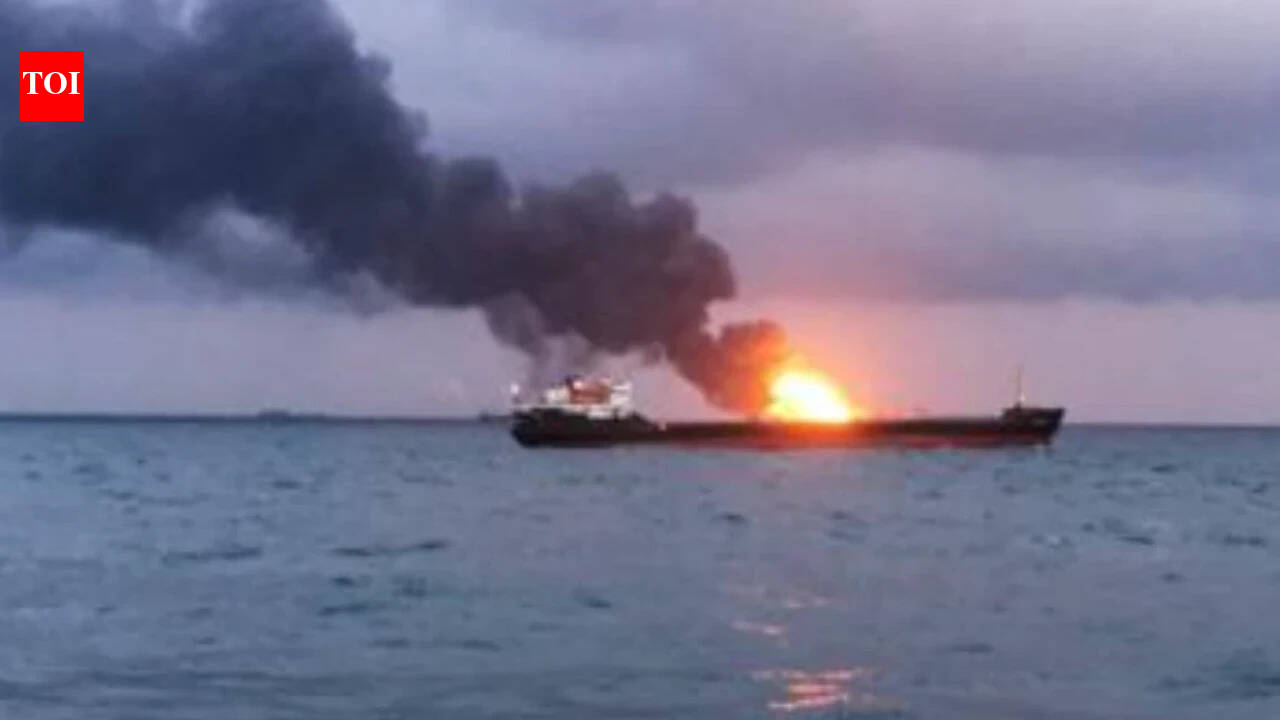
Photo via timesofindia.indiatimes.com
Iran Claims Two Tankers Hit Mines in Strait
The IRGC says supertankers carrying 4 million barrels total struck naval mines; US and international shipping firms race to assess claims amid record attack tempo.
What happened
Iran's Revolutionary Guards Navy said Saturday that two oil tankers caught fire after striking naval mines in the Strait of Hormuz, each carrying roughly 2 million barrels of crude oil. According to Iran's official news agency IRNA, both vessels had switched off their positioning and radar systems and attempted to traverse an unauthorized route through the waterway. The IRGC said one tanker struck a mine triggering a "fierce fire," while the second was left immobilized after its mine strike caused an explosion in the engine room. The IRGC also claimed one tanker attempted to cross "with US support."
No independent confirmation of either incident has emerged. The incidents come amid a surge in reported attacks on shipping in the strait. According to CENTCOM data through mid-October, at least 10 ships were struck in or near Hormuz in a single week—the highest tempo since the war began in late February—though the US military disputes Iran's broader claims about control of the waterway.
CENTCOM commander Admiral Brad Cooper stated Friday that despite Iranian attacks, the strait remains under US and regional partner control, citing data showing 400 ships and 100 million barrels transited in the past week. A CENTCOM spokesperson said "the vast majority" of Iranian attack attempts are "unsuccessful," with roughly 97 percent of vessels transiting without being hit by Iranian projectiles.
The tactical and rhetorical disagreement reflects a deeper contest. Iran claims it seized authority over the strait after February's escalation and demands all ships seek authorization before passage. The US maintains an ongoing naval blockade on Iranian oil exports. Global oil prices reflect the uncertainty: Brent crude traded near $105 per barrel as of mid-October, with analysts attributing a "significant risk premium" to ongoing Middle East security risks. Before the conflict, the strait handled roughly one-fifth of global oil and liquefied natural gas flows.
Chanakya's Move
Iran's move here is declarative sovereignty theater—asserting control by claiming mines it says it placed, warning shipmasters to respect Iranian navigation rules or face "consequences." The IRGC is betting that high-profile claims of successful interdictions (burning tankers) will deter unauthorized transits and force the international community to negotiate Iran's terms for strait access. The wager: perceived control is half the battle; visible consequence deters others. The counter is CENTCOM's narrative: deny the threat narrative, flood the strait with protected convoys, publicize success rates (97 percent transit safely) to restore shipper confidence. The outcome turns on whether tanker operators believe Iran or the US—insurance underwriters, not navies, will make that call.