
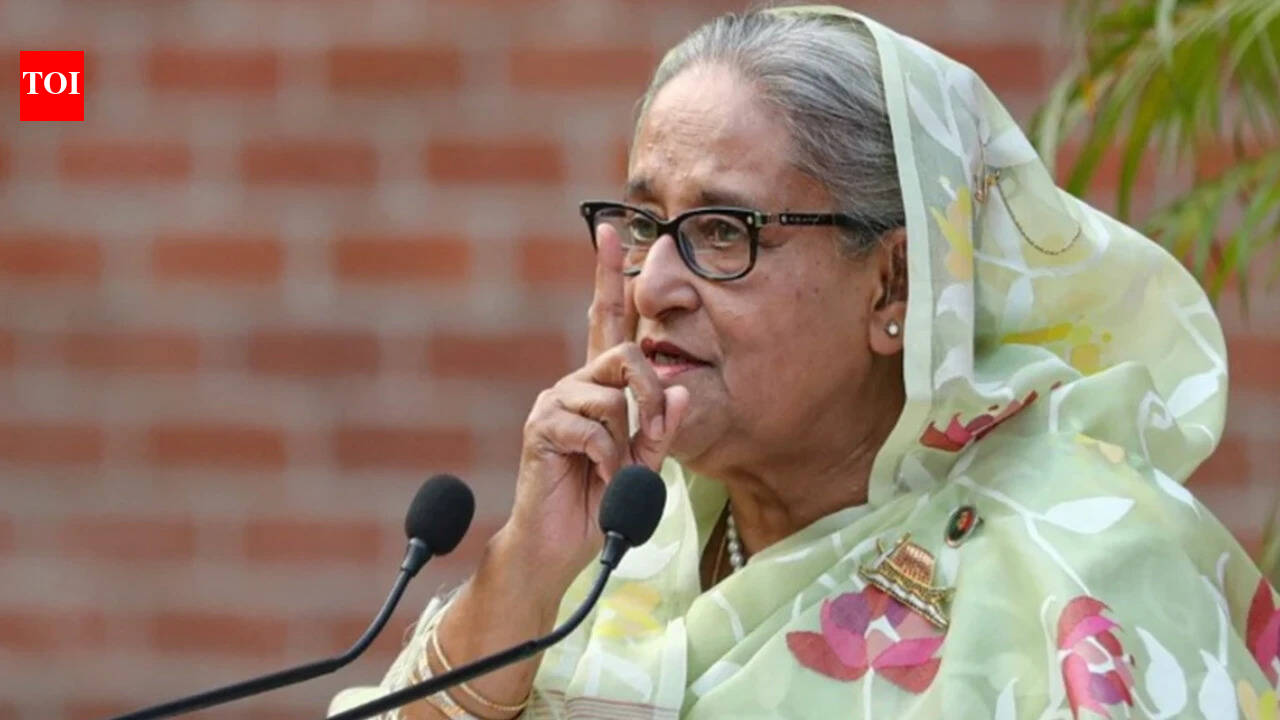
Photo via timesofindia.indiatimes.com
Hasina Announces December 16 Return to Bangladesh
Exiled former PM pledges comeback to nation's Victory Day, but government warns of immediate arrest and death sentence.
What happened
Sheikh Hasina announced November 24 that she will return to Bangladesh on December 16, nearly 16 months after fleeing to India during a student-led uprising that killed approximately 1,400 people. The former prime minister chose the date—the 55th anniversary of Bangladesh's 1971 liberation war victory—as a symbolic gesture. Her spokesman said she is requesting the government arrange her transport via state carrier Biman Bangladesh Airlines from Delhi. This is the first specific date Hasina has set for her return since her ouster in August 2024.
The announcement has triggered sharp political confrontation. Bangladesh's government, now led by Prime Minister Tarique Rahman's Bangladesh Nationalist Party, immediately warned that Hasina will be arrested and jailed upon entry. State Minister for Foreign Affairs Shama Obaed Islam told Reuters on November 23 that "as soon as she tries to enter Bangladesh, she will have to face the music." Hasina faces a death sentence handed down in absentia last November by the International Crimes Tribunal for crimes against humanity, particularly ordering lethal force against protesters. Her Awami League party remains banned from political activity.
The standoff creates a diplomatic test for India, which hosts Hasina in New Delhi. Bangladesh has formally requested her extradition under a bilateral treaty, but India has not complied; New Delhi said in April it was "examining" the request. Indian law allows refusal of extradition if charges are deemed political in nature. The government has rejected Hasina's requests for replacement travel documents, citing her conviction status.
Hasina's December 16 announcement has already sparked violence. Supporters of the Awami League have staged protests and shutdowns while the government blamed her party for recent bomb explosions and arson attacks in Dhaka. The timing coincides with Bangladesh's legislative elections planned for February 2027, adding to political pressure.
Chanakya's Move
Hasina is gambling that symbolism (December 16, Victory Day) and legal argument (India's constitutional obligation, the government's illegitimacy) will force India's hand or spark domestic pressure on Rahman's government. She is betting on Awami League mobilization to create noise that makes her arrest politically costly. Rahman's counter-move is to announce pre-emptive arrest, delegitimize her legal standing (by refusing documents), and lock down India diplomatically by demanding extradition—making a voluntary Indian refusal appear as protection of a fugitive. The question is whether India sees Hasina as a former strategic asset worth defending on principle (extradition treaty loopholes, political persecution claim) or as a liability that only complicates ties with the BNP government.