
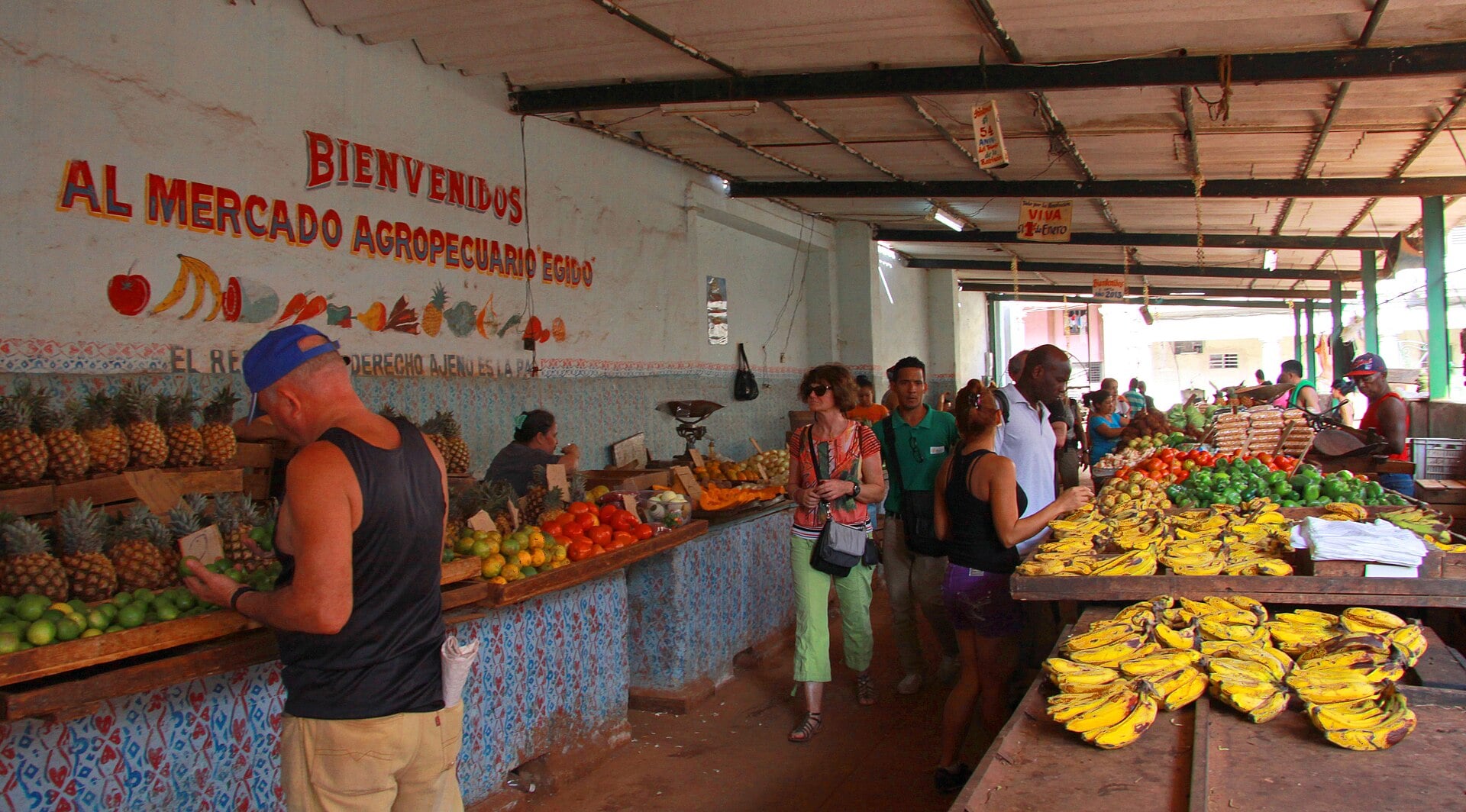
Photo via riotimesonline.com
Cuba's Inflation Hits 28.44% as Economic Crisis Deepens
Official prices surged 3.37% in September alone, while average state wages remain under $10 monthly, compounding hardship amid fuel shortages.
What happened
Cuba's year-over-year inflation reached 28.44% in September 2026, with monthly prices jumping 3.37%, according to the country's official statistics office ONEI. Food prices led the acceleration, accounting for nearly three-quarters of the monthly increase. The Cuban government attributes the spike to U.S. pressure on fuel supplies, though official figures do not quantify this impact.
The informal market—where most Cubans actually source goods—likely shows significantly higher inflation, with independent experts suggesting three-digit rates. Cuba's economy contracted over 15% between 2020 and 2025, and the International Commission for Latin America and the Caribbean projects a 10.3% GDP decline in 2026, the worst in the region. State wages averaged 7,354 pesos (about $9.25 at informal rates), well below $10 monthly. The crisis has been compounded by rolling blackouts lasting up to 20 hours daily and widespread shortages of food and medicine.
Chanakya's Move
Cuba's economic collapse is the inevitable end-state of two colliding forces: the decades-old U.S. embargo, now intensified under the current Trump administration, and a centrally planned economy unable to adapt to external shocks. The regime's move to publish official inflation figures—rather than suppress them—signals either confidence in the narrative that this is imposed by external enemies, or desperation to acknowledge crisis to ward off larger unrest. The real vulnerability is not the official 28% rate but the informal market's three-digit inflation: at that level, the formal economy becomes irrelevant and the state's ability to maintain control through wage distribution collapses. The counter-move from outside would be targeted engagement and sanctions relief, but under current U.S. policy, that is unlikely. The regime's only realistic play is appealing for humanitarian exceptions or regional mediation—neither of which has worked.