China faces scrutiny over flood response as censorship and infrastructure risk concerns mount
A catastrophic glacier collapse killed thousands on the Nepal-Tibet border in late August. Now, disputes over casualty reporting and China's massive hydropower projects in the region are fueling geopolitical tensions.
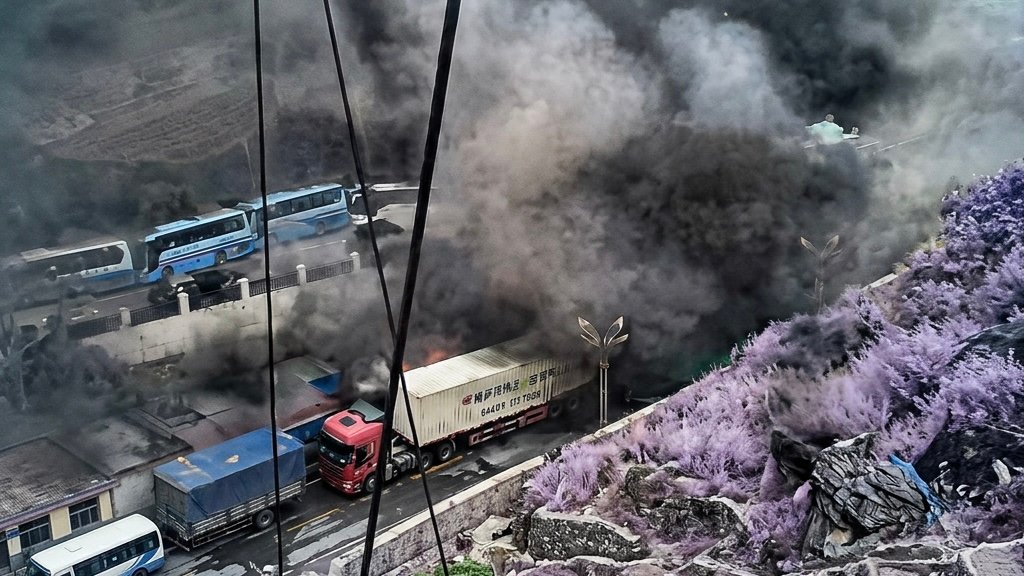
On August 26, a massive glacier collapse at high altitude on Langtang Lirung in the Himalayas unleashed flash floods and debris flows across the Nepal-Tibet border. The surge destroyed Gyirong Port, the main customs crossing between the two countries, and devastated dozens of settlements along the Trishuli River valley. Nepal reported at least 1,451 deaths and 5,745 missing; China reported 43 deaths and 519 missing in Tibet Autonomous Region. The toll reflects not just environmental catastrophe but a sharp divergence in how each side is acknowledging the disaster.
China's response has drawn international criticism for information control. Chinese authorities took five days to disclose details of foreign casualties, compared to Nepal's immediate transparency. More significantly, Chinese social media platforms have censored eyewitness videos of the disaster, replacing them with state media coverage focused on rescue operations and leadership response. Multiple reports indicate China's official casualty figures froze at lower numbers while Tibet rights groups and independent monitors claim actual deaths were far higher. The International Campaign for Tibet says at least 300 homes were destroyed in Gyirong County alone, and that relocated residents were placed in "tightly controlled holding areas" with limited outside communication.
The disaster has intensified scrutiny of China's vast hydropower ambitions. Construction began in July 2025 on a mega-cascade project near Medog on the lower Yarlung Tsangpo River, estimated to cost 1.2 trillion yuan and generate roughly three times the output of the Three Gorges Dam. Experts note that two-thirds of Himalayan hydropower projects sit on potential outburst-flood pathways in a region where climate warming is destabilizing glaciers and permafrost. India and other downstream nations have long accused China of withholding glacial and hydrological data that could enable flood forecasting. Beijing insists it shares data transparently, but Nepal and India officials have said critical information sharing remains inadequate.
The floods have become a flash point in China-India tensions. Indian commentators initially blamed China's dam projects for exacerbating the disaster, though the immediate cause was the natural glacier collapse on Nepal's side. Nepal's new government, led by reformist Prime Minister Balendra Shah, faces pressure from both Beijing and New Delhi to legitimize competing claims. Both countries have already sent rescue teams to the region in what observers see as a competition to demonstrate generosity and influence.
How could this affect you
Traced by who's actually in the path of this — not everyone is.
Likely
Downstream nations (India, Bangladesh) relying on Himalayan river systems
If China completes its Yarlung Tsangpo mega-dam project without adequate data-sharing agreements or seismic safeguards, catastrophic cascade failures could occur during glacial outburst events, affecting water supply, power generation, and agricultural systems across borders
Likely
International investors in Himalayan hydropower and infrastructure projects
Renewed scrutiny of climate risk and geotechnical stability in the Himalayas could slow project approvals, increase insurance premiums, and prompt stricter environmental assessments, delaying or raising costs of planned dams and corridors
Possible
Nepal's government balancing geopolitical pressure
Nepal may face competing demands from China (maintaining project cooperation and censorship alignment) and India (opposing dam projects and calling for transparency), potentially forcing concessions on either cross-border data sharing or Chinese infrastructure investments
Possible
Tibetan exile communities and human rights advocates
If China's casualty figures prove significantly understated, international pressure could mount for independent investigation and accountability, weakening Beijing's narrative control and risking diplomatic isolation
Sources
Every claim here traces back to reporting you can read yourself.