
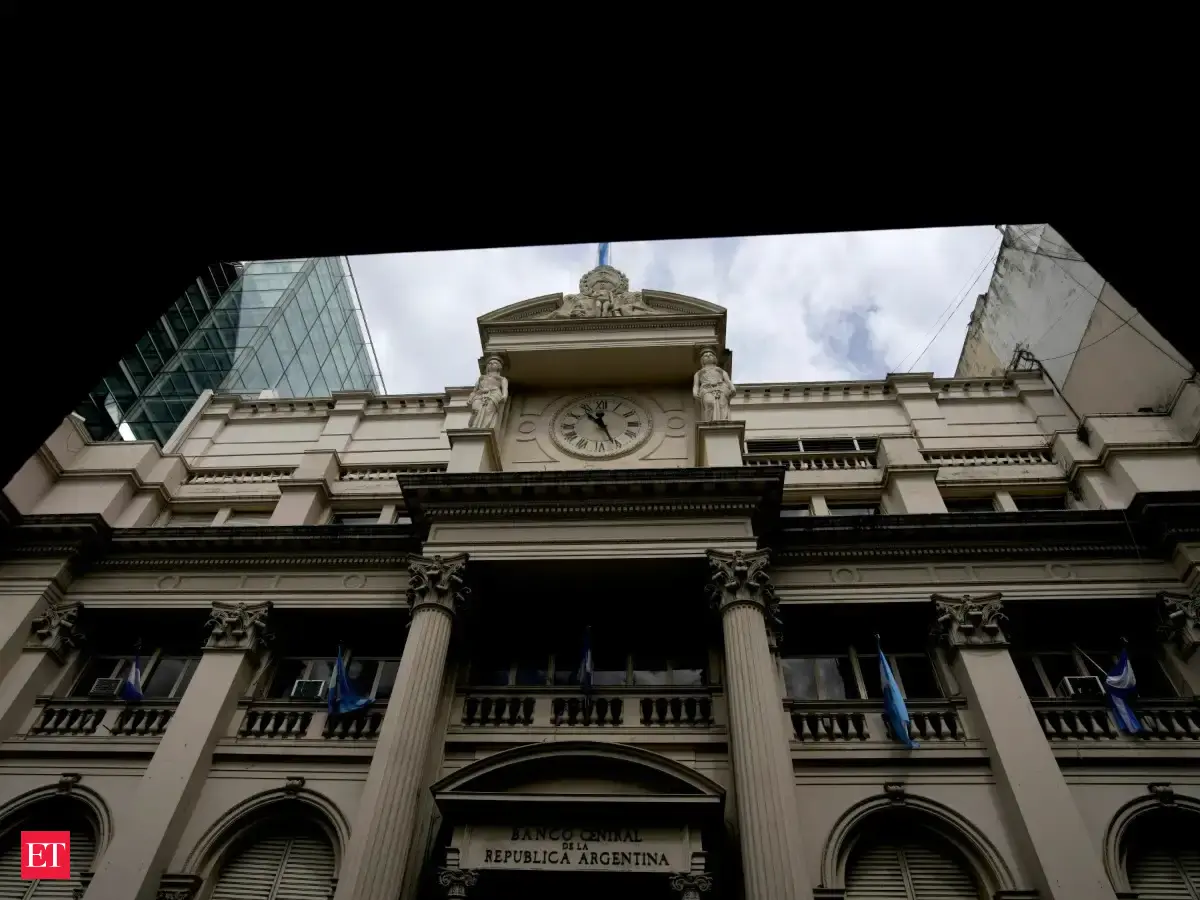
Photo via economictimes.indiatimes.com
Argentina bans central bank from financing government
Congress passes Milei's charter reform blocking money printing, even as economic recession and inflation rebound cloud his re-election bid.
What happened
Argentina's Congress voted Thursday to bar the central bank from printing money to pay government bills, a core pillar of President Javier Milei's fight against inflation. The lower house approved the revised charter 141–0, with 99 abstentions, capping a legislative battle that began in August. The new charter makes preserving the peso's value the central bank's primary mission and blocks lending to any level of government or financing of the Treasury—a practice that fueled repeated currency crises and hyperinflation under previous administrations. While the final version fell short of Milei's original demand for a two-thirds supermajority to remove the bank's governor, the core restriction on deficit financing is now law pending his signature.
The victory comes as Milei faces mounting economic headwinds ahead of his October 2027 re-election bid. Argentina entered a technical recession after back-to-back quarterly contractions, with the economy shrinking 1.8% in Q3. Inflation, which Milei cut from 211% in 2023 to 33% by February 2026, has stalled; it hit 33.1% year-on-year in October and ticked up 2.2% in October alone. Unemployment reached 7.9% in mid-2026, its highest under Milei, while about six million people defaulted on personal loans as consumption collapsed under 64% annual interest rates.
The same week, Brazil excluded Milei from President Luiz Inácio Lula da Silva's January 5 inauguration and said it would not return its ambassador to Buenos Aires. The decision capped months of escalating tensions rooted in Milei's support for Lula's defeated rival, Flavio Bolsonaro. In July, Milei attended a campaign event for Bolsonaro and called Lula a "thief." After Bolsonaro fled to the U.S. via Argentina following his election loss, Brazil recalled its ambassador and downgraded ties. Milei also declined to congratulate Lula on his October victory, a rare diplomatic slight. Argentina's Foreign Minister said his government had received no official confirmation of the exclusion but signaled the snub would not improve relations.
Chanakya's Move
Milei is betting that locking in the central bank ban—making it harder to reverse—gives him credibility on inflation and anchors long-term market confidence in the peso, even as near-term recession pain threatens his re-election. By suspending primaries on the same day, he also shields himself from an early political test when economic data is weak. The play assumes that if inflation stabilizes and growth returns in late 2026 or early 2027, voters will credit his structural reforms despite current suffering. The risk: if recession deepens or inflation re-accelerates before October 2027, the absence of a primary will not shield him from general election defeat. The Brazil exclusion is partly self-inflicted—Milei's backing of Bolsonaro and personal attacks on Lula were calculated gambles on regional ideology that have isolated him diplomatically. He can still meet Lula at a planned Mercosur summit in December, but without presidential-level legitimacy, leverage is diminished.