
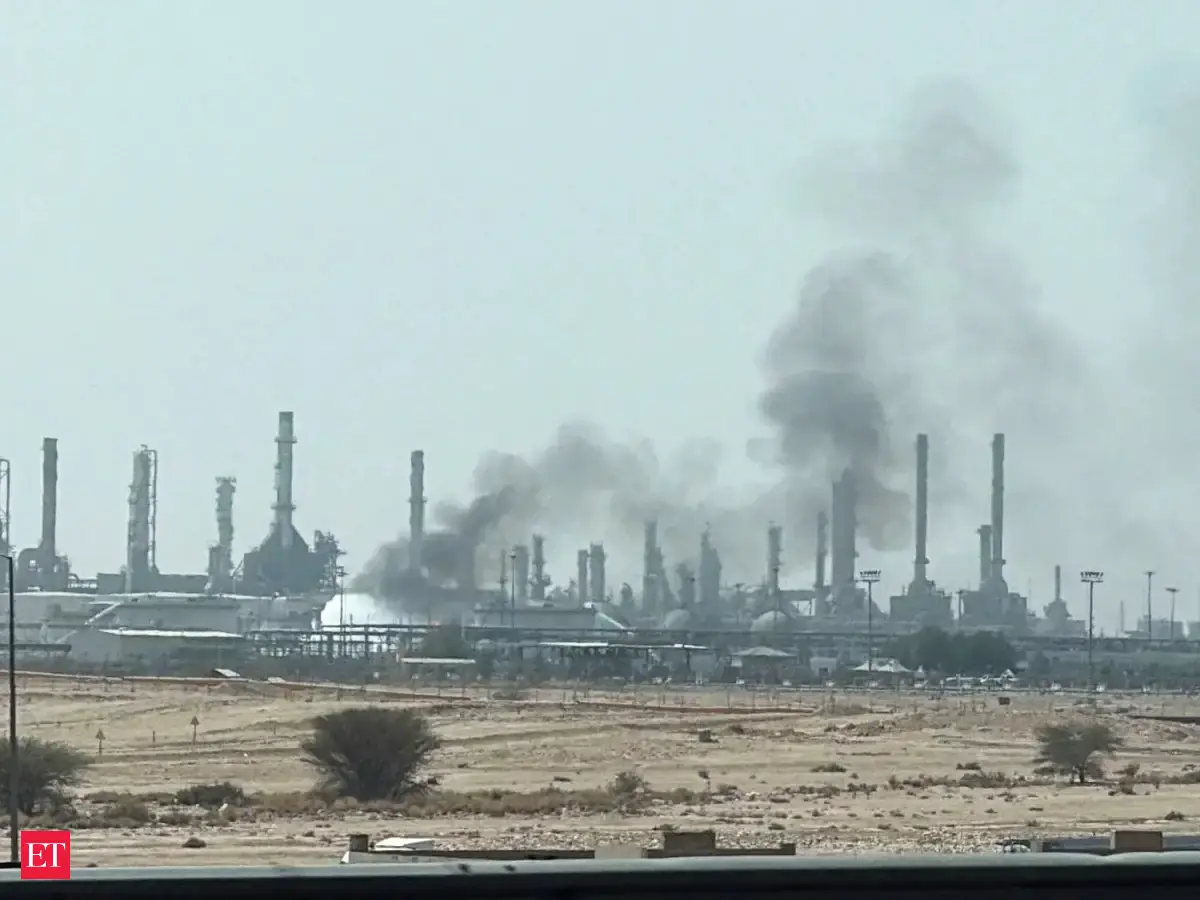
Photo via economictimes.indiatimes.com
Aramco Evacuates HQ as Houthis Escalate Saudi Strikes
Oil giant orders full staff withdrawal from Dhahran headquarters for the first time since Iran war began, while US pulls diplomats as attacks kill at least four.
What happened
Saudi Aramco ordered the complete evacuation of its Dhahran headquarters on October 22, directing all remaining staff to work remotely—the first such order since the current conflict began. The move came after a fresh wave of Houthi attacks on critical Saudi infrastructure, including strikes that killed two people at King Fahd International Airport in nearby Dammam and two more at the Shaybah oil field. Aramco's sprawling Dhahran complex houses the company's main operations center, which monitors and coordinates onshore and offshore oil rigs, refineries, export terminals, and thousands of kilometers of pipelines across Saudi Arabia's vast energy network.
The escalation marks a sharp reversal of the 2022 UN-brokered truce that had largely halted cross-border Houthi attacks. In recent weeks, the Iran-aligned militia has intensified operations, targeting civilian airports, military facilities, and oil infrastructure across the kingdom with ballistic missiles, cruise missiles, and drones. Earlier this month, a Houthi strike on the Dhahran headquarters caused extensive fire damage across several floors. On October 22, Houthi military spokesperson Yahya Saree claimed four operations over 48 hours, naming the Saudi Defense Ministry in Riyadh and Aramco facilities in Yanbu as targets, though Saudi authorities have not confirmed the defense ministry claim.
The evacuation order rippled through global markets: Saudi Arabia's benchmark index dropped 2.5% on Thursday following the announcement. Separately, the US State Department ordered nonemergency diplomats and their families to depart from its missions in Saudi Arabia, citing the Houthis' "increasingly engaged" hostilities against civilian infrastructure. Plans were also underway to withdraw family members from US missions in other Gulf states. This reflects growing concern that Houthi capabilities have advanced beyond the kingdom's air defense capacity and that the conflict could escalate further.
Chanakya's Move
The Houthis are executing a strategy to raise the cost of Saudi intervention in Yemen by demonstrating the kingdom's inability to defend its most critical civilian infrastructure—particularly its energy sector command center. By forcing Aramco to evacuate and the US to pull diplomats, they signal that Saudi Arabia is no longer a safe operating environment for foreign business and governance. Saudi Arabia and its US ally face a credibility problem: despite massive air defense expenditures and US support, they have failed to prevent strikes on symbolic targets like the world's largest oil company's headquarters. The Houthis' aim is likely to negotiate from strength—demonstrating that without a Yemen settlement favorable to their interests, the attacks will continue. Saudi Arabia's counter-strategy is to maintain defense of critical sites and increase coalition strikes on Houthi capabilities in Yemen, but escalation risks further entanglement in the broader Iran war at a moment when global energy markets are fragile.