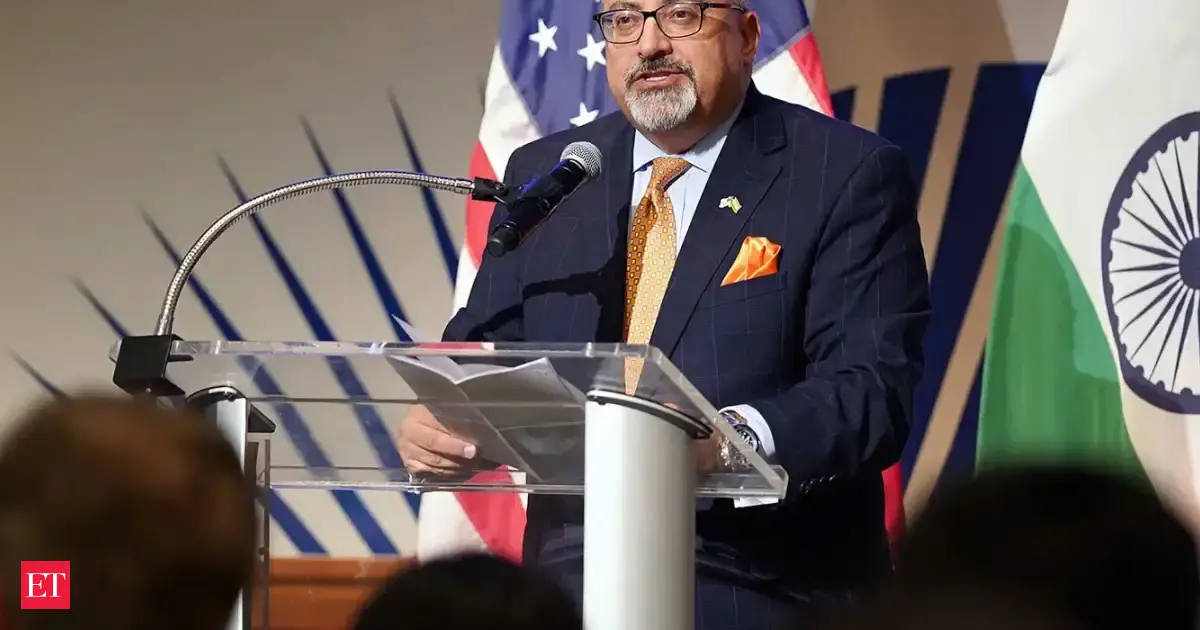
USIBC President Urges US and India to Intensify Efforts on "Historic" Trade Deal
With India's Commerce Minister suggesting negotiations are near completion, business groups are pushing both governments to finalize a comprehensive bilateral trade agreement that would lock in tariff reductions and provide long-term certainty to the partnership.
The US-India Business Council (USIBC) released a statement calling on both the US and India to intensify efforts to conclude a "historic" trade agreement that lowers trade barriers and minimizes tariffs. USIBC President Atul Keshap said unlocking reciprocal trade would build on record investments made in 2026 and benefit businesses in both countries, particularly by boosting manufacturing and opening new consumer markets while strengthening both nations as AI leaders. The statement comes as India's Commerce Minister Piyush Goyal prepares to visit the US for the G-20 Trade Ministerial in Milwaukee on September 30-October 1, where he is expected to hold bilateral talks with US Trade Representative Jamieson Greer. Goyal has indicated the bilateral trade deal is nearly complete, though negotiations continue over tariff terms. In February 2026, the two countries announced a framework for an Interim Agreement that reduced US reciprocal tariffs on Indian goods from 25% to 18%, but the framework has been subject to ongoing negotiations as the US tariff landscape has evolved. India has signaled that finalizing a deal requires the US to offer tariff rates that provide Indian exporters a competitive advantage over rivals like Vietnam and Bangladesh.
How could this affect you
Traced by who's actually in the path of this — not everyone is.
Likely
US exporters of industrial goods, pharmaceuticals, and agricultural products
A finalized bilateral trade agreement with lower Indian tariffs would provide tariff-free or preferential access to India's market of 1.4 billion people, directly expanding addressable markets for American exporters. Non-tariff barrier reductions on medical devices and ICT goods would accelerate market entry.
Likely
Indian textile, leather, jewelry, and small-medium exporters to the US
While the agreement would lock US tariffs at 18% on select Indian goods, continued negotiations over preferential treatment could reduce this further. If India fails to secure competitive tariff rates versus other Asian suppliers, exporters could face ongoing cost disadvantages. Conversely, zero tariffs on generics and gems (per the current framework) provide direct benefit to pharmaceutical and diamond sectors.
Direct
US and Indian manufacturers seeking supply chain integration and FDI clarity
A comprehensive deal with established rules of origin and digital trade rules would reduce regulatory uncertainty, making joint manufacturing and investment commitments more feasible. The deal could anchor supply chain diversification away from China at a time when both countries prioritize economic security alignment.
Possible
Working families in both countries dependent on manufacturing
According to Keshap's statement, the deal is framed as delivering 'immediate benefits to working families by boosting manufacturing.' However, this is contingent on implementation and actual job creation timelines, which are not detailed.
Sources
Every claim here traces back to reporting you can read yourself.