
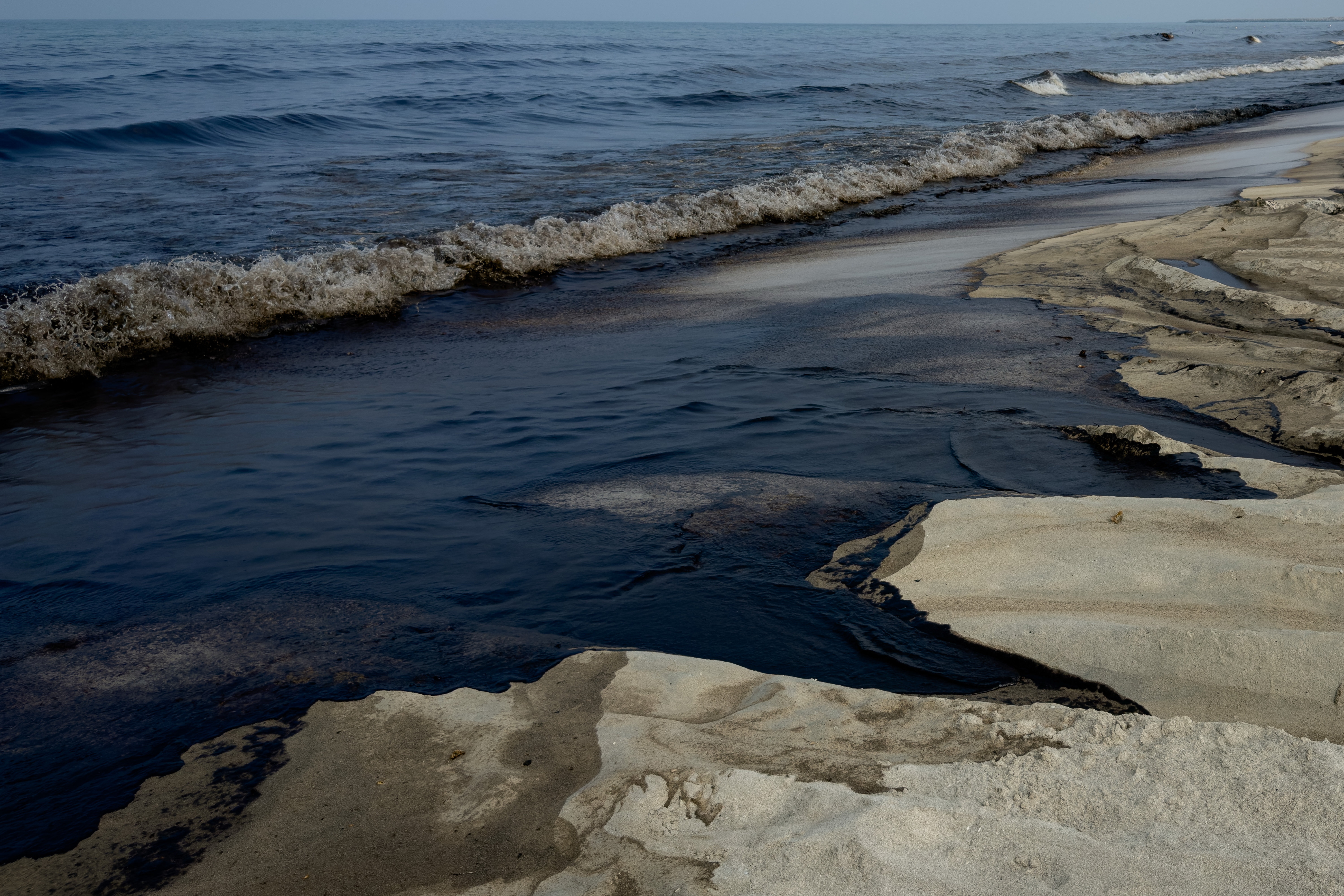
Photo via ndtv.com
UAE Beaches Closed After Oil Tanker Spill in Gulf
Three UAE emirates shut coastlines after GEM NO.2 tanker leaks 2 million barrels; incident linked to October projectile strike in contested Strait of Hormuz.
What happened
The United Arab Emirates closed all beaches across three northern emirates on Friday and Saturday following an offshore oil spill that has spread rapidly across the Gulf's northern waters. Ras Al Khaimah announced the closures first on Saturday, followed by similar measures in Umm Al Quwain and Sharjah. The Ministry of Climate Change and Environment confirmed the incident and launched containment operations, though authorities have not publicly named the vessel or confirmed what caused the spill.
Analysts and maritime security firms have identified the leaking tanker as the Panama-flagged GEM NO.2, a supertanker carrying approximately 2 million barrels of crude loaded from a Saudi port in March. Satellite imagery from October 19-21 shows a hydrocarbon slick stretching 40 kilometers long and covering 190 square kilometers, reaching within six kilometers of the shore. Residents across Sharjah, Ajman, and Umm Al Quwain reported strong fuel odours for days before the spill was officially confirmed, though the UAE environment ministry said the smells posed no health risks.
The spill originates from damage sustained on October 9, when the GEM NO.2 was struck by an unidentified projectile off the UAE coast, causing a fire that crews subsequently extinguished. The incident occurred in the context of sustained attacks on commercial vessels near the Strait of Hormuz, where tensions have escalated amid the ongoing Iran-US conflict. Since February 2026, Iran has claimed unilateral control over sections of the strait and repeatedly targeted cargo vessels it deems to be using unauthorized routes.
UAE authorities are coordinating containment and cleanup efforts while monitoring marine protection measures. All affected beaches remain closed indefinitely as technical assessments continue. The spill's spread to just six kilometers from shore has raised concerns about potential long-term environmental damage, particularly given the Gulf's semi-enclosed geography, where pollutants can persist longer than in open waters.
Chanakya's Move
This incident reflects the collision between two strategic contests: control of the Strait of Hormuz and the environmental costs of escalating maritime conflict. For Iran, the October 9 projectile strike on a cargo vessel was part of a campaign to enforce its unilateral claim over Gulf shipping lanes—a move to assert power during a conflict where it faces blockades and US military presence. For the UAE, a key US-aligned port state, the spill represents a direct vulnerability: as a small nation dependent on global trade and tourism, it now faces environmental damage and economic disruption from a conflict it partly instigated by hosting US military infrastructure. The timing—spill detected only after satellite analysis, not by authority-led monitoring—suggests gaps in the UAE's own early-warning capacity or deliberate opacity about the scale. For maritime actors and global energy markets, this signals that tanker losses in the Hormuz region are no longer theoretical; they now have documented environmental consequences that affect regional economies and insurance frameworks. The UAE's silence on the vessel's identity also suggests diplomatic sensitivity: naming the GEM NO.2 would implicitly confirm that a projectile attack caused the spill, framing it as a direct cost of Iran's maritime strategy—a claim the UAE government may prefer not to make explicitly. This silence itself becomes a move: by letting analysts name the ship, the UAE maintains plausible deniability about causation while still performing emergency response, preserving both security relationships and domestic legitimacy.