
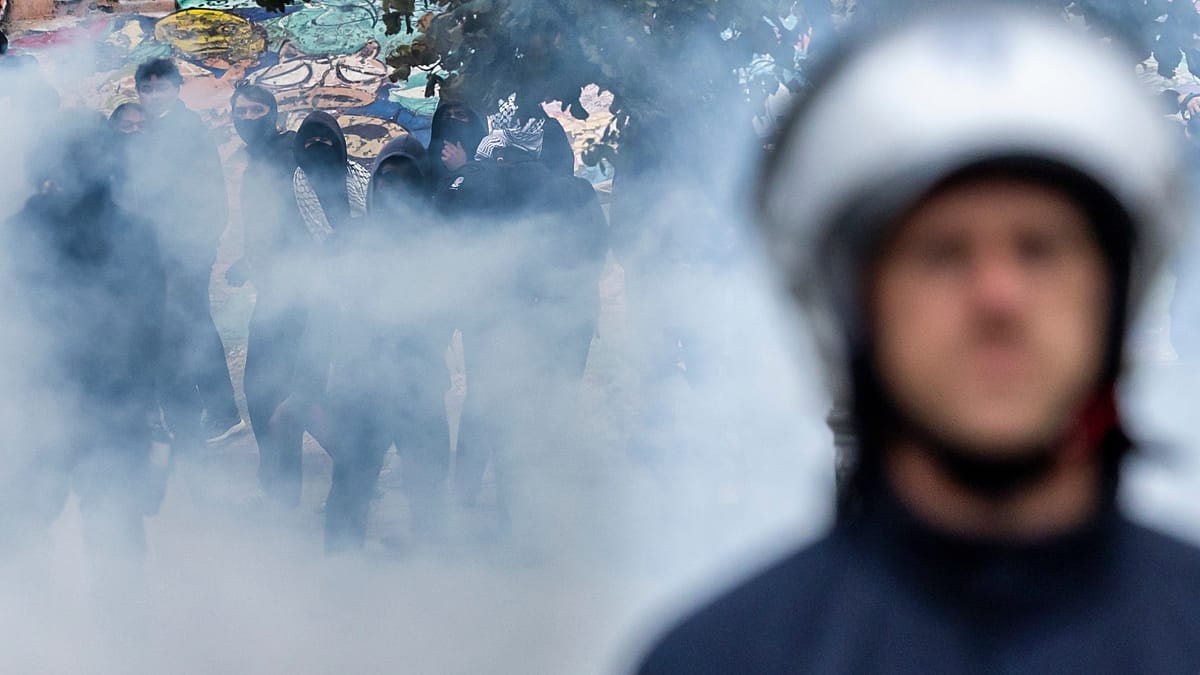
Photo via euronews.com
Police arrest 9 minors in Brussels-Midi clash amid austerity unrest
Ten people, mostly teenagers, arrested after violence near Brussels railway station as student and union protests escalate against €10 billion budget cuts.
What happened
Belgian police arrested ten people, including nine minors, after clashes involving hundreds of young people near Brussels-Midi railway station on Monday, October 12. Officers reported being targeted with stones and fireworks as unrest broke out on the sidelines of a national strike and student gathering. Police deployed tear gas and water cannon as groups moved between the station, Place Bara, and the Cureghem neighbourhood. The Clemenceau metro station was temporarily closed; a car, several scooters, and street furniture were set alight. Officers seized fireworks, flammable liquids, and aerosol cans.
The violence reflects escalating opposition to Prime Minister Bart De Wever's proposed €10 billion austerity package, required by 2029 to meet European fiscal targets. Since October 1, secondary-school pupils in French-speaking Belgium have demonstrated against plans to cut €500 million from education budgets. A separate anti-austerity march in Brussels on Friday, October 9, drew approximately 30,000 people and was also followed by clashes that resulted in over 100 arrests. In Liège, more than 200 arrests have been reported since the student protests began.
Belgium faces acute fiscal pressure: the deficit stands at 5.2 percent of GDP (highest in the eurozone), while debt exceeds 110 percent of GDP. Trade unions are opposing the cuts, arguing that austerity will harm workers, pensioners, and low-income households. They have threatened a general strike in November. The government is negotiating the final details of its budget package, which includes potential changes to VAT, wage indexation, and healthcare spending.
Chanakya's Move
This is a pressure play by student and union movements against De Wever's coalition, betting that street mobilization can force a political retreat or compromise on austerity. They are testing their organizational reach and attempting to make the political cost of cuts visible before budget negotiations conclude. De Wever's counter-move is to frame austerity as fiscally inevitable—a matter of EU rules and debt dynamics, not political choice—thereby containing the narrative. The coalition's internal divisions (with some partners calling De Wever's proposals 'unbalanced') create an opening: protesters could exploit disagreement within the government itself. If protests escalate without winning concessions, unions will escalate to the threatened November general strike, raising the political temperature further. The risk for De Wever is that persistent unrest signals his coalition is fragile and unable to govern; the risk for protesters is that violence on the margins (stone-throwing, vandalism by youths) allows the government to frame legitimate grievance as disorder.