
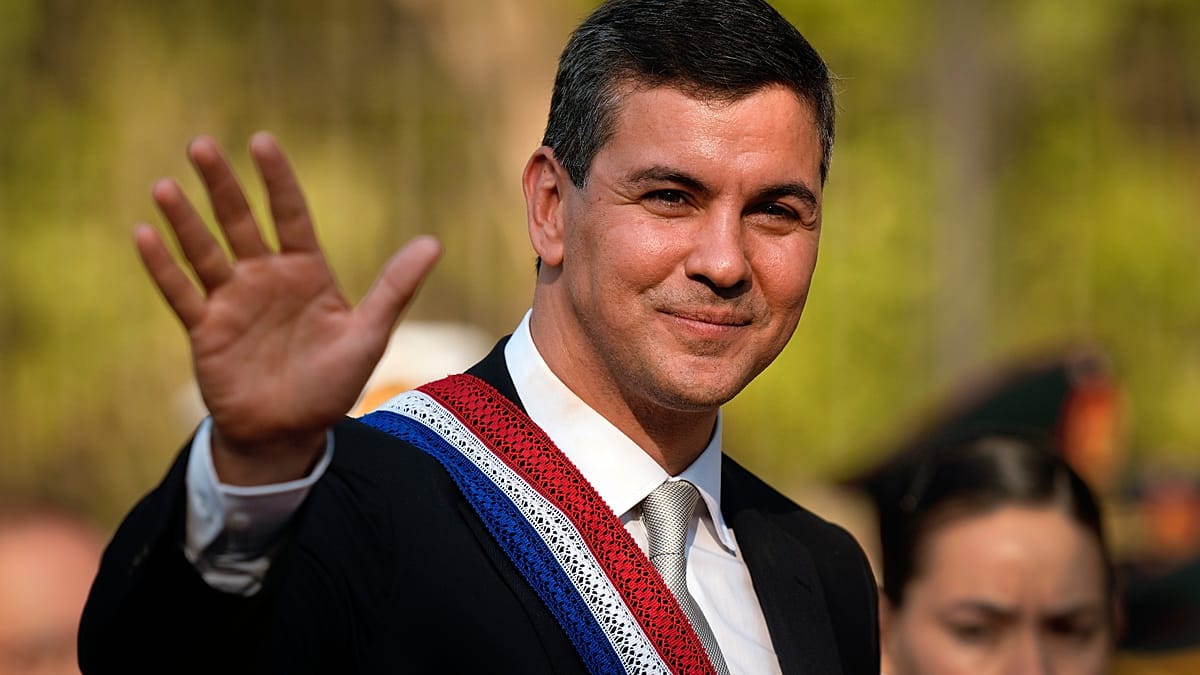
Photo via hindustantimes.com
Paraguay President Peña Resigns After Ueno Bank Collapse
Santiago Peña stepped down after the seizure of a digital bank holding 3 million customers' frozen funds, triggering criminal investigations and an impeachment.
What happened
Paraguayan President Santiago Peña announced his resignation on November 5, 2026, hours before lawmakers were set to vote on impeachment charges tied to the collapse of Ueno Bank. The central bank had seized the digital lender on November 4 after its solvency ratio fell below 50 percent of the legal minimum, leaving approximately 3 million depositors—roughly 60 percent of Paraguay's adult population—unable to access their accounts, salaries, pensions, and savings. The bank held around $850 million in public funds, including $380 million from the state pension and health fund.
Ueno's rapid expansion from a rebranded decades-old finance company to Paraguay's most visible financial institution in under five years hinged on Peña's government backing. Peña held an ownership stake in Ueno's parent company, Grupo Vázquez, until March 2025, and appointed Carlos Carvallo—Ueno's former president—to head the central bank in 2023, raising questions about regulatory oversight. The bank aggressively expanded under Peña's administration, sponsoring Paraguay's national soccer team and securing $350 million in Wall Street financing in 2026.
Minutes after Peña's resignation announcement, the Chamber of Deputies voted 78-0 to impeach him on charges of conflict of interest and regulatory failure. Vice President Pedro Alliana assumed the presidency following Peña's departure. Paraguay's Attorney General opened three criminal investigations into the bank crisis involving Peña and other officials, though Peña said he would cooperate with investigators. The collapse marked Paraguay's worst financial crisis in decades and triggered mass protests in the capital.
Chanakya's Move
This was Peña's gamble failing. He bet that backing a fast-growing fintech with state deposits and central-bank-friendly regulation would deliver growth and modernization credentials. Instead, Ueno's solvency collapsed under the weight of related-party lending and insufficient capital buffers, and his own party turned on him to survive politically. The move to resign before impeachment was tactical—Peña avoided forced removal and preserved legal defenses, while his vice president (also implicated but who survived the impeachment vote) inherited the crisis and the recovery burden. Alliana now holds a poisoned presidency with a damaged financial system and public rage; his counter will be swift deposit recovery and prosecution of bank executives to redirect blame.