
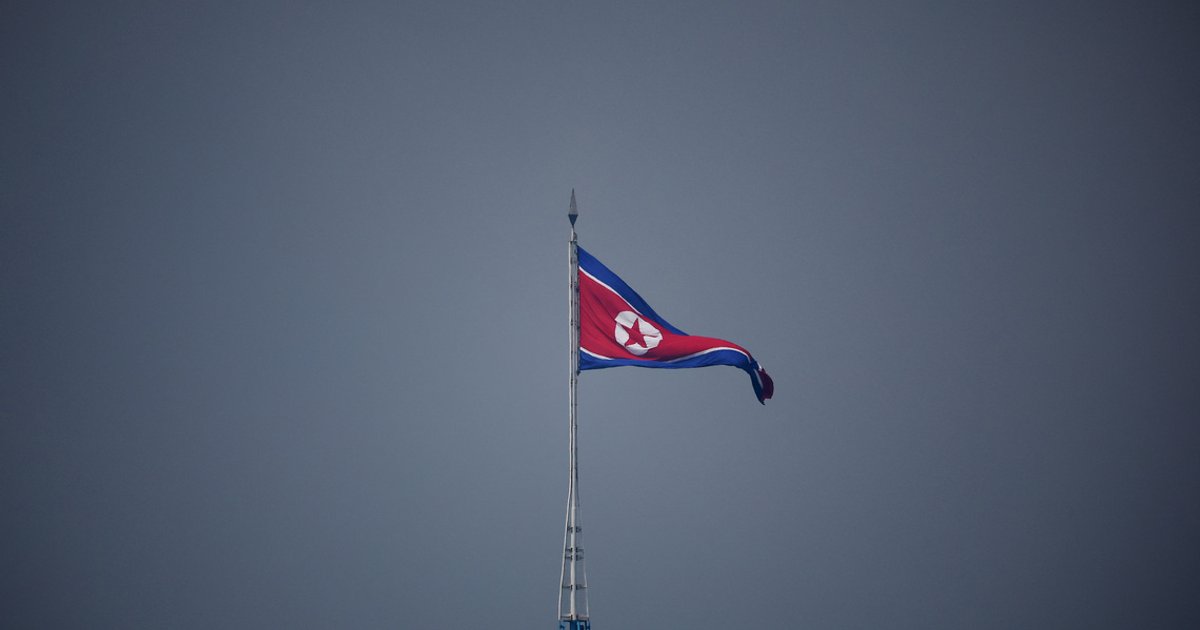
Photo via scmp.com
North Korea Tests AI-Equipped Zam-2.0 Torpedo
The underwater test on Thursday featured artificial intelligence for target detection and guidance, signaling accelerated naval modernization amid Russian military support.
What happened
North Korea conducted an underwater test of the Zam-2.0 precision-guided torpedo on Thursday, with state media announcing the successful trial on Saturday. According to the Korean Central News Agency (KCNA), the weapon incorporates AI technology into its target detection and guidance systems. National defense officials described the test as confirming successful technical upgrades and heralded it as a significant step in naval development.
The test verified propulsion technology that KCNA said had been refined through more than 180 related trials over the past five years. The Academy of Defence Science, Missile Administration and Torpedo Weapons Research Bureau oversaw the test. While KCNA provided no images or detailed specifications, it claimed the trial demonstrated improvements in propulsion efficiency and rocket propulsion system performance.
The torpedo test follows a pattern of recent North Korean weapons demonstrations. Earlier this week, Pyongyang tested two types of submarine-launched strategic cruise missiles from a submarine—the first such underwater tests in nearly three years. In early October, North Korea also announced an AI-assisted test of an intermediate-range hypersonic missile. In September, leader Kim Jong Un emphasized the need to increase "the level of artificial intelligence" in weapons systems.
Analysts have linked North Korea's advancing missile capability to its military partnership with Russia. North Korea has deployed thousands of troops to support Russia's war in Ukraine since late 2024, and U.S. officials have assessed that Pyongyang receives advanced military technology and combat experience in exchange. As of early 2026, roughly 11,000 North Korean troops were stationed in Russia's Kursk region, with reported casualties approaching 6,000.
Chanakya's Move
North Korea is signaling accelerated naval modernization precisely as it consolidates military ties with Russia through active involvement in Ukraine. The timing—back-to-back submarine missile tests, hypersonic missile work, and now an AI-equipped torpedo—suggests Pyongyang is using Russian combat feedback and technical support to compress a development timeline that would normally take years. Kim Jong Un's public emphasis on AI in weapons systems frames this as a strategic pivot toward autonomous or semi-autonomous systems that could operate in contested environments where communications might be degraded. The wager is that demonstrating rapid progress raises North Korea's value to Russia (securing continued technology transfer) and deters regional adversaries from assuming current defensive systems will remain effective. The counterplay would be for South Korea and the U.S. to accelerate their own submarine and AI-enabled ASW capabilities—but the timeline constraints favor North Korea if Russian transfer continues.