
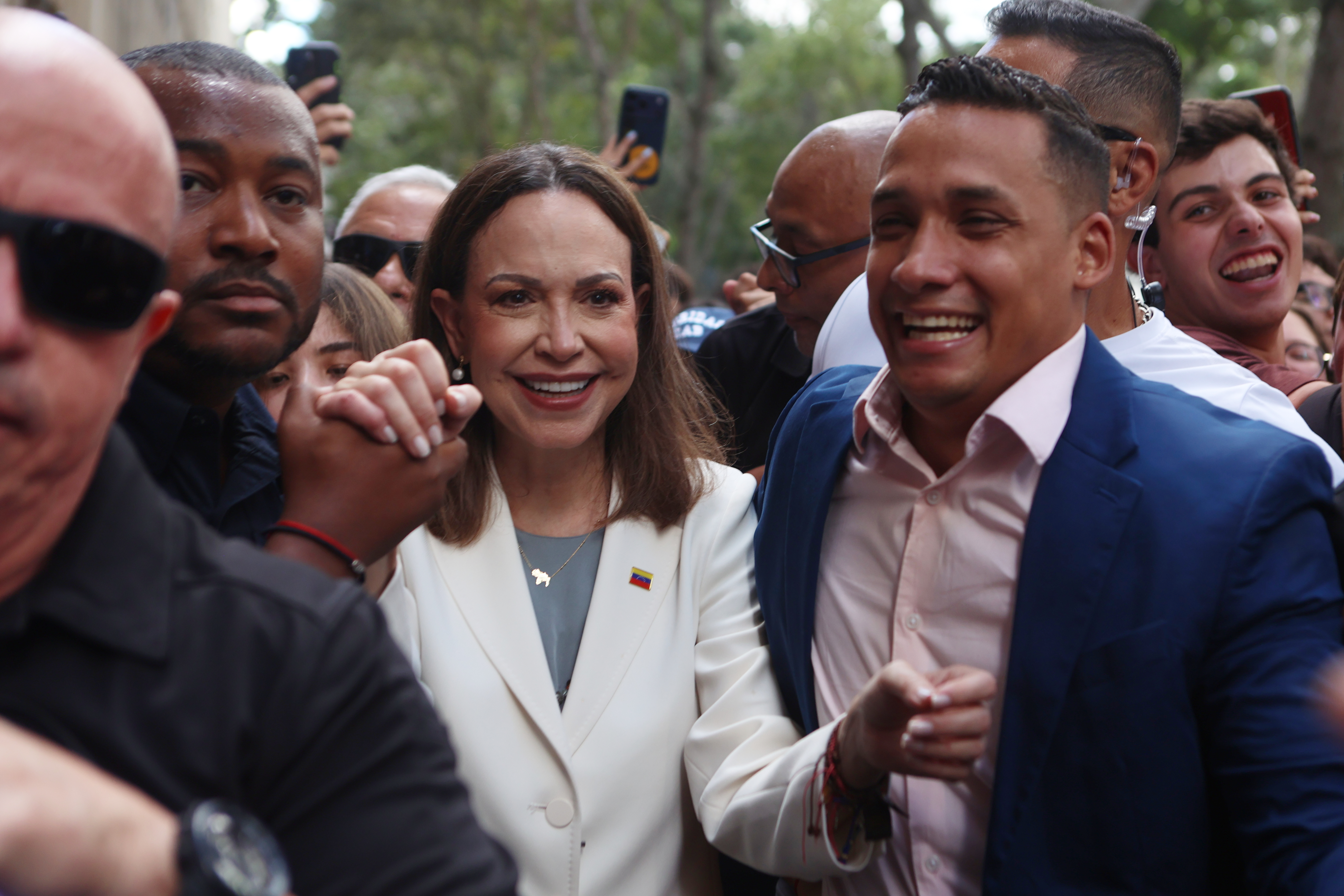
Photo via nytimes.com
Machado Maintains Distance After Trump-Backed Venezuela Return
Nobel laureate thanks Trump for Maduro's capture but emphasizes her return was self-organized, not US-directed, amid tensions over election timing.
What happened
Venezuelan opposition leader María Corina Machado has returned to Caracas after 10 months in exile, having crossed back into the country on October 25 with what she described as an independent team. At her first press conference on October 29, Machado thanked President Trump and Secretary of State Marco Rubio for capturing former president Nicolás Maduro in January, crediting that operation with opening a "floodgate to freedom" for Venezuela. She endorsed the US-proposed timeline for presidential elections in 2027.
Yet Machado also took pains to distance her return from Washington's control, noting that her entry had been organized by her own supporters and that even Trump said initially he knew nothing of her plans. Secretary of State Rubio swiftly claimed the return as a US diplomatic win, attributing it to American reconciliation talks. Machado has not received any communications from the Trump administration or interim Venezuelan President Delcy Rodríguez since returning, she told reporters.
The Trump administration continues to prioritize working with Rodríguez's interim government, explicitly excluding Machado and her Vente Venezuela party from ongoing negotiations over electoral reform and Venezuela's democratic transition. Rubio has repeatedly praised Rodríguez's cooperation while suggesting Machado lacks sufficient domestic support to lead the country. Machado's push for swift elections in 2027 potentially conflicts with Washington's three-phase plan emphasizing stabilization and economic recovery before political competition.
Machado's return amplifies pressure on an interim government that had been cooperating smoothly with Washington since Maduro's removal. Her presence on Venezuelan soil resurrects questions about who will lead the country after elections—questions the Trump administration has not yet resolved. She remains excluded from substantive negotiations over how Venezuela will hold and conduct those elections.
Chanakya's Move
This is Machado's strategic bet: return to Venezuela with sufficient public fanfare that the Trump administration cannot ignore her, while maintaining rhetorical loyalty to Trump to avoid being frozen out entirely. She has accepted exclusion from negotiations for now but ensured her physical presence in the country resets the political equation. Trump and Rubio are making competing moves—Rubio taking credit for her return while Trump's actual policy continues to marginalize her. Machado's move assumes that her domestic popularity and the speed of events could force Trump's hand to include her in any eventual elections. The counter-move: Trump could pressure the interim government to prevent Machado from running again, just as Maduro did in 2024, though doing so openly would damage Trump's claimed commitment to democracy.