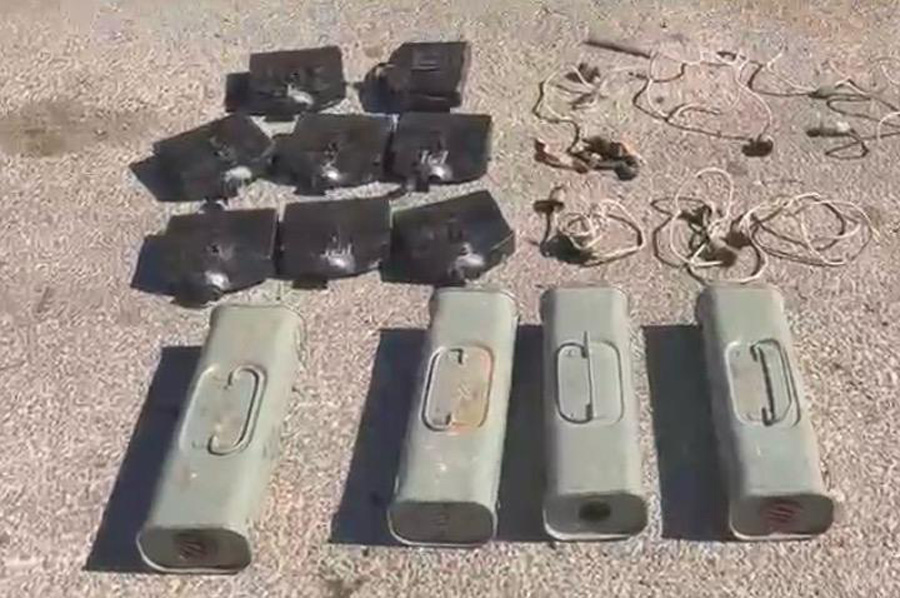
Lebanese Army Seizes 245kg of TNT Smuggled from Syria
In a patrol along the northeastern border, Lebanese forces intercepted explosives and detonators being smuggled across the porous Lebanon-Syria frontier as cross-border trafficking persists.
Lebanon's army said on Thursday that it had seized approximately 245 kilograms of TNT, four explosive devices, and eight detonators being smuggled from Syria, along with electrical wiring used for detonation. The seizure took place during surveillance operations along Lebanon's northern and eastern borders. Suspected smugglers fled back across the Syrian border immediately upon arrival of an army patrol, and Lebanese authorities said they are coordinating efforts to identify and apprehend those involved.
The incident marks the latest in a series of reported weapons-trafficking cases along the 375-kilometer Lebanon-Syria border, which is known for its porous terrain and illegal crossings. The Lebanese army reported a similar seizure of 122mm Grad rockets in August, and Syrian authorities have announced parallel interdiction efforts, including seizures of narcotics and weapons destined across the border.
The cross-border smuggling occurs against a backdrop of significant regional shifts. Syria's new government, which took power in December 2024 after the fall of Bashar al-Assad's regime, has declared stopping weapons and drug trafficking a priority, particularly smuggling networks previously associated with Hezbollah. Days before the Lebanese seizure, Syrian authorities announced on September 29 the arrest of three alleged Hezbollah-affiliated cell members in the Yarmouk Basin and the dismantling of rocket launchers.
Under Assad, smuggling networks operated with state tolerance. The Lebanese army did not identify the intended recipients or purpose of the seized explosives, nor did it specify whether Hezbollah was suspected of involvement. Authorities on both sides face significant challenges: the rugged terrain, porous boundaries, and entrenched smuggling infrastructure have enabled illicit trade for years, and eradication remains difficult despite heightened enforcement efforts.
How could this affect you
Traced by who's actually in the path of this — not everyone is.
Likely
Regional governments and security services
Successful interdiction demonstrates capability but also reveals ongoing attempts to move weapons into Lebanon. Success could embolden enforcement but also signal to smuggling networks the need to adapt routes, timing, or methods—a pattern consistent with previous trafficking cycles.
Possible
Hezbollah and armed groups in Lebanon
Loss of explosives represents a tactical reduction in available materiel, but the persistence of smuggling attempts suggests networks remain active and capable. Supply disruptions could constrain operational capacity if repeated, but alternative routes and suppliers may mitigate impact.
Likely
Lebanese and Syrian governments
Coordinated enforcement along the border strengthens state control and legitimacy, particularly for Syria's transitional government seeking to demonstrate sovereignty. However, endemic smuggling and limited security capacity suggest enforcement will remain episodic rather than comprehensive.
Sources
Every claim here traces back to reporting you can read yourself.